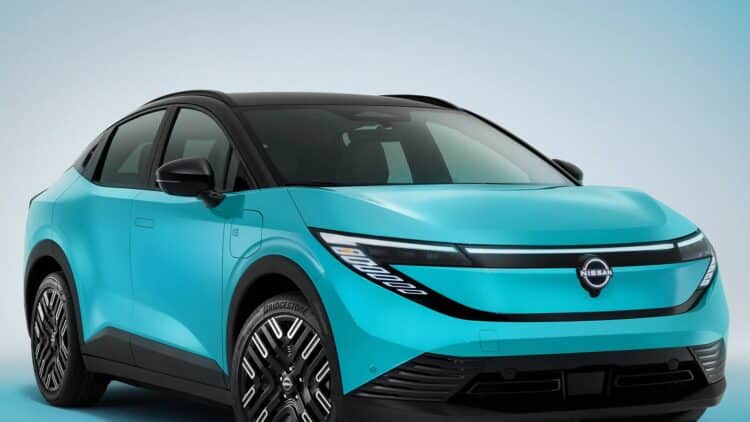
Nissan, one of the most recognizable car brands of all time, is increasingly diversifying its portfolio and competing in different categories. For instance, it has a new B-segment MPV vehicle slated for a 2026 release and has numerous types of SUVs. The latest reports suggest that the Nissan Leaf third-generation EV has entered production in the UK, creating a massive amount of anticipation among its customers.
The Nissan Leaf third-generation EV: Catering to current consumer demands
Nissan has, for a long time, consistently produced ICE vehicles that fulfilled the needs of its core customer base. However, electric cars have now burst onto the scene and taken over the automotive industry, causing many companies to pivot and find a way to enter the now lucrative EV market. As such, the upcoming Nissan Leaf is a reaction to the current state of the market and consumer demands.
Upgrading the infamous Nissan Sunderland facility to produce the Leaf EV
Nissan is a Japanese-based corporation, but it has an established factory in the UK, which makes the production of vehicles for the European market much easier. Impressively, the Nissan Sunderland factory is reportedly Britain’s largest car plant, responsible for manufacturing models such as the Juke, Qashqai, and the Leaf. For a foreign company to possess the largest car manufacturing plant in the UK speaks volumes about how Nissan is dedicated to reaching the widest audience possible. A total of 6,000 people are employed at the UK-based factory.
Since 2013, Nissan has built nearly 285,000 LEAFs in Sunderland. The first model was a two-tone Luminous teal Leaf Evolve with a 75 kWh battery capable of providing up to 386 miles WLTP driving range. Moving onto the Leaf-third generation EV, the customers’ expectations will be through the roof as they hope to see the release of a car that is far beyond the Leafs that currently exist. However, Nissan is a veteran in the industry and understands the importance of consistently meeting people’s expectations.
The Sunderland facility has received a tremendous upgrade following Nissan’s investment of hundreds of millions of pounds in modernising it.
What is significant about Nissan’s revamping of the the Sunderland factory?
The upgrade of the British-based plant conveys that Nissan is not just pursuing a one-off project but is now a mainstay in the EV production market. New additions include: technologically advanced robotics designed explicitly for the assembly of electric vehicles, top-notch equipment, and most importantly, a collaboration with a nearby battery supplier named AESC, which will produce battery cells for the upcoming Leaf car. Although only 6000 people are employed at the moment, the current trajectory suggests that many more will be employed in the future, primarily if Nissan generates its desired amount of profit.
Unpacking the features of the Nissan Leaf third-generation EV expected to enter production in the UK
Nissan has still maintained its core identity whilst also attempting to enhance the features of the Leaf in order to gain a new audience. The new car is expected to have a crossover-influenced design that might be slightly experimental as it goes against the grain and aims to alter the customers’ demands moving forward.
Among its performance features is a fast-charging capability of up to 150 Kw DC, meaning it can be fully charged in 30 minutes. The cabin has dual large screens, enhancing the viewers’ experience. This first release is the premium option, but there might be a future one that will be more affordable. The coming version might follow in the steps of Tesla, which has introduced a budget-friendly Model 3 version for the European market.
It is imperative that the Nissan Leaf third-generation will be produced in the UK and cater to UK buyers. This is because Europe is under pressure from other companies that are coming from overseas and dominating the European EV market. For instance, a Chinese-based company, Zeekr, recently entered the German market. Ultimately, if Nissan perfectly executed the marketing and production of its forthcoming masterpiece, it would perfectly transition from the ICE to the EV space.