The pitch sounds as solid as a utility bill.
Always-on, round-the-clock power, no clouds required, no lulls between gusts. A geothermal plant sits on top of the earth’s own heat engine, and the salespeople for the technology are fond of pointing that out. So buyers sign. Contracts get written. And then the wait begins.
How long that wait actually lasts, and how often it ends in cancellation rather than electricity, is the part nobody puts in the brochure.
Why the grid queue swallows projects whole before the first watt flows
Every new power plant, regardless of fuel source, must pass through a transmission interconnection study before it can legally deliver electricity to customers. Grid operators run these studies in sequence: each new applicant waits behind every project already in line, and any change to an upstream project forces the studies behind it to be rerun from scratch.
Geothermal plants are no exception. Their remote locations, deep in the volcanic West and far from existing high-voltage lines, mean the studies are among the most complex in the queue.
Because each study must model the effect of every other active project on the same transmission corridor, a single withdrawal by a neighbor can reset months of work. That cascading restudy problem is the core mechanical reason why interconnection timelines have stretched well past what any contract’s delivery schedule assumed when it was first signed.
The numbers written into contracts and the numbers that actually come out
Lawrence Berkeley National Laboratory tracks every interconnection request filed with US grid operators. Its Queued Up 2026 report puts the scale of the problem in plain arithmetic: only 13 percent of capacity that submitted interconnection requests from 2000 through 2020 had reached commercial operations by the end of 2025; 75 percent of that capacity had been withdrawn and 10 percent was still active.
The success rate for getting a new power plant from application to operating status is barely one in eight.
The time projects spend in queues before reaching commercial operation is increasing. The median duration from interconnection request to commercial operation was over five years for projects built in 2025. A geothermal developer who signs a power purchase agreement today promising delivery in three years is, statistically, already behind schedule before the ink dries.
Where the evidence comes from and what the full queue looks like
The volume of new power generation and energy storage seeking transmission connection decreased 10 percent from 2024 to 2025, with 2,061 gigawatts of generation and storage capacity now actively seeking grid interconnection. That combined total is roughly one-and-a-half times the country’s installed generating capacity. Geothermal sits inside that pile with no special priority.
Of active projects, a substantial slice already holds a draft or executed interconnection agreement but has not yet reached commercial operations, with solar, storage, and wind collectively accounting for the vast majority of that signed-but-unbuilt capacity. Geothermal’s share of that pile is tiny by volume, which means it competes at a disadvantage for the finite number of study slots grid operators can process each year.
The DOE’s Enhanced Geothermal Shot, announced in September 2022, aims to cut the cost of enhanced geothermal systems to $45 per megawatt-hour by 2035, reducing current costs by roughly 90 percent. But cheaper drilling does nothing to shorten the interconnection line.
Where the always-on promise hits its sharpest limit
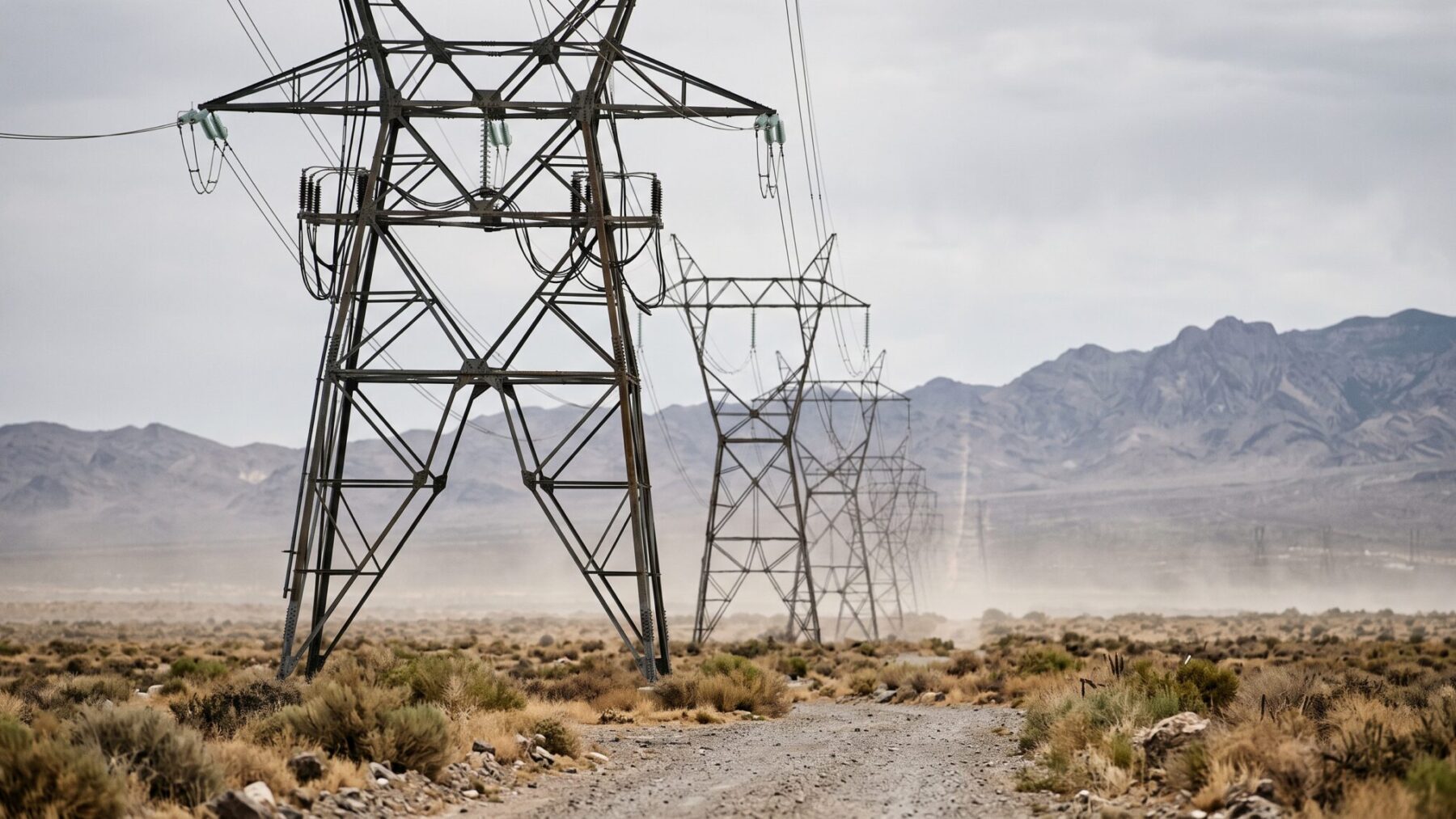
The cruelest mismatch is geographic. The best geothermal rock in the continental US clusters in the Intermountain West, Nevada, Utah, Idaho, and the eastern edge of California, areas where transmission infrastructure is thin and distances to load centers run into hundreds of miles. That remoteness is precisely why interconnection studies for these sites take longer and cost more than studies for a gas plant proposed inside a dense urban grid.
Most projects that apply for interconnection are ultimately withdrawn, and interconnection timelines for remote generation sites have stretched well beyond what project contracts originally assumed. For every gigawatt that reached commercial operation in 2025, roughly fourteen gigawatts were withdrawn.
Meanwhile, as covered here, geothermal plants face a second contractual gap: reported capacity factors for operating plants run well below the near-firm figures sometimes written into long-term agreements. A project that takes six years to reach the grid has already burned through a substantial share of its contracted delivery window before generating its first commercial megawatt-hour.
What regulators are doing and how far the fixes still need to go
FERC Order 2023, the federal rule designed to overhaul how grid operators process interconnection requests, was adopted in 2023 and has been rolling out across US grid regions since, with several grid operators implementing additional process reforms as well. The shift to cluster-based study windows, grouping nearby projects together rather than studying each one individually, is meant to cut the restudy cascade that inflates timelines.
While it is still too early to see major impacts from the interconnection rule changes, evidence shows that incremental improvements are taking shape around the nation. The backlog built over two decades will not clear quickly. Geothermal developers who want to reach the scale that resource-rich regions are now targeting will need those reforms to accelerate well beyond their current pace.
The path forward is real but narrow. Geothermal’s genuine advantage, dispatchable heat available every hour of the day, remains the most compelling argument for its place on a grid adding more intermittent solar and wind every quarter. If the interconnection process can be reformed fast enough to let these projects through, that promise holds. Until then, the contract says firm power, and the queue says wait.
