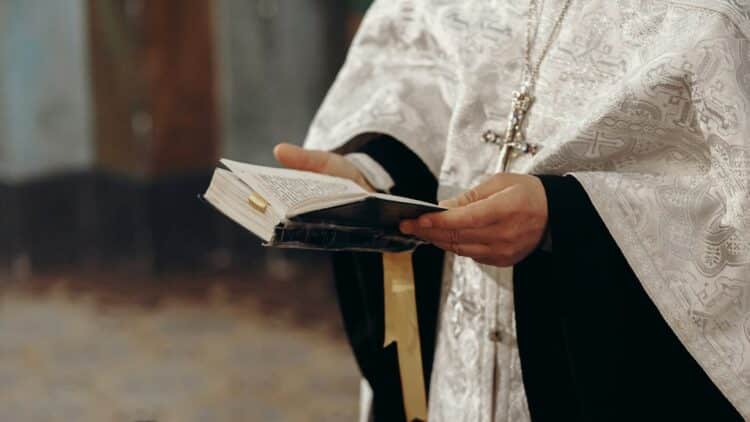
In a historic attempt to mend the division that has stood for centuries, in his attempt to foster unity and peace, Pope Leo XIV will be welcoming and listening to Christian leaders from different parts of the Middle East for the first time in history. This meeting will take place in the first regions of the First Ecumenical Council of Nicaea 1 700 years ago. This immense and important Christian event includes the creation of the Nicene Creed, a significant doctrinal formulation for Western and Eastern Christianity, and the birth of one of the most important and key documents in Christianity.
They will meet in the nearby city of Iznik, Turkey
Nicaea is the place where 325 AD bishops first met to discuss and conclude basic Christian values. By choosing to return to Nicaea, Pope Leo is excited and hopeful that his mission will close this important and dividing 1000+ year gap with the Catholic and all Christian communities.
Pope Leo XIV sees this program not as a diplomatic program, but as a program of the Spirit and of faith in the Christian witness of this program.
The Middle Eastern Christians continue to suffer persecution, displacement, and the unrest of ongoing wars, and therefore, the timing of this statement is not by chance. Pope Leo showed solidarity with these people and with the Middle Eastern people; the leaders of the world have to stop violence and embrace diplomacy. Targeting Christians in the Middle East, Pope Leo stated after a Greek Orthodox Church in Damascus was attacked.
“I am near to Christians in the Middle East. All the Church is close to you,”
Pope Leo XIV is the first American to ever be the Pope
Since he stepped into the position in May 2025, one of the things he has stood for is unity. During the first address to the public, he expressed his desire for unity by saying, “Peace be with you.”
This was the first step for Leo to aim for unity with the Christians outside the Catholic Church. He is an Augustinian. He spent many years as a missionary in Latin America. This all has made Leo take the route of integration through humble unity and collaboration, rather than taking a confrontational stance.
The summit in the upcoming days has three priorities to discuss with other attendees.
- Advancing and Strengthening Ecumenical Dialogue Weaving through the tapestry of collaboration. Attendees will propose consummate cooperation on the aspects of liturgy, pastoral care, and aid in humanitarian efforts.
- Assisting Christians and other Religious Advocates in Conflict Areas. This meeting will focus on the protection of Christians in active areas of war and Advocating of Religious Freedom.
- Promoting and Sustaining Peace. To discuss the role of faith diplomacy in the resolution of the existing issues in the Middle East.
Looking ahead, there is still optimism about unifying the Catholic and Orthodox
The summit is expected to draw major representatives of the Eastern Orthodox, the Catholic, and the Oriental Orthodox Churches, and the locally elected heads in Syria, Lebanon, and Iraq.
The participants in the summit hope and expect that this first assembly will constitute the modern and provisional faith of the participants to demonstrate that faith and to set for the participants a tenacious determination for mutual collaboration, a mutual collaboration that provides a primary Christian faith and a Christian spirit at the summit, free from all historical grievances, a mutual collaboration that provides a primary Christian faith and spirit at the summit.
With careful optimism, the world watches as the preparations commence. If the preparations go as planned, the world may see a potential shift in the summit. The summit will serve as a testimony of collaboration in a world of conflict.