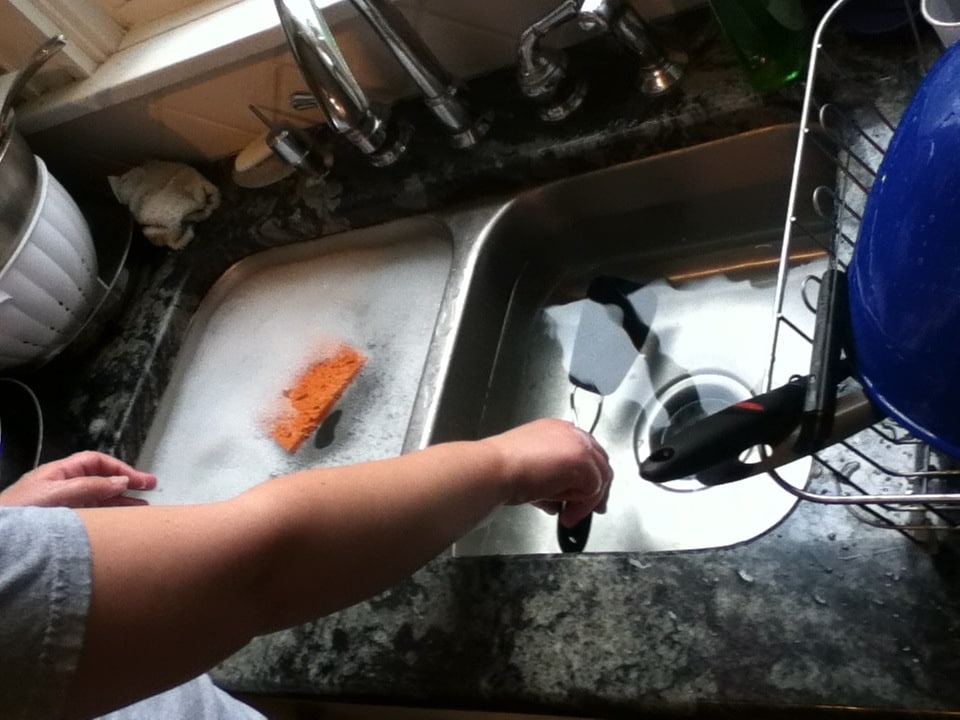
A sink fills with warm water and the smell of dish soap rises in the steam.
Eighteen plates and bowls wait in a stack by the faucet.
Somewhere nearby, a phone buzzes and gets ignored.
For one small group of college students, this ordinary scene became a lab experiment in disguise.
What they noticed about their own minds while scrubbing turned out to matter more than the dishes themselves.
Why paying attention to soap and water actually calms the brain
The trick is not the dishwashing itself but the quality of attention brought to it. Researchers split participants into two groups before handing them the same stack of dishes. Before they did so, half of the participants were required to read a descriptive passage about dishwashing (the control group), while the other half were required to read a mindful passage about dishwashing, which emphasized the need to be mentally focused on the task at hand.
Before they started, half of the students read a short mindfulness dishwashing passage and the other half read a short descriptive dishwashing passage. The descriptive passage was straightforward, but the mindful passage focused on being present mentally for the task. Both groups then washed the exact same dishes in the exact same kitchen setup, and only the instructions differed.
That difference in mental focus is what researchers call informal mindfulness, the idea that any repetitive task can double as a brief meditation if attention stays anchored to the senses instead of drifting into worry. Mindful meditation is usually an exercise in itself, but routine daily activities may provide opportunities for informal practice, the study suggests. Washing dishes supplies all the sensory material a wandering mind needs, temperature, texture, sound and smell, all at once, which may explain why the two groups walked away feeling so differently.
A kitchen sink becomes an unlikely testing ground
Picture the scene researchers built: a plain kitchen counter, a pile of clean dishes used only as props, and college students standing at a sink with no distractions. Nobody was told the chore mattered beyond getting the plates clean, so neither group had reason to perform for the experiment.
Because the setup was identical for both groups, any shift in mood afterward could be traced almost entirely to the mental instructions each person carried into the sink. That clean comparison is what makes a small, simple study worth taking seriously.
Even the stack of dishes mattered, since each washed 18 clean dishes , chosen to take roughly the same time to wash. That meant nobody could rush through sloppily or stretch the task out to game the results, and that built in fairness is what let the numbers underneath carry real weight.
The numbers behind the soap suds
The results, published in the journal Mindfulness, came from a sample of 51 college students engaged in either a mindful or control dishwashing practice before completing measures of mindfulness, affect, and experiential recall , split roughly in half between the two instruction groups. Each participant answered questions measuring mood, stress and focus before washing, then answered the same questions again once the water drained, creating a clean before and after snapshot.
Small as that sample is, the gap between groups registered as statistically meaningful. Nervousness ratings decreased by 27 percent in the mindful dishwashers, while mental inspiration increased by 25 percent. Both changes were statistically significant and reflected a substantial experiential shift, researchers said.
Researchers also noticed something less expected: mindful dishwashing also heightened the sense of time pleasurably slowing down, and studies have associated altered time perception with greater psychological well-being, the researchers said. The chore itself stayed exactly the same length; only the attention paid to it changed, and that alone moved the numbers.
Where the effect runs thin, and what still needs testing
This was a small study of healthy young adults doing a single task once, not a long term trial tracking people across months or different stress levels. The study size was very small with only 51 students, so it would need to be replicated , and whether the same calming effect holds for someone washing a sink full of dishes after a brutal workday, rather than 18 clean props in a lab, remains an open question researchers have not yet settled.
Even so, the underlying idea lines up with a broader body of research on how small, repeated routines shape daily mood and attention, even outside the kitchen. That pattern connects to habits this desk has tracked before. From how office breaks eat into the day to how structured routines fill the hours outside work, small repeated tasks keep showing up as quiet levers on mood, and a kitchen sink, it turns out, can do that same quiet work.
A small, free habit worth defending
None of this means dishwashing is secretly glamorous or that chores should replace real rest. What the research suggests instead is more modest: a task already on the to do list can double as a brief mental reset, if the mind stays with it rather than racing ahead to the next item.
That reframe matters because so much daily stress gets treated as something requiring a purchase or a scheduled break to fix. This is the opposite kind of fix.
It is available at every sink in the country, free of charge and already built into the evening, which fits a broader shift in how households think about small daily choices and spending. The dishes were never going to wash themselves, but paying attention while doing them may be doing more than anyone expected.
