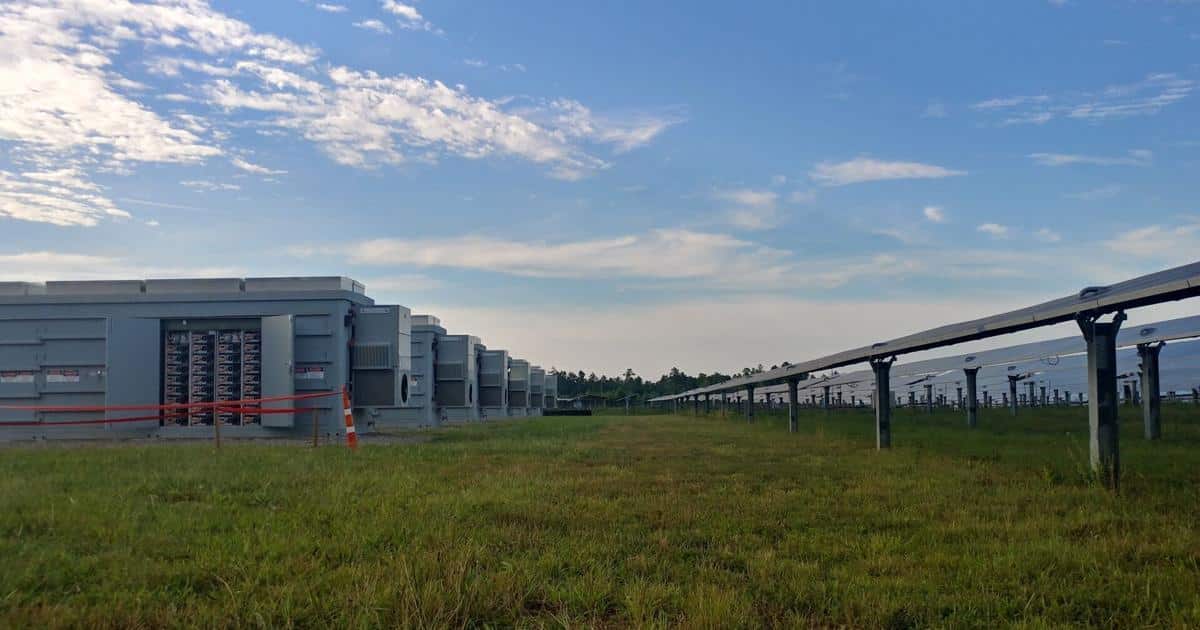
A single row of solar panels tilts slowly across a gravel field, chasing the sun from dawn until dusk.
Underneath, the ground itself is doing something unusual.
Light bounces off the pale stone and lands on the back of the glass.
Nobody built that panel to waste that light.
So what exactly is happening on the side nobody looks at.
The hidden second face doing the real work
Ordinary solar panels are built like a one way mirror for sunlight, with a solid backsheet sealing in the cells so only the front ever generates power. A bifacial panel swaps that backsheet for a second pane of glass, so photons that bounce off whatever is underneath, gravel, white rock, concrete, even snow, can strike the rear of the same silicon cells and get converted too.
That rear face is not just a cosmetic upgrade. Manufacturers rate it with a bifaciality factor, essentially how efficiently the back responds compared with the front, and premium HJT bifacial panels push that figure to 0.80-0.90, while most commercial panels sit somewhat lower.
Then comes the part that turns a lab spec into a grid number. When installers raise these panels onto single axis trackers, the kind of steel frame that rotates panels to follow the sun through the day, the rear face spends the whole day staring at open ground instead of a roof or rack blocking the view.
That combination, glass on both sides plus a tracker lifting the panel into open air, is what turns a modest rear gain into a serious one.
Why gravel pits and white rock became a design choice
Utility scale developers do not pick ground cover by accident anymore. A reflectivity rating, called albedo, decides how much of that bounced light actually reaches the back of the panel, and dark native soil reflects far less than crushed white gravel or a light colored membrane.
Because of that, some project engineers now spec light colored gravel specifically underneath tracker rows, treating the ground itself as part of the power plant rather than just fill dirt. A few have tested white coatings or reflective fabric strips between rows to push the number higher still.
Spacing matters too. Rows set farther apart, with a lower ground coverage ratio, let more sunlight reach the ground between panels in the first place, which means more light available to bounce back up. Field testing of different ground surfaces found that the gain over the investigated range was 6.4 percent for grass, 11.3 percent for river sand, 5.9 percent for grey paver, 13.6 percent for light aggregate, and 4.5 percent for dark aggregate.
That is one reason some newer tracker fields look sparser than older fixed tilt arrays even though they cover similar total acreage.
What the field data actually shows
Independent testing has narrowed the wild early claims into a real number. Field validation work on bifacial trackers is showing an annual energy gain of 6.5 percent and 9 percent for PERC and Si-HJT cells, respectively, mounted on single axis trackers, well below some marketing claims but still a meaningful bump.
Under the best conditions, though, that number climbs sharply. When bifacial PV modules were used, the corresponding tracker gains increased to about 24 percent in Amsterdam and 28 percent in Doha, according to peer reviewed modeling of tracker performance in different climates. Desert sites with strong sun and reflective sand tend to land at the high end of that range.
A separate desert field study found that tracker benefits were highly seasonal. Fixed tilt systems outperformed horizontal single axis trackers by up to 7.2 percent in daily average energy yield during winter, while annual bifacial gain in trackers ranged from 9.4 to 12.1 percent.
That seasonal swing is exactly why developers model a full year before locking in a design rather than judging performance off one sunny afternoon.
Where the gain shrinks or disappears entirely
None of this holds up everywhere. On a typical sloped residential roof, the rear face sits inches from dark shingles with almost nothing to reflect, so homeowners rarely see a meaningful bump even after paying a premium for bifacial glass.
Even at utility scale, the physics punishes crowded designs. Shading from steel supports, the pipe each row pivots on, plus mounting rails and wiring conduit, blocks a portion of the rear face no matter how reflective the ground is, trimming the theoretical maximum before a single electron moves.
That is why real world gains at most large solar farms land closer to single digits than to the headline 30 percent figures used in sales materials. Developers who treat albedo, spacing and row height as one connected design problem get near the top of the range.
Those who bolt bifacial panels onto an old fixed tilt layout often get barely more than a standard panel would have produced.
What it means for the next wave of solar fields
Bifacial glass paired with tracking motors has become close to the default choice for new utility scale solar, with 99 percent of new utility-scale solar projects using single-axis tracking by 2024 due to lower cost per unit of power. That same shift in design logic has pushed developers to pair more new solar capacity with batteries as both technologies mature together.
So the gain is real, measurable and already built into how new solar fields get financed and sited. But it is not a flat bonus a buyer gets just by purchasing the glass.
It depends on gravel color choice, row spacing, latitude and how much shade a steel support throws across its own panel.
Meanwhile the same push for efficiency is reshaping what utilities do with the power once it leaves the field, from fast reacting storage fleets smoothing out swings to new rate structures built around when panels actually produce. For an industry chasing every fractional gain it can find, a strip of reflective gravel under a steel frame turned out to be one of the cheapest upgrades on the table.
