
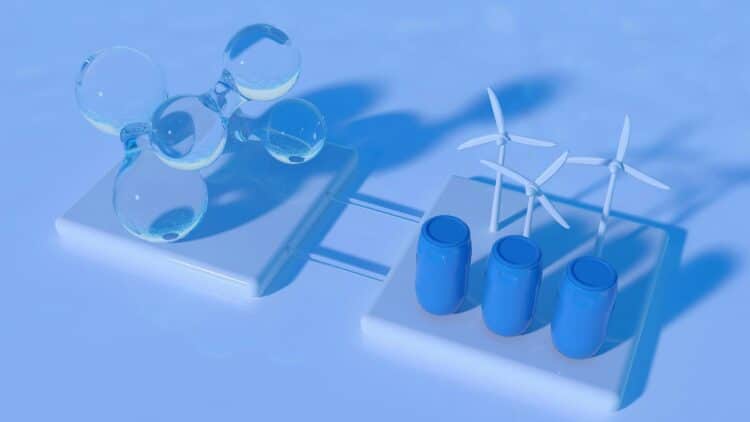
Spain has unveiled an ambitious new funding initiative that promises to reshape the country’s clean energy manufacturing landscape through substantial financial support for innovative technologies. The comprehensive program represents a significant expansion from previous efforts, incorporating hydrogen projects alongside traditional renewable energy initiatives for the first time. This strategic shift demonstrates Spain’s commitment to establishing itself as a major player in Europe’s emerging hydrogen economy.
RENOVAL2 program expands beyond traditional renewable energy sectors
The Spanish Ministry of Ecological Transition has introduced the RENOVAL2 project, which has available financial support of up to €355 million to promote local capabilities for manufacturing clean technology. The project has expanded its focus to include hydrogen technology equipment and components, solar photovoltaic technology, wind technology, energy storage technology, and geothermal technology. The project has expanded its focus as Spain embraces the manufacturing aspect of clean technology, as opposed to the technology.
The programme shall be managed by the Institute for Energy Diversification and Savings (IDAE), and the funds shall be provided through Spain’s Recovery and Resilience Plan by NextGenEU. The investment in the country’s manufacturing sector shall cover the entire value chain, from basic to finished products. The reason behind all these is that Spain is working towards developing its own environments for its manufacturing sectors from scratch and not through the use of international value chains.
Models of funding are developed with projects of varying sizes in consideration
The RENOVAL2 scheme has allocated the available funds into two tracks depending on the size of the projects. The small schemes of projects between €1-30 million compete for funds of €25 million, while larger projects above €30 million are supported by the remaining funds of €330 million. The projects also have an upper limit of funds of €150 million, which is 15% of the scheme costs. The broad focus of the RENOVAL2 scheme reflects Spain’s ambitions of establishing itself as a full-fledged clean technology production base.
Applicants for the new scheme will be received from Thursday, 22 January, to Wednesday, 25 February, 2026. For this scheme, the basic aid intensity is fixed at 15% aid costs, but has the potential to rise to a maximum of 35% for schemes that are located in the approved development areas, in addition to the special aid that targets small to medium enterprises. However, the final subsidies will be granted after the success of the project.
European clean technology sovereignty is strengthened by strategic positioning
The RENOVAL2 Scheme in Spain is an example that has been driven by the key gaps in clean tech production capacity that exist within the European continent and the growing competition in global supply chains. It currently produces 95% of its components for wind energy and 62% of its solar energy components in Spain, and there are also huge opportunities within this sector and others that are yet more niche, including hydrogen plants and energy storage installations. Arc furnaces and iron reduction units, for example, require hydrogen technologies.
This investment phase follows the success of the initial RENOVAL scheme, through which a total of over €210 million was distributed among seven photovoltaic solar manufacturing initiatives back in March of 2025. Other notable beneficiaries of the scheme included Sunwafe, courtesy of a €200 million investment for the construction of a 20GW wafer production facility, as well as Dutch manufacturer MCPV, for the construction of a 2.5GW heterojunction module assembly production plant located in the northern Spanish region.
The Spanish RENOVAL2 project, valued at €355 million, is a revolutionary measure in the adoption and manufacturing of clean energy, moving forward from conventional technologies to hydrogen and other newer fields. This project marks the beginning of a new era in the adoption and manufacture of clean energy in the European context, meeting the critical climate change objectives. The project challenges the government to start the selection processes by January 2026.
