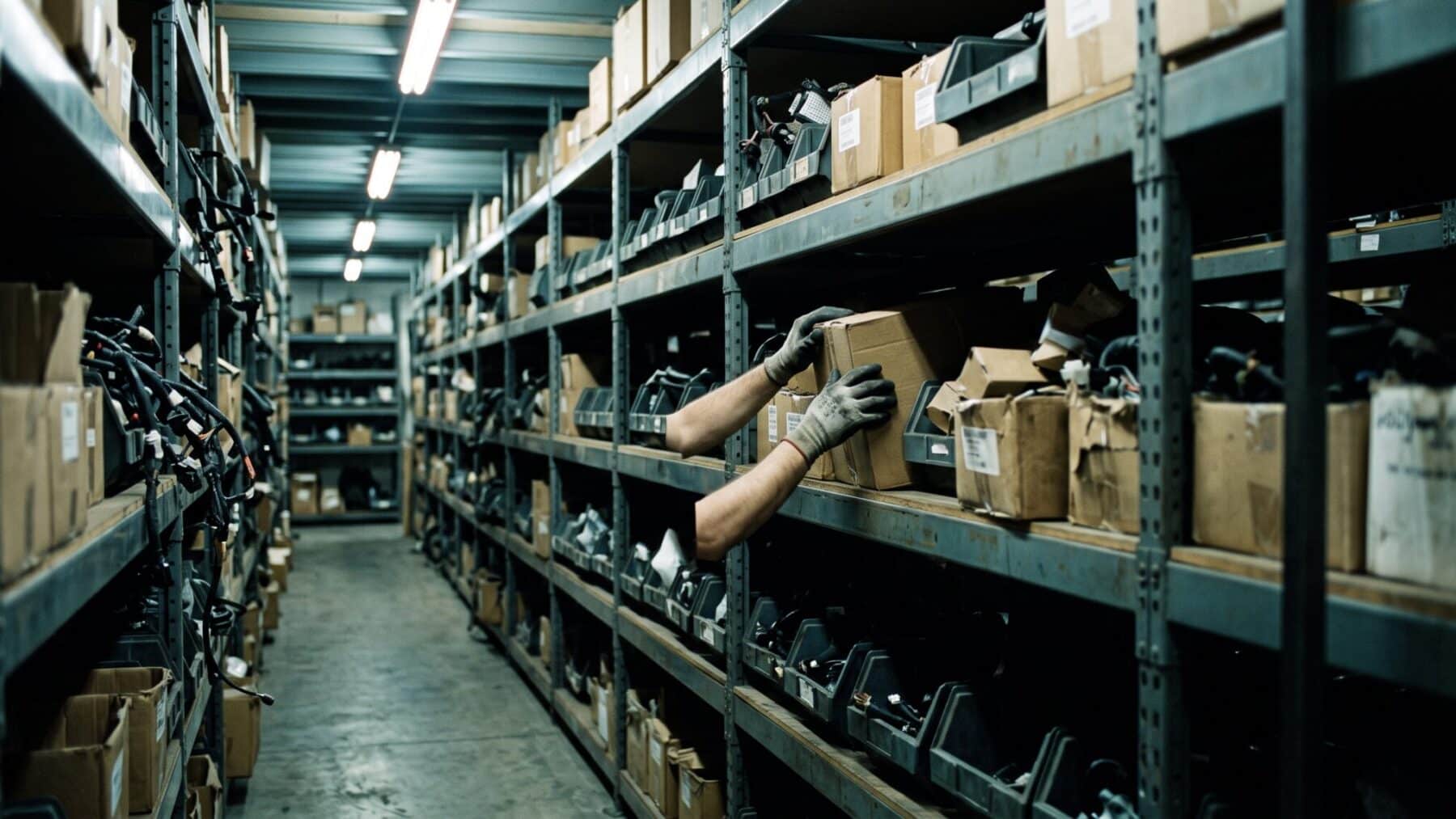
General Motors has put a $4.5 billion financial backstop between its assembly lines and the next supply chain shock, signing a formal purchasing agreement with a specialist parts firm that will stockpile critical components on the automaker’s behalf before any disruption strikes.
How the deal works
GM has set a plan to guarantee the supply of as much as $4.5 billion in critical auto parts to safeguard the company from supply shocks caused by such events as extreme weather, natural disasters, and cyberattacks.
According to an SEC 8-K filing dated Aug. 7, General Motors Co. and General Motors LLC entered into a master irrevocable payment undertakings (IPU) agreement with Procura Auto Parts, the “paying agent.” The up to $4.5 billion purchasing facility includes Procura Auto Parts, a company that specializes in sourcing rare or critical parts. The suppliers will acquire and hold inventory on behalf of GM. The purpose of the program, as stated in the filing, is to secure supply of certain critical inventory for the production of retail and fleet vehicles in the event of supply chain disruptions.
Procura will receive funding through a bank syndicate led by JPMorgan Chase and Banco Santander to prepay select suppliers on behalf of GM. In return, GM will issue formal promises called irrevocable payment undertakings, or IPUs, to pay back the company after it uses the parts in production, no later than August 6, 2029.
The deal allows GM to keep inventory costs off its books while better securing future supply. GM pays interest, plus an agreed-upon premium on what is used, as well as a customary annual fee on the unused portion during that year, according to the filing.
Chips and critical components at the center
The agreement is reportedly aimed at avoiding supply chain delays or shortages similar to those in the last five years, including the chip shortage that left some GM vehicles without functioning ADAS features. GM did not disclose which specific automotive parts it intends to purchase through the program.
The automotive industry has grappled with multiple supply-chain disruptions over the past several years, including a microchip shortage that forced automakers to adjust or temporarily halt vehicle output. Automakers have also faced constraints on dynamic random-access memory, or DRAM, as well as wiring harnesses and rare earth materials.
The deal runs up to three years. Procura will act as a GM purchasing agent and supplier, handling related working capital financing as well as supply chain management. When a GM supplier has parts the automaker wants secured for future use, Procura will pay the supplier and hold the parts until GM needs them.
DRAM makers were shifting capacity toward AI data centers, leaving automotive systems increasingly exposed. Since December, DRAM prices have risen faster than expected, up about 70% year over year for automotive LPDDR4 by January 2026, with additional increases signaled for 2026 and 2027 as supply for older generations tightens, according to S&P Global Mobility. S&P Global Mobility anticipates the main impacts of this shortage to arrive in two phases, noting that DRAM suppliers have clarified that the retirement of DDR4 and LPDDR4 is for consumer products, but that automotive-grade production will continue for a few years. That same pressure is one reason GM had already moved on the billions in additional costs hitting Detroit’s automakers this year from multiple directions at once.
Part of a broader GM supply strategy
On July 1, 2026, Micron Technology and General Motors announced a Strategic Customer Agreement to secure a long-term, reliable supply of memory and storage platforms critical to GM’s vehicle production, with both companies working to strengthen semiconductor and automotive supply chains. Under the agreement, GM will secure supply of LPDRAM, NOR, and UFS NAND products from Micron.
The deal follows years of global automotive supply chain issues and comes after GM and other automakers reevaluated their sourcing of parts following U.S. tariffs and a push to move away from Chinese companies.
Along with other automakers, GM has suffered several supply chain disruptions this decade relating to COVID-19, rare earth minerals, semiconductor chips, and tariffs on raw materials such as steel, resulting in sparse dealer lots when consumer demand was strong.
The agreement is structured to allow GM to continue manufacturing SUVs and trucks even if supply chains falter. The automaker characterized the deal as a precautionary measure aimed at shoring up access to key components, not a reaction to any current supply problems, according to Reuters. The company has not publicly detailed which specific vehicle lines or model years the stockpiled inventory is intended to protect.
Financial structure and timeline
The facility caps outstanding IPUs at $4.5 billion at any given time, and provides for a twelve-month funding period commencing on August 7, 2026, during which IPUs may be issued by the company. The prepayments made to suppliers will be accounted for as GM assets, and each IPU will be reflected as unsecured debt.
The structure keeps the headline cost from hitting GM’s adjusted free cash flow immediately, giving the automaker financial breathing room while locking in physical parts.
For suppliers and parts-watchers tracking the fragility that supplier missteps can introduce into even a single vehicle line, the deal signals that Detroit’s largest automaker is done relying on just-in-time delivery for components it cannot afford to run short of.
