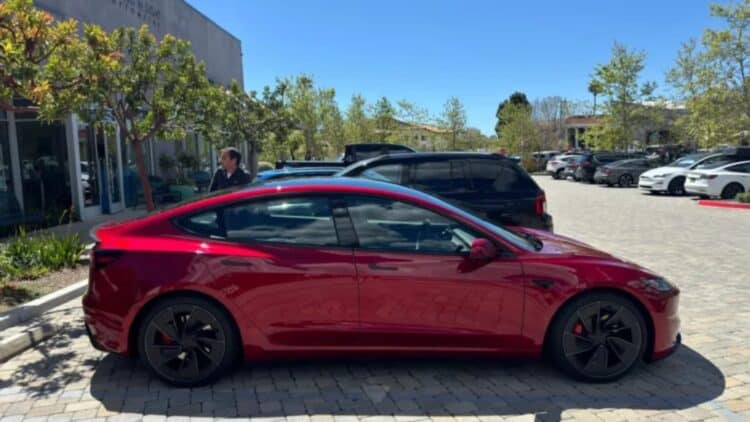
Contrary to popular belief, Tesla was not the first corporation to launch electric vehicles, but it significantly advanced the range of EVs and catapulted them into the mainstream market. However, as competition intensified over the years, the corporation struggled to attract a high number of customers. In an ambitious attempt to regain notoriety in the European market, Tesla introduced a budget-friendly Model 3 version.
Reviewing the pricing challenges faced by Tesla in the European market
Tesla’s general target market is upper-middle to high-income earners within developed countries. Only a certain number of people are capable of purchasing the cars; hence, after exhausting its primary audience in the US, Tesla’s next option is the European market.
The primary challenge faced by the US-based corporation is that electric vehicle production is no longer a niche market. Instead, it is one where competition is abundant. Companies like BYD, based in China, are increasingly offering a wider range of options at relatively diverse prices and are also expanding into the European market, making it harder for Tesla to attain high sales. Furthermore, there is no clear indication as to which electric vehicle company is the best, which heightens the randomness through which customers acquire EVs. Ultimately, Tesla’s premium pricing for its premium vehicles is no longer as lucrative as it once was, as the separation between Tesla and its competitors decreases.
Understanding the full context: Why did Tesla launch the Model 3 version?
A previous strategy that Tesla has utilized is price cuts across its portfolio of vehicles, but this has yielded lower profits. Instead of under-pricing its vehicles, the US corporation has elected to introduce a Model 3 version, which is priced accordingly and will allow the generation of profit.
The overall registrations of Tesla vehicles have plummeted by over 36% in the European market, excluding Norway. Such a statistic justifies the decision made by the US corporation to adopt a new strategy.
Delving deeper into the specifications of the new Tesla Model 3 version
The launch of a brand-new model at a much lower price might lead to concerns that Tesla will be introducing a low-quality vehicle, but this is not the case. The corporation is aware of its good reputation and aims to maintain it.
The initial price of Model 3 is projected to be approximately €36,990 in various European nations. The car has a WLTP-rated range of around 534 km (332 miles). In simple terms, 332 miles is the standardized distance that the car can travel on a single charge. Additionally, Tesla removed some features found in its premium vehicles. The Model 3 has no rear passenger touchscreen, a less advanced audio system, no heated rear seats, and cloth seats instead of vegan leather.
Introduction of the Model 3 version: What does it mean in the grand scheme of things?
Introducing the Model 3 version serves as an indication that Tesla has been humbled by its competition and understands the need to adopt newer strategies. To put this into perspective, BYD’s SUV Atto 3, which is similar to the Model 3, starts at €37,990 compared to Tesla’s €36,990. A clear message has been sent that Tesla is not just a premium vehicle company that produces cars for the top echelon of people, but is capable of catering to middle-income customers. Yes, Tesla stands to lose out on profitability, but the objective this time is to claim market share before seemingly gearing up for even bigger projects in the future.
The premium segment of electric vehicles is increasingly becoming saturated, forcing all companies, not just Tesla, to strategize. The Model 3 version represents a bold decision by the US corporation, and only time will tell how successful it will be. Nevertheless, introducing newer vehicles with fewer features is a much better option than reducing the price of all premium vehicles. Tesla is edging closer to a point of desperation in relation to generating more sales in Europe.