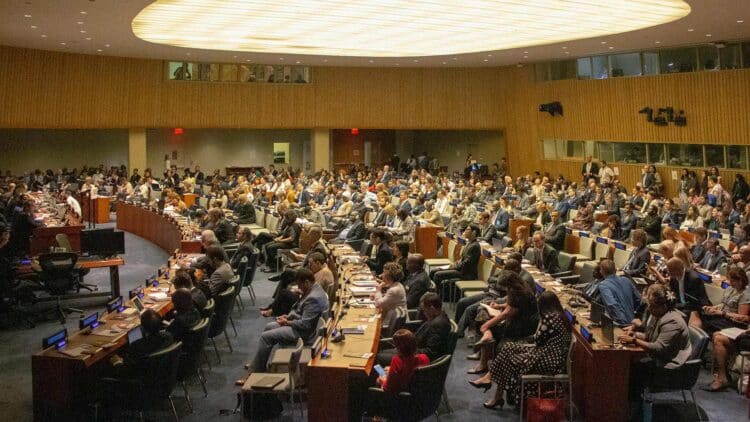
A health crisis of unprecedented dimensions is taking place across the world, the consequences of which are being felt in every corner of the globe. The consequences are being felt on a variety of systems and economies. Global rates of obesity and overweight individuals have seen a drastic and unprecedented increase. Global health systems and economies are at risk of being overwhelmed.
The obesity pandemic: Why has obesity rates increased so drastically?
In 2022, there were more than 2.5 billion overweight adults in the world; 890 million of whom were classified as Obese (WHO). Children and adolescents aged 5-19 have reported quadrupling rates of obesity since 1990, with a total of more than 390 million in the world.
This is the first time in the world at any time, where the number of children classified as obese is greater than the number of children who are classified as underweight. The global shift in trends in nutrition has been radical and startling.
What are the contributing factors?
Current trends will lead to a world where more than 50% of the population is classed as overweight or obese by 2035. This is because of urbanization, sedentary lifestyles, and the easy access of the world population to ultra-processed high-calorie foods. Nutritional poverty in low-income groups leads to easy access to marketed foods, leading to the situation worsening.
The United Nations weighs in on the problem
At the recent UN meeting, health officials stated that obesity should not be viewed as a problem for the person suffering, but rather needs to be viewed as a problem for the system. Dr. Luz Maria De Regil from WHO stated that obesity is “a serious public-health problem and a disease in its own right”.
UNICEF stated that childhood obesity is on the rise, and more actions need to be taken early on in Obesity and Public Health to have a more proactive stance on Obesity in Schools. UNICEF’s nutrition advisor, Nita Dalmiya,
“Childhood obesity is rising faster than ever before. We must act now to prevent this epidemic from defining the next generation.”
Experts propose the following actions be taken.
- Food Policy Changes are Suggested as the Last Resort.
- Encouraging Physical Activity through Schools is Suggested.
- Treat Obesity as the Chronic Condition that it is and Provide Counselling, Medication, and Support.
WHO has recently released global guidelines recommending medications such as GLP-1 receptor agonists for treating obesity, an endorsement describing how to go beyond basic interventions.
Awareness is not enough: Barriers to overcome to help the cause
While there is enough awareness, there are several barriers to making it actionable, such as
- Industry lobbying
- Weak policy commitments, and stigma around obesity.
- Many countries still do not have a national strategy in place, and contrary to global proclamations, many do not consider obesity a chronic condition and fail to describe it in a way that demands systemic responses.
What does the UN say?
The UN clearly states that reversing the obesity pandemic requires unprecedented cooperation among governments, health systems, and communities. WHO’s global strategy on diet and physical activity and World Obesity Federation country scorecards do nothing to assist countries in the implementation of actionable tools.
The growth of obesity and overweight is an active crisis that, without actionable tools, will result in loss of lives and more preventable diseases, not to mention the economic burden. It is obvious that the UN is signaling the need for immediate and collaborative work to transform food systems, work environments, promote physical activity, and incorporate management of obesity in health systems. The silent epidemic is already on the brink of an irreversible crisis, and action is needed now.