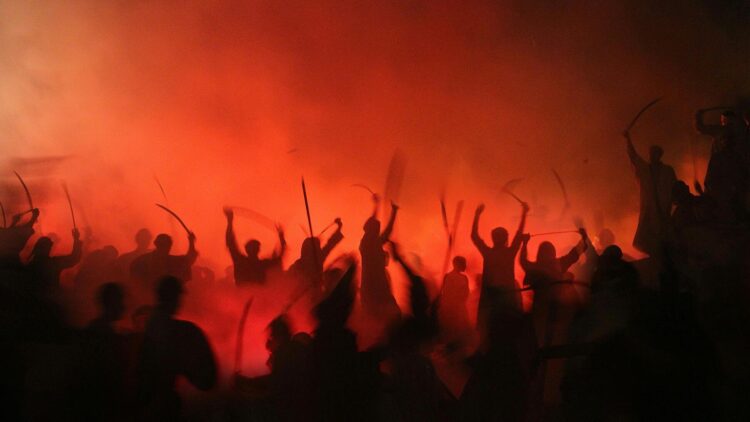
As Iran’s economy declines, it has experienced a large-scale protest movement — the biggest in decades. This protest movement is moving out of Iran’s capital city (Tehran) and into its rural areas. Since the protests began in mid-December, there have been an estimated six deaths. This demonstrates how seriously the situation is developing.
Protests have been centered on the economic decline of the nation.
Economic problems began to develop in late December 2025. The Iranian rial has dropped to approximately 1.4 million rials per dollar, which has contributed to rising inflation. The cost of many basic items has risen significantly, causing financial burdens for many families.
According to NBC News, protesters in multiple cities have protested against high rates of unemployment, the lack of honesty in government, and the inability of the government to stabilize the economy. Protests have expanded to include more than just economic issues; protesters have demonstrated a general dissatisfaction with the government.
Six people have died in the last week, according to government officials.
Five of the deaths were protesters and one who was a member of Iran’s paramilitary Basij force. One of those killed was a 21-year-old volunteer in the Basij Force, whose death was confirmed by state media. Government officials stated that more than a dozen security personnel were injured while attempting to quell the violence.
Human Rights organizations, including the Abdorrahman Boroumand Center, have identified some of the protesters who were killed. Human Rights organizations also posted pictures of the security personnel wearing protective gear, indicating the level of tension and hostility present in the protests.
The Iranian government does not have the capability to quickly stop the devaluation of the rial.
President Masoud Pezeshkian, Iran’s reformist president, acknowledged the extreme nature of the economic crisis in Iran but stated that the Iranian government does not have the capability to quickly stop the devaluation of the rial. President Pezeshkian urged the protesters to participate in dialogue with the government, but critics stated that the protesters will be unlikely to achieve meaningful reforms in Iran’s existing government.
The Iranian government has also stated that it has arrested people it claims were associated with monarchists and European-based organizations, implying that the protests were influenced by foreign entities.
Historically, the present protests are the largest seen in Iran since the 2022 protests following the death of Mahsa Amini, a young woman who was detained for allegedly violating Iran’s laws requiring women to wear the hijab in public. Like the present protests, the 2022 protests garnered international attention and were met with extreme repression.
Abroad, the protests have elicited official declarations of support for the protesters.
Official United States representatives have expressed support for the Iranian protesters, criticized the way the government has handled the economy and human rights. Internationally, observers caution that the growing protests could destabilize the region even further, given Iran’s already strained relations with Western powers and Iran’s continued involvement in regional conflicts.
A major challenge for the government of Iran will be to manage the expanding protests. Experts predict that the government may attempt to use greater force to suppress the protests, especially as the protests expand to rural areas. Additionally, the economic crisis does not appear to be abating, forcing citizens to express their frustration through the protests.
For many Iranians, the protests symbolize both desperation and hope. Desperation is felt in relation to the daily struggle of living with rising costs, and hope is represented in the potential that if enough people join together, positive change can occur. Whether this protest evolves into a larger nationwide protest or is suppressed, as previous protests have been, remains unknown.
Iran’s escalating civil unrest represents a severe strain of economic hardship and dissatisfaction with the government. As at least six people have lost their lives and protests continue to spread across the country, the Iranian government is facing increasing pressure to act. What the Iranian government chooses to do in the coming weeks will determine if the protests become a dialogue or a confrontation.