
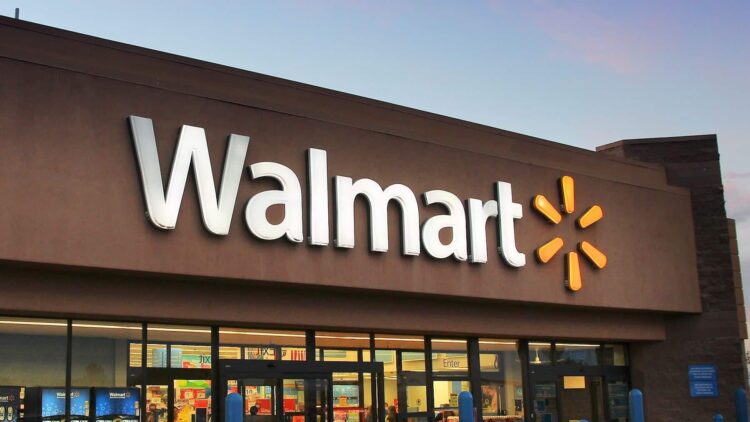
Popular retail chain, Walmart, remains a topic of interest as of late. The end of 2024 marked the closing of several locations for the company who was also facing backlash for the company’s decision to cut out its Diversity, Equity, and Inclusion (DEI) policy. This time, the retailer is in the spotlight after making an investment into automation.
What is Walmart’s plan of action?
Walmart has made the decision to sell its advanced systems and robotics business to long-time tech partner, Symbotic. This will be done in an attempt to improve online order pickup and delivery fulfilment, as part of the retailer’s initiative to boost online sales amidst a time of brick and mortar store closures.
Symbotic has been partnered with Walmart since 2017 to automate the retailer’s supply chain. Symbotic has now taken over the retailer’s robotics so as to accelerate automation technology development for its fulfilment operations. At present, 42 of Walmart’s regional distribution centers across the U.S. are using the technology company’s software and robotics platform.
In the release for this sale, Greg Cathey, SVP of transformation and innovation at Walmart, shared, “We anticipate the synergy between Symbotic’s expertise and our nearly decade-long relationship in innovating the supply chain technologies to elevate customer service and rapidly advance our in-store Accelerated Pickup and Delivery capabilities”.
As per the agreement, Symbotic will “build and deploy an advanced solution leveraging Symbotic’s A.I.-enabled robotics platform to offer Walmart customers greater shopping convenience through accelerated online pickup and delivery options at stores. Symbotic will engage in a development program funded by Walmart to enhance current online pickup and delivery fulfillment systems as well as to design new systems to meet the needs of current and future customers”.
How will it work?
The agreement between the two companies will span 12 years and the technology developed by Symbotic will will remain exclusive to the retailer. However, according to Symbotic CFO, Carol Hibbard, once the period of exclusivity passes, the company does expect to offer the technology to the entire retail market.
Walmart has spent the last decade committed to scaling the use of automation as part of its supply chain evolution. The retailer will be using a miniaturized automation system in the back room of stores to retrieve products to fill individual customer orders for pickup or last-mile delivery for its ADPs, according to Bill Boyd, chief strategy officer at Symbotic.
Perhaps the retailer’s decision to close down some stores stemmed from plans for automation. Fewer, yet more efficient brick and mortar store would certainly bring in a higher turnover than an excess of underperforming stores.
In 2024, Walmart had automated its distribution centers in Arizona and Arkansas, with plans to add five new automated distribution centers to its grocery supply chain. Distribution centers in Texas, Florida, New York, and Alabama were also the first to make use of autonomous forklifts.
What can we expect to see from this?
A key driving force of improvement for was noted as “the automation of our supply chain,” by Walmart EVP and CFO, John Rainey. The retailer has cut U.S. net delivery costs per order by 40% in the previous fiscal quarter. It truly does appear that the consistently growing reliance on automation technology is paying off in the form of delivery efficiency.
As per an email from October to Supply Chain Drive, the retailer has predicted to end off the year of 2025 with 65% of its stores to receiving merchandise from high-tech distribution centers.
Whilst the continual growth in reliance on automation is certainly a fascinating wonder to behold, one does begin to wonder how far down will automation drop employment rates. Are we on the precipice of fully robotic stores?