
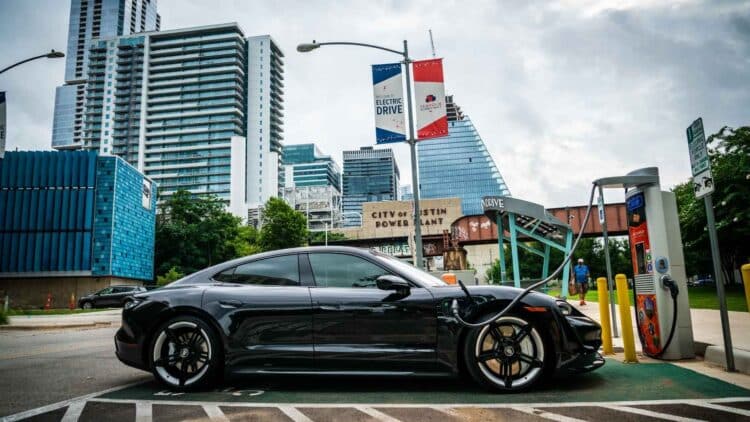
When you think of a Porsche, the first thought that comes to mind is speed and that loud growl of a powerful engine but did you know that this sportscar giant also makes electric cars?
Car makers across the industry have made investments towards the development of electric engines to power their vehicles as an environmentally sustainable alternative to petrol or diesel fueled combustion engines. The need for this evolution in recent years came about as a result of heightened signs of global warming and rapidly changing rates of climate change with fossil fuels being amongst the top contributors of pollution. Drivers began looking into alternatives and as such the rise of electric vehicles (EVs) came about. It took some time but most cities now have developed infrastructure to support and sustain the use of these types of vehicles as well. But where does this leave luxury sports vehicles like Porsche?
Is Porsche going electric or will they stick to the traditional combustion engine?
The German luxury car maker does indeed have electric cars available on the market — like the battery-powered Cayenne — and will continue to produce them, however, Porsche is not going fully electric and will continue to produce and develop traditional internal combustion engines for some of its pure combustion or plug-in powertrain models.
Whilst there has been enough demand for EVs to warrant its development and supporting infrastructure, many companies, including the Prancing Horse, have and still are facing difficulties in persuading motorists to opt for full electric models. Hence, this strategy change for the company.
Known as the Zuffenhausen icon, the Porsche 911 will maintain its well-known and loved design featuring an internal combustion engine for years to come. Previously, the automaker had shared that switching to electric on this type of car would prove to be too difficult. Although, there the new GTS model which is a hybrid version of the 911 and fortunately, still features the six-cylinder boxer.
On the 718 side of things, the Boxster and Cayman will soon be unveiled as all-electric sport cars. There is, however, a crisis at Northvolt which is the company that manufactures the batteries used by these two models. As such, the iterations that have been withdrawn, cannot make a return as they no longer comply with EU regulations Unece / R155 and R156. The question of whether or not the company will update them so as to continue the use of internal combustion engines in these coupes remains.
It had also been reported that the Macan model — a now fully electric mid-size SUV — was going to make the switch to a petrol engine, but the company swiftly debunked these rumors. The automaker revealed that the “PPE platform does not allow internal combustion engines and it would require the PPC, which is designed for non-electric models.”
The Cayenne range, a rather popular model, will offer motorists the best of both worlds as it will be available in both electric and plug-in hybrid iterations. The electric iteration will be available for drivers to enjoy as soon as 2025. The plug-in hybrid will be developed as an evolution of the current version.
Lastly, the Panamera model is on a similar track as the Cayenne in the sense that it will also have two separate iterations. Development of this model aims to produce a completely electric model, as well as an electrified version of the classic model.
Costs
Development, or rather the re-development of these existing models to accommodate for electric batteries can be a rather costly endeavor meaning that this decision will likely impact Porsche’s margins — and the company’s margins are already under immense pressure as things stand. Margins between 10% and 12% are expected by Porsche for 2025. The long-term target margin is much higher and sits at 20%. Additionally, the automaker will have to budget for the €800 million needed to develop these battery-powered vehicles.