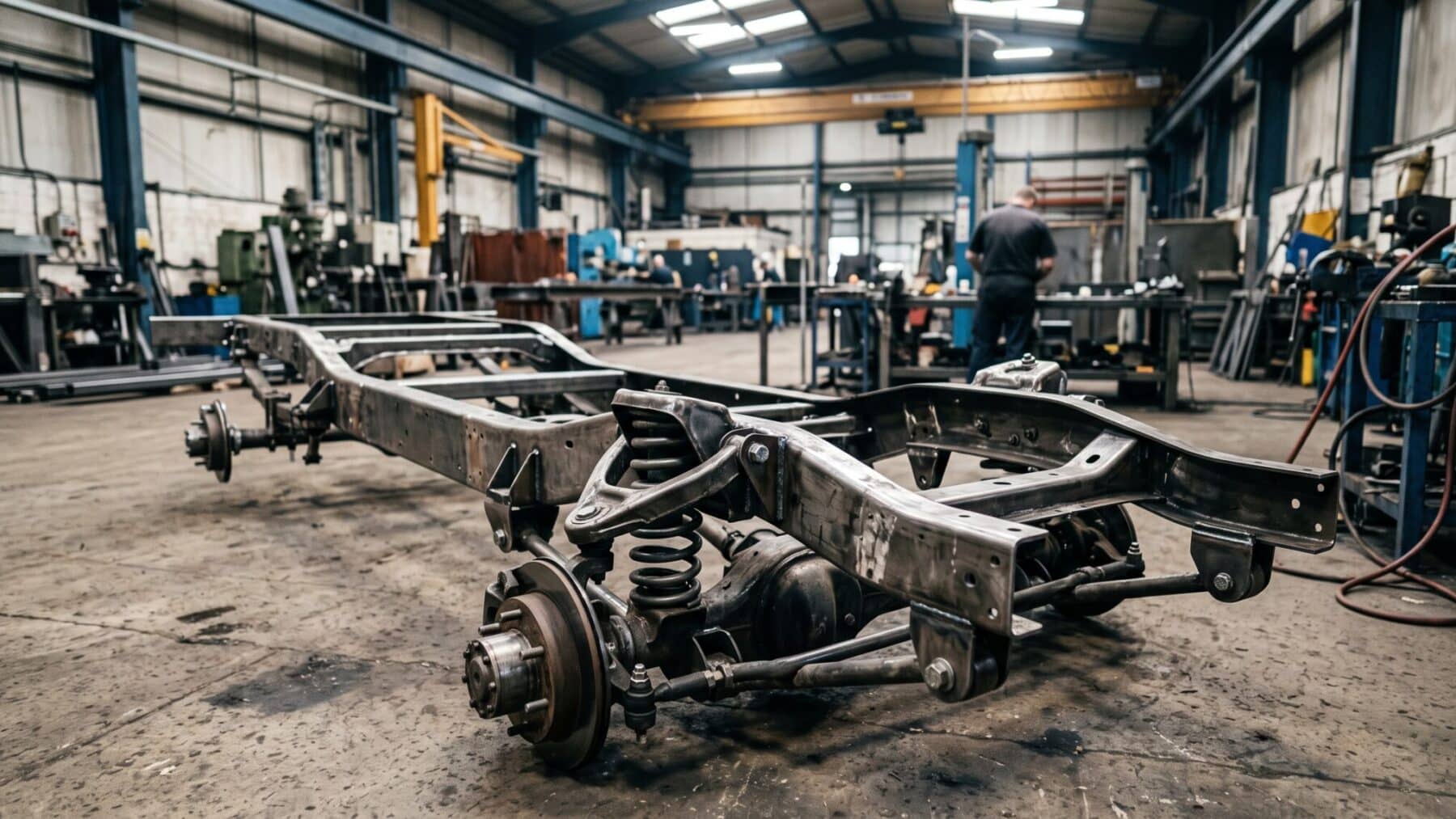
Volkswagen has officially placed body-on-frame pickup trucks and rugged SUVs on its North American product agenda, marking the German automaker’s most direct signal yet that it intends to compete in the segment that dominates US vehicle sales. The announcement came as part of a wider North American reset unveiled September 3.
What Volkswagen announced
Volkswagen is exploring body-on-frame pickup trucks and rugged SUVs as part of a dedicated North American strategy, the latest example of how carmakers are increasingly relying on region-specific approaches to confront trade tensions and varying consumer appetites.
In an official Volkswagen release, CEO Thomas Schäfer said “the brand will explore opportunities in the highly popular body-on-frame B-segment, including robust SUVs and pick-up trucks, as a potential component of Volkswagen’s future product portfolio.” Volkswagen declined to provide additional details on the size of its potential SUVs or trucks.
If Volkswagen literally means a B-segment pickup, it would be targeting something closer in size to the Ford Maverick, which currently has the small truck market almost entirely to itself. Analysts note, however, that Volkswagen’s description raises a question about size, since the “body-on-frame B-segment” label is unusual: B-segment typically refers to subcompact vehicles, and body-on-frame SUVs and pickups are not part of that category in the North American market.
Context: 42 years out of the US truck market
Volkswagen last sold a pickup in the US in 1984, but the brand now says it is formally studying one again as part of a wider North American reset unveiled September 3.
The original Volkswagen Pickup ran from 1979 to 1984 on the first-generation Rabbit’s unibody platform from the Westmoreland, Pennsylvania plant, far from the ladder-frame layout American truck buyers expect.
The Amarok, which is sold in Europe, Australia, New Zealand, South America, and Africa, has never set wheels in the US, even though it shares the platform with the Ford Ranger. That gap in Volkswagen’s American lineup has persisted even as pickups and body-on-frame SUVs consistently account for the country’s best-selling vehicle nameplates year after year.
The automaker currently holds roughly 3 percent of the US market, according to Motor Intelligence. The German carmaker is in the middle of a massive global overhaul, targeting a leaner lineup and production footprint to better compete with Chinese rivals.
Scout Motors and the platform question
Scout Motors is developing the Traveler SUV and Terra pickup on a body-on-frame platform. Initial production is targeted for 2027, with customers expected to begin taking delivery of new Scout vehicles in 2028.
That is where Scout Motors, the revived American off-road brand Volkswagen is funding, comes into the picture, though the companies have not tied the projects together publicly.
For Volkswagen-branded trucks, this matters because any modern truck would need suitable Volkswagen Group hardware. The Scout platform represents the most developed option within the group, but whether a Volkswagen-badged model would ride on it remains unconfirmed.
VW will also look to expand hybrid offerings for US customers, with the company stating it will “focus on those segments that show the strongest market demand and best meet the needs of customers and dealers in the region.” The Volkswagen Group announced it has appointed Marco Schubert as a member of the Extended Executive Committee for the North American Region, effective October 1, 2026, giving him responsibility for the overall management of the North American region.
What it means for the US truck market
The US pickup truck and body-on-frame SUV segment remains the most profitable in the global auto industry. Full-size trucks from Ford, General Motors, and Ram collectively account for the three best-selling vehicles in the country.
Volkswagen’s move, even if still exploratory, signals that the segment’s pull is now strong enough to draw in brands that have historically stayed away.
The VW announcement also arrives as rival automakers accelerate their own truck and SUV offensives, including electrified variants targeting buyers who want capability without a conventional powertrain. Meanwhile, the growing role of advanced electronics in new trucks has made software a central competition axis, with decade-long driver-assist partnerships now shaping which platforms automakers choose to build on.
No production timeline, confirmed architecture, or pricing has been released for a Volkswagen-badged truck. Volkswagen floats body-on-frame SUVs and pickups for North America with no confirmed platform, specs, or timing beyond a broad restructuring push, leaving the door open without committing to a launch date.
