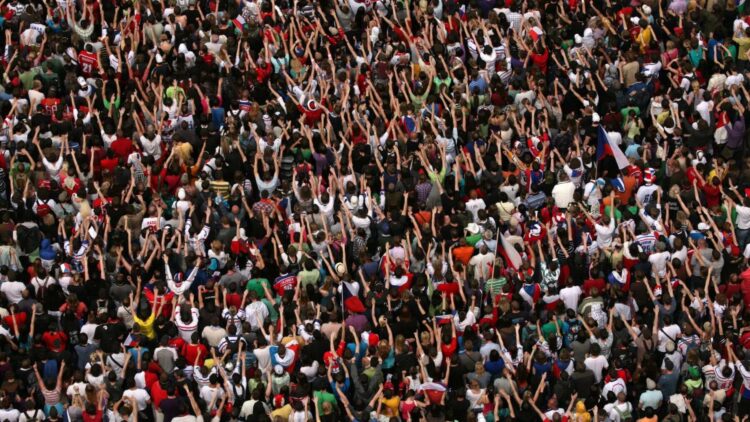
Forecasts for 2026 suggest that Bangladesh, Nepal, and Pakistan could face a rise in political unrest. Analysts point to a combination of slowing economies, persistent inflation, and highly contested elections as key factors increasing tensions. These elements create a fragile environment where political and ideological disputes may escalate, raising the likelihood of protests gaining momentum quickly.
Economic and electoral factors are fueling the risk of political unrest in the region
This concern is not random, nor does it arise out of nowhere. In Bangladesh, the recent political collapse is still felt by the population, especially among young people who find it difficult to enter the job market and distrust the country’s institutions. With elections scheduled for February 2026, the risk of tensions and confrontations increases even further, especially in large urban centers.
In Nepal, the economy is experiencing a slowdown after a year of often violent protests that left people dead and wounded. The upcoming elections in March raise concerns about renewed disputes between traditional parties accused of corruption and favoritism. The feeling of frustration, due to economic difficulties and allegations of public mismanagement, creates an even more favorable context for public protests.
Meanwhile, Pakistan is facing even broader difficulties. The 2025 floods generated an intense crisis in the country, leading to a cascade of consequences, primarily increased inflation and a higher cost of living. The government is under increasing pressure to adopt harsh measures to meet international financial demands, such as subsidy cuts and tax increases.
How the economy and lack of jobs increase social discontent
It may sound contradictory, but even though the region remains one of the fastest-growing in the world, that momentum hasn’t translated into enough opportunities for its young population. Bangladesh, Nepal, and Pakistan see millions of new workers entering the job market each year, yet the number of available positions falls far short of what is needed.
Many of the recent protests in South Asia have been driven by highly educated young people who lack domestic opportunities for economic growth. Studies indicate that dissatisfaction with job opportunities and frustration with political corruption are the main reasons for the prolonged demonstrations. In 2024 and 2025, waves of protests have already taken to the streets of Dhaka, Kathmandu, and Lahore, showing that the region is experiencing a continuous cycle of popular discontent.
Rising living costs and limited job prospects increase social frustration
Rising inflation is another factor contributing to increased public dissatisfaction. Although there have been improvements since 2023, the financial impact on people’s daily lives regarding basic services remains evident, and it is expected that when basic needs become more expensive, the tendency for citizens to turn against governments increases even further, intensifying the pressure for change.
Impacts on the population and businesses in the region
It is important to emphasize that these are predictions that may or may not materialize in 2026, but if new waves of protests are confirmed, the greatest effects are expected to be the disruption of the population’s daily lives, with road blockages, temporary network cuts, service suspensions, and difficulties in circulation. Foreign companies are not usually a direct target of the protesters, but their operations may be affected by logistical delays or temporary restrictions.
For Bangladesh, Nepal, and Pakistan, 2026 is shaping up to be a year of many possibilities, but also many of them worrying. The combination of election cycles, a weakened economy, and a dissatisfied youth creates a scenario that could further increase political instability in the region. While there are no signs of widespread collapse in the three countries, the context of unrest and social unhappiness is likely to persist.