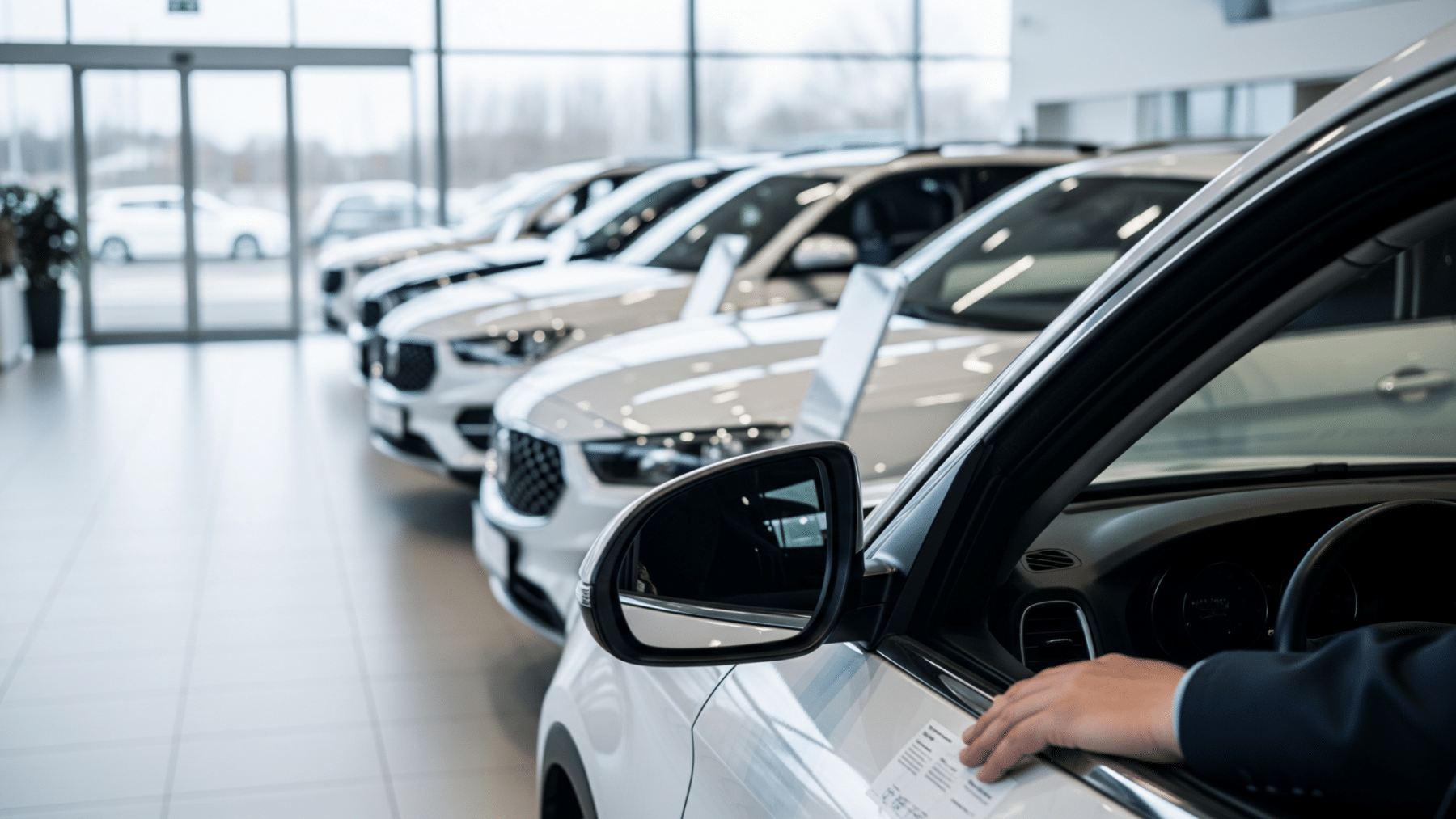
Walk into a new-car showroom this month and something invisible is pulling the industry in two directions at once.
Every number on the window sticker tells part of the story. The hidden part nobody is advertising tells the rest.
The discount war that almost nobody noticed starting
Industrywide incentive spending decreased for a second straight month, averaging 6.4% of average transaction price (ATP) in July, the lowest point since January. That decline, to $3,192 per vehicle on average, suggests automakers are facing less pressure to stimulate demand as inventory levels tighten.
That is a significant shift.
Automakers largely absorbed tariff costs and didn’t pass them on to consumers because they believed many of the tariffs would be temporary. That calculus is starting to change.
So they are doing the next best thing: letting the deals shrink instead of raising the sticker.
Automakers may introduce higher MSRPs, reduce incentives, or remove certain features to stabilize margins.
What the tariff math looks like behind the showroom wall
The Trump administration’s trade policies have cost automakers at least $35.4 billion so far, based on an analysis of automaker financial reports by Automotive News through the first half of March 2026.
Nobody has escaped clean.
Among global automakers, Toyota is expected to pay the most in tariff costs, projecting approximately $9.1 billion for its fiscal year, while the Detroit Big Three, General Motors, Ford, and Stellantis, collectively paid about $6.5 billion in tariffs during 2025. Several other manufacturers, including Mercedes, Subaru, Mazda, BMW, Volkswagen, Hyundai-Kia, Honda, and Nissan, each face bills exceeding $1 billion.
As GCN has reported, Detroit’s Big Three face billions in tariff costs in 2026, with automakers splitting sharply on how to respond to the pressure.
Automakers have adjusted pricing strategies in various ways, including incorporating costs into destination fees, which have reached elevated levels on 2026 models.
Instead of simply raising sticker prices, companies are quietly padding fees, destination charges, once a minor line item, now ballooning past $3,000 in some cases, a subtle way to shift the burden onto buyers without triggering the immediate backlash a straightforward price hike would generate. Unlike the vehicle price itself, which a buyer can negotiate with the dealer, destination fees are fixed charges that every buyer pays, and they do not appear in the headline MSRP that gets advertised.
The industry playbook everyone agreed on, except one
The broad consensus across the industry was simple: protect the bottom line, trim the deals, hope buyers keep coming.
Average incentives for bestselling passenger vehicles did climb in July, Ford’s Employee Pricing program significantly contributed to that rise, and as the program concluded, some discounts shifted from sale prices to reported incentive spending. As the promotion ended, Ford moved back toward the industry-wide pattern of pulling back on deals.
The average industry MSRP was $51,621 in July, up 1.9% year over year; the long-term average annual MSRP increase is 3.4%, suggesting new-vehicle price inflation continues to track below long-term averages.
That reality is already showing up at checkout. The average transaction price hit a 2026 high of $49,855 as the market tightened across nearly every brand.
New-vehicle sales in July were lower year over year by 1.5% and mostly flat compared to June, as the market slowed and buyers continued to migrate to lower-priced vehicles. That easing of demand reduces the need for deep discounts.
Almost every major automaker read the same script. Almost.
Nissan breaks ranks with a $4,005 per-vehicle incentive average
In July, as most rivals cut back on promotions, Nissan’s average incentives rose to $4,005 per vehicle, 14 percent higher than a year earlier.
That is the sharpest move in the opposite direction of any major automaker in the market right now, reported by Automotive News on August 13, 2026.
In August, Nissan is offering up to $5,000 in cash rebates on the 2026 Nissan Rogue Plug-in Hybrid and $5,000 on the 2026 Murano.
The strategy has roots in a dealer-network overhaul Nissan launched earlier this year.
Nissan revised its U.S. dealer incentive strategy for 2026 following mounting backlash from retailers who said the original program eroded profitability and imposed unrealistic sales targets. The automaker acknowledged the concerns and adjusted the program, eliminating the top incentive tier and lowering performance thresholds to make bonuses more attainable across the dealer network.
The updated 2026 plan lowers volume thresholds, increases per-vehicle payouts, and shifts bonuses to monthly calculations.
The changes come as Nissan’s U.S. retail market share increased to 4.9% in November, up from 4.2% a year earlier.
A two-track market is forming, and buyers on both sides need to move carefully
The split playing out right now is rare: one automaker is effectively subsidizing deals while competitors push costs the other way.
Buyers are continuing to migrate toward lower-priced vehicles, with subcompact SUVs, compact cars, and midsize cars posting year-over-year sales gains, while demand for full-size pickups, full-size SUVs, and several luxury segments softened.
For anyone shopping a new vehicle right now, the gap between brands has rarely been this wide in a single month.
Incentive spending in July fell to $3,192 per vehicle, the lowest point since January industrywide, though spending remained elevated in many of the best-selling segments, full-size pickup trucks at 8.6% of ATP, compact SUVs at 7.8%, and mid-size SUVs at 6.8%.
Nissan’s bet is a volume play: gain share while rivals protect margin.
The industry can only go so long without spreading out the tariff pain, which means the window for deals this generous, from anyone, may be shorter than it looks.
