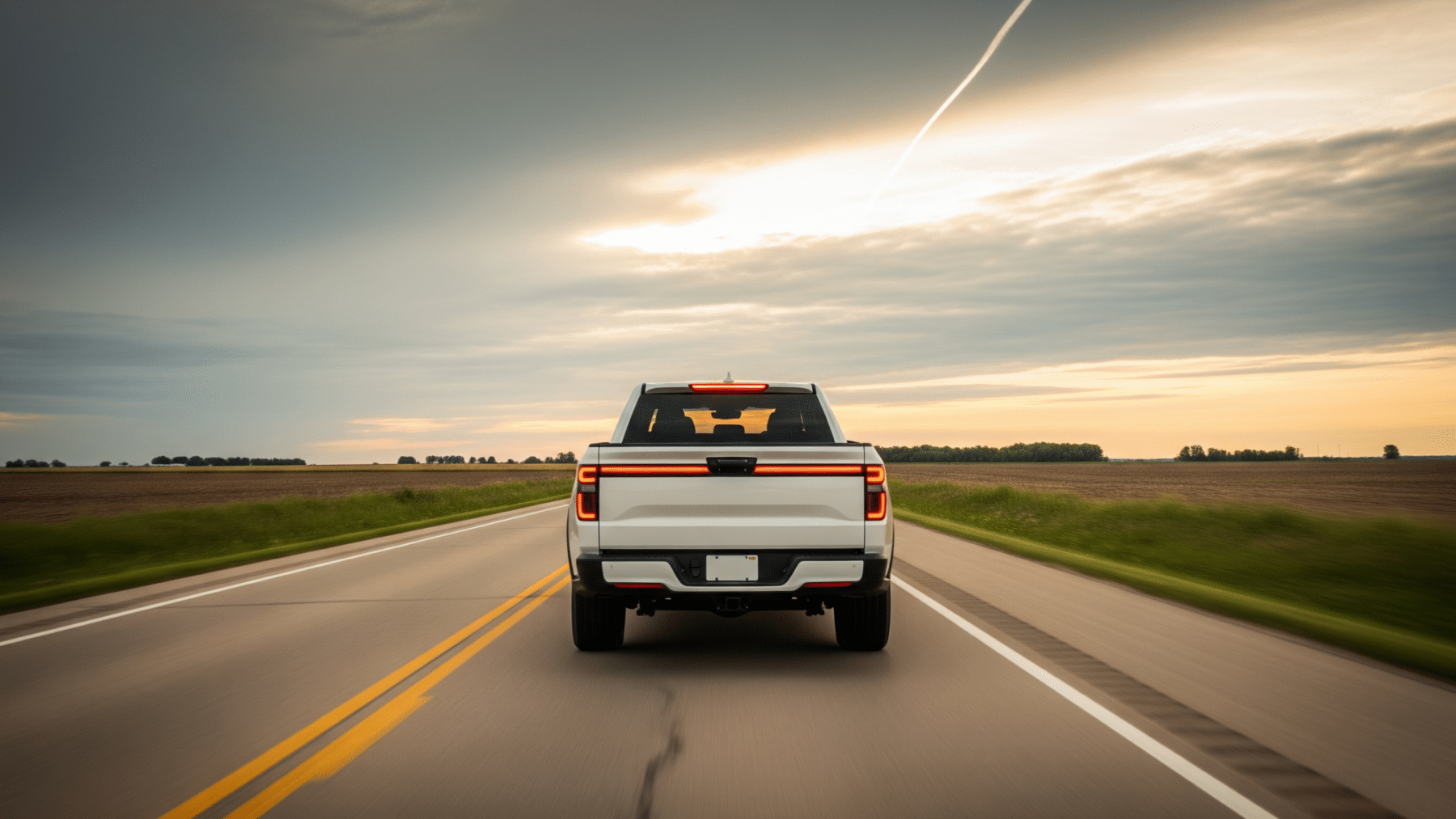
Most Americans drive fewer than 40 miles a day. So when a full-size electric pickup truck quietly rolled to a stop after covering more than a thousand miles on a single charge, it landed like a thunderclap in an industry that has spent years arguing over whether 300 miles is enough.
The number is not a concept car projection or a lab simulation.
It happened on real public roads, with a production truck you can buy right now, driven by a rotating cast of engineers in one-hour shifts across seven consecutive days.
How an idle conversation in a Michigan engineering bay turned into a week-long driving challenge nobody expected to win
What started as a casual conversation among a group of GM engineers in late 2024 quickly turned into a challenge.
With its EPA-estimated range of 493 miles, the Silverado EV Max Range Work Truck already led the pack among electric trucks.
But someone asked the obvious question: how far could it actually go?
The guesses started flying: 800 miles, 900, or maybe even 1,000.
And just like that, a weeklong mission was born inside one of America’s most storied automotive companies.
The route they chose and the speed that surprised everyone who heard it
The record-breaking drive took place on public roads near GM’s Milford Proving Ground in southeastern Michigan, with the final stretch completed on Detroit’s Belle Isle.
Engineers drove in one-hour shifts, fitting the challenge into their regular work schedules.
A group of around 40 employees drove a production Silverado EV WT, the base work-truck trim, on those same public roads over seven days to set the record.
The speed that made it possible sounds almost comically slow for a truck this capable.
The team found the Silverado EV’s most efficient cruising speed to be 20 to 25 mph, a realistic pace for neighborhood or city driving in southeast Michigan.
At that speed the truck was using nearly all of its battery power to move down the road, with minimal energy going to other uses.
No secret software changes. No drivetrain modifications. The physical adjustments the team made, adding a tonneau cover, inflating tires to their maximum rated pressure, removing the spare tire, and lowering the wiper arms, were all owner-manual-permitted moves any Silverado EV owner could replicate.
What the engineers changed, and what they left completely untouched
The truck’s hardware and software remained entirely stock and representative of a customer vehicle.
The efficiency-focused adjustments, optimized tire pressure and wheel alignment, a tonneau cover for smoother airflow, lowered wiper arms to reduce drag, and removal of the spare tire, stayed within acceptable limits established in the owner’s manual.
The team also performed the test in summer, when the ambient temperature is optimum for battery efficiency, and climate control was switched off for the duration.
The engineers drove with minimal hard braking and smooth acceleration, maximizing every kilowatt-hour that the massive battery pack could deliver.
Day by day, the total climbed past projections.
The original target was breaking the existing world record. Then the team reset its sights on something rounder and more audacious.
The world record the Silverado EV smashed, and by exactly how much it buried the previous best
GM set a new EV range record, exceeding 1,000 miles on a full charge in the 2026 Chevrolet Silverado EV Max Range Work Truck, which made history by going 1,059.2 miles on a full charge during a range test executed by the GM engineering team.
This feat breaks the world record of 749 miles set by the Lucid Air Grand Touring earlier that summer.
That gap, more than 300 miles, is wider than the entire EPA-rated range of dozens of electric vehicles currently on sale.
A world-record distance that could take you from Los Angeles to Portland, Oregon, and back toward Sacramento, without plugging in.
According to GM’s official newsroom, the record attempt was not just a challenge for bragging rights; it was a meaningful test feeding data directly into the work these engineers do every day, and every mile taught them something that will help shape how GM continues to improve and innovate in electric vehicles.
According to GM, the truck that set the record was then used for one more act: the Silverado EV was recharged and powered up a 3D printer that printed a trophy to honor the team’s accomplishment.
This kind of engineering ambition is also showing up in everyday specs. The Ram 1500 REV is targeting 2026 dealer arrival with 690 miles of combined range, signaling that the race to stretch EV range across the truck segment is only accelerating.
Why a record set at 25 mph still matters enormously for every EV buyer shopping today
The record conditions are not real-world driving. Nobody disputes that.
According to GM’s customer research, range is the number one purchase driver for potential Silverado EV buyers.
A test that proves the battery chemistry and drivetrain can hold 1,059 miles of energy in ideal conditions directly builds the engineering knowledge that pushes the next EPA-rated number higher.
The Lucid Air Grand Touring leads all passenger EVs at 512 miles of EPA-rated range, while the Chevrolet Silverado EV Max Range is the longest-range electric truck at 493 miles.
Both figures already dwarf what seemed possible just five years ago.
For shoppers watching the truck segment shift, the Silverado EV’s standard EPA range of 493 miles already tops every rival on the lot. If you’re comparing options, the 2026 Toyota bZ now offers 314 miles on a new 74.7-kWh battery, a figure that felt futuristic not long ago and is now the middle of the pack.
By demonstrating how over 1,000 miles of range is possible through owner-replicable adjustments and disciplined driving, without touching a bolt of the factory drivetrain, GM has raised expectations across the entire EV landscape.
The range ceiling just moved. And the engineers who moved it did it one quiet Michigan mile at a time.
