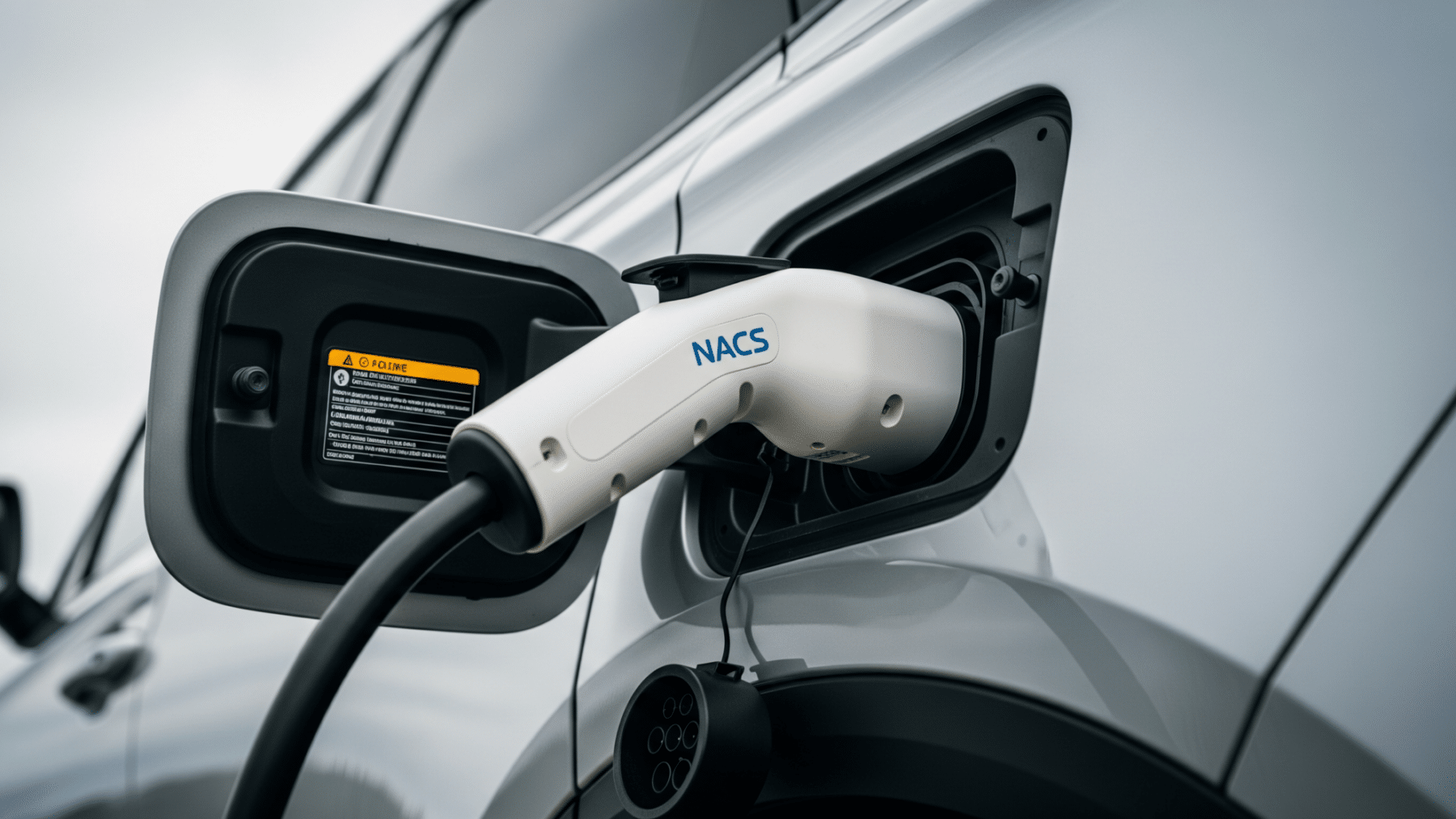
Toyota has upgraded its bZ electric SUV for the 2026 model year with a larger battery, a meaningfully longer range rating, and a new charging port standard that opens access to tens of thousands of additional fast-charging stations across the United States.
Bigger battery, longer range
Toyota announced the 2026 bZ Battery Electric Vehicle from Plano, Texas on May 13, 2025, advancing the model in range, output, charging performance, and vehicle design.
The headline change is a new pack option: a larger lithium-ion battery with a higher total capacity of up to 74.7-kWh, equipped on a newly available XLE Front-Wheel-Drive Plus model, as well as the XLE All-Wheel-Drive and Limited grades.
Models equipped with the new battery carry an EPA-estimated range rating of up to 314 miles on a full charge on the XLE FWD Plus. A 57.7-kWh battery remains available on the XLE FWD model, rated at an EPA-estimated 236 miles, giving buyers a lower-cost entry point into the lineup.
The 314-mile figure is a notable jump for a nameplate that previously topped out at 252 miles on front-drive versions. It puts the bZ within range of rivals that have long held a distance advantage in the compact electric SUV segment.
The range gain matters commercially as well as technically. A new battery pre-conditioning function is equipped on all models, designed to bring the battery to an optimal temperature for DC fast charging, and can be manually activated or programmed in advance based on location. That capability can enable faster charging in colder climates, a persistent weak point for many EVs that Toyota is directly addressing heading into the model year.
NACS port and faster AC charging
Alongside the battery upgrade, Toyota made a key infrastructure change. The 2026 bZ comes equipped with a North American Charging System (NACS) charging port, opening access to thousands of DC fast-charging stations nationwide.
The NACS connector, originally developed by Tesla and now adopted across the industry, unlocks the Tesla Supercharger network for bZ owners without an adapter.
The model supports Level 1 and Level 2 AC charging through a higher-capacity 11-kW on-board AC charger, and DC fast-charging capability that can charge the battery from 10% to 80% in about 30 minutes under ideal conditions. The on-board AC charger is up from the prior model, increasing AC charging capacity and cutting overnight top-up times at home and at workplace chargers.
The NACS move aligns Toyota with the direction the broader industry has taken. Ford, GM, and Rivian have all committed to the same standard, and the shift has accelerated as more drivers expect plug compatibility across networks without carrying multiple adapters.
Where the bZ fits in the 2026 EV market
The 2026 bZ update arrives as automakers compete aggressively on EV battery range. The 2026 model year brings longer range across several brands, with the Lucid Gravity Grand Touring at an EPA-estimated 450 miles, the Rivian R1S at up to 410 miles EPA on the Dual trim with the Max pack, and the Hyundai Ioniq 9 at an EPA-rated 320 miles in AWD form.
At 314 miles, the bZ sits in the more affordable, mainstream tier of that range race, where the competitive pressure is arguably strongest.
Toyota’s timing is deliberate. The company has faced sustained criticism for moving slowly on battery electric vehicles compared to Korean and American rivals. A refreshed rival electric SUV recently cleared 17,500 U.S. sales in six months and leapfrogged ten competing brands, a result that illustrates how quickly a credible range number and updated hardware can shift buyer behavior in the segment.
The 2026 bZ also receives exterior design revisions and, on higher trims, 338 combined horsepower from its dual-motor all-wheel-drive system. The charging port is located on the front right side of the vehicle, and the model comes with a dual-voltage charging cable.
The base 57.7-kWh XLE configuration starts at $34,900. Toyota has not announced pricing for all trim levels of the 2026 model year updates.
What comes next for Toyota EVs
Toyota has confirmed it is developing solid-state battery technology and plans to launch BEVs equipped with all-solid-state batteries between 2027 and 2028. A first-generation solid-state design is targeted to deliver a charge time of just 10 minutes for a 10%-80% charge and up to 621 miles of range on the European WLTP testing cycle. A second-generation design, to follow after the 2027, 2028 launch, is targeted to reach 745 miles on the WLTP cycle.
Toyota originally planned to introduce solid-state batteries in hybrids, with an executive saying that would happen by 2025, but the automaker has since shifted focus to EV applications in the slightly later 2027, 2028 timeframe.
For 2026, however, the story is the production-ready upgrade already headed to dealerships: a larger pack, a longer range estimate, faster charging hardware, and the network access that NACS brings. Those are the practical variables that move mainstream buyers, and Toyota is betting the bZ’s revised spec sheet is now strong enough to compete for them.
