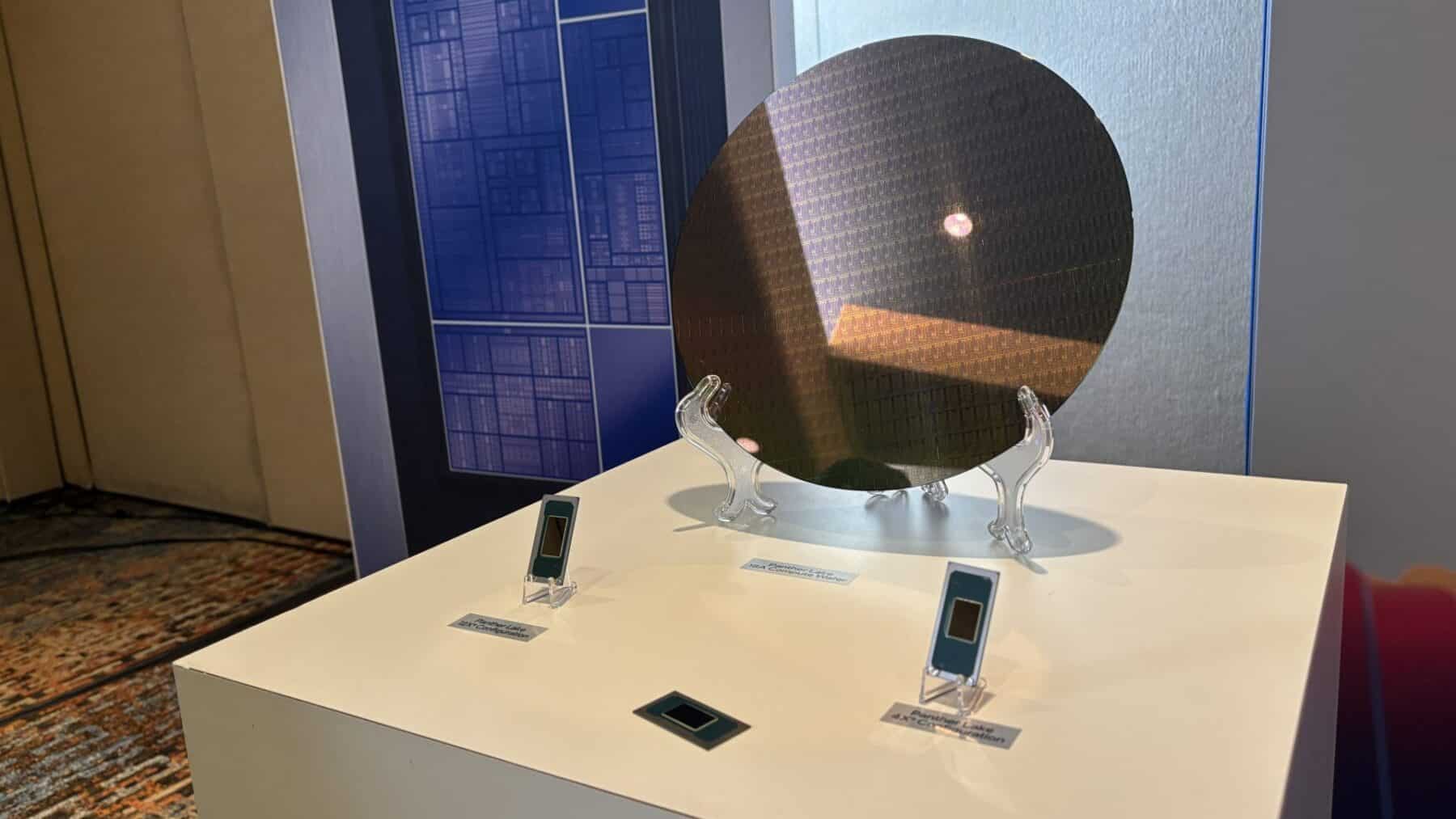
Intel has signed its first external customer for its advanced 18A chip manufacturing process, a milestone the company has been chasing for years as it tries to rebuild a contract chipmaking business to rival Taiwan Semiconductor Manufacturing Co.
Intel CEO Lip-Bu Tan disclosed the deal on November 18 at the TomorrowX Summit in Austin, Texas, without naming the customer.
A long-sought foundry win
Tan told attendees that “Resilient supply on the foundry is very important,” and “And then 18A, I’m involved in production and we just signed the first customer,” framing the signing as proof that outside chip designers are willing to trust Intel’s newest manufacturing node, according to CNBC’s report.
The outlet described the moment as a milestone in Intel’s five-year effort to take on chip manufacturing leader Taiwan Semiconductor Manufacturing Co.
Intel technology chief Pushkar Ranade clarified on social media that the customer has signed up for Intel’s 18A-P manufacturing process node, which went into risk production in June , according to reporting from The Daily Upside.
Intel has not disclosed the customer’s identity, order volume or expected revenue from the agreement.
Tan also said at the summit that 18A yield was “now at 70%,” a figure he tied to the new customer win as evidence the process is maturing, though he didn’t name the customer or say which measure of yield he meant .
Analysts following the stock said the unnamed buyer could be a major chip designer or a cloud company developing its own processors, though Intel has not confirmed that speculation.
Microsoft expands Azure partnership same day
Intel paired the customer announcement with a separate deal involving Microsoft. The two companies said in a joint newsroom announcement that they announced an expansion of their decades-long collaboration under a long-term agreement to advance select areas of Azure infrastructure for growing cloud and AI demand .
Microsoft is the first company to announce use of Intel Foundry’s EMIB™ (Embedded Multi-die Interconnect Bridge) advanced packaging technology for Azure first-party silicon. EMIB links separate chiplets together inside a single package, an approach increasingly common in large server and AI processors.
Intel’s announcement said the companies can combine “the flexibility of heterogeneous integration with the manufacturing scale required for the AI era” through use of the EMIB packaging capabilities.
The agreement confirms multi-year Intel Xeon supply capacity, including instances of next generation server CPUs codenamed Diamond Rapids, and expands collaboration across the Azure roadmap and Intel-based Azure hardware systems.
The companies did not disclose which specific chip will use EMIB packaging, nor a production timeline or pricing.
Why the timing matters
The announcements land as demand for AI chip manufacturing capacity remains tight industrywide, pushing some customers to look beyond TSMC’s dominant position.
Chip packaging has become as critical a bottleneck as transistor fabrication itself, since modern AI processors increasingly stitch together multiple chiplets rather than relying on a single monolithic die, a dynamic also visible in how Lambda connects thousands of GPUs with high-speed switches to scale AI data centers.
Intel shares climbed in the hours after the announcement, with reported gains ranging from roughly 2.6 percent in after-hours trading on November 18 to around 5 percent in Thursday’s premarket session, before the stock resumed a broader decline in the following days amid a sell-off in chip stocks that also hit Nvidia, AMD and other semiconductor names.
Intel has staked much of its turnaround under Tan on 18A succeeding commercially, after years of delayed nodes and manufacturing setbacks that let TSMC pull ahead in advanced chipmaking.
The foundry business remains a small part of Intel’s overall revenue today, but executives have said that landing outside customers, even without public names attached yet, is a signal that its newest factories can compete on both cost and performance.
Enterprise buyers evaluating new chip suppliers increasingly weigh software and tooling ecosystems too, a trend also shaping markets like enterprise coding spending where a handful of companies now dominate.
Intel has not said when it expects to name the mystery 18A customer or disclose order specifics, leaving investors and rivals to watch for confirmation in coming quarterly reports.
