Hold a printed photograph at arm’s length and count every hair on the subject’s head.
Now imagine each individual strand rendered in a file so large it strains a laptop’s RAM. That is roughly what 67 million pixels does to a single frame. The camera that captures it also fires those frames thirty times every second. And until this spring, no full-frame stacked-sensor camera had ever done both at once.
So how does the physics actually allow it?
How stacking the sensor layers makes 30fps at 66.8 megapixels physically possible
A conventional image sensor reads its pixels one row at a time, like a printer head sweeping down a page. At very high resolutions, that sweep takes long enough that a fast-moving subject appears subtly warped, a phenomenon called rolling shutter that has haunted high-resolution cameras for years. The fix costs speed, and the speed fix costs detail.
The newly developed 66.8-megapixel Exmor RS back-illuminated sensor is the highest-resolution full-frame, fully stacked sensor available. Stacking works by bonding the pixel layer directly onto a second silicon die that handles all the data processing, so the electrons generated by light never have to travel far. The result is a dramatically shorter sweep time, approximately 5.6 times faster readout than the previous generation, short enough to make an electronic shutter behave like a mechanical one at high burst rates.
Sony also installed a dedicated processing layer on the sensor so the camera can fuse high and low ISO outputs in real time, a feature called Dual Gain. That extra processing layer handles noise reduction and tone mapping simultaneously, rather than leaving those tasks to the main engine afterward. Until now, photographers had to choose speed or resolution. That bargain is over.
What 66.8 million pixels actually looks like in everyday use
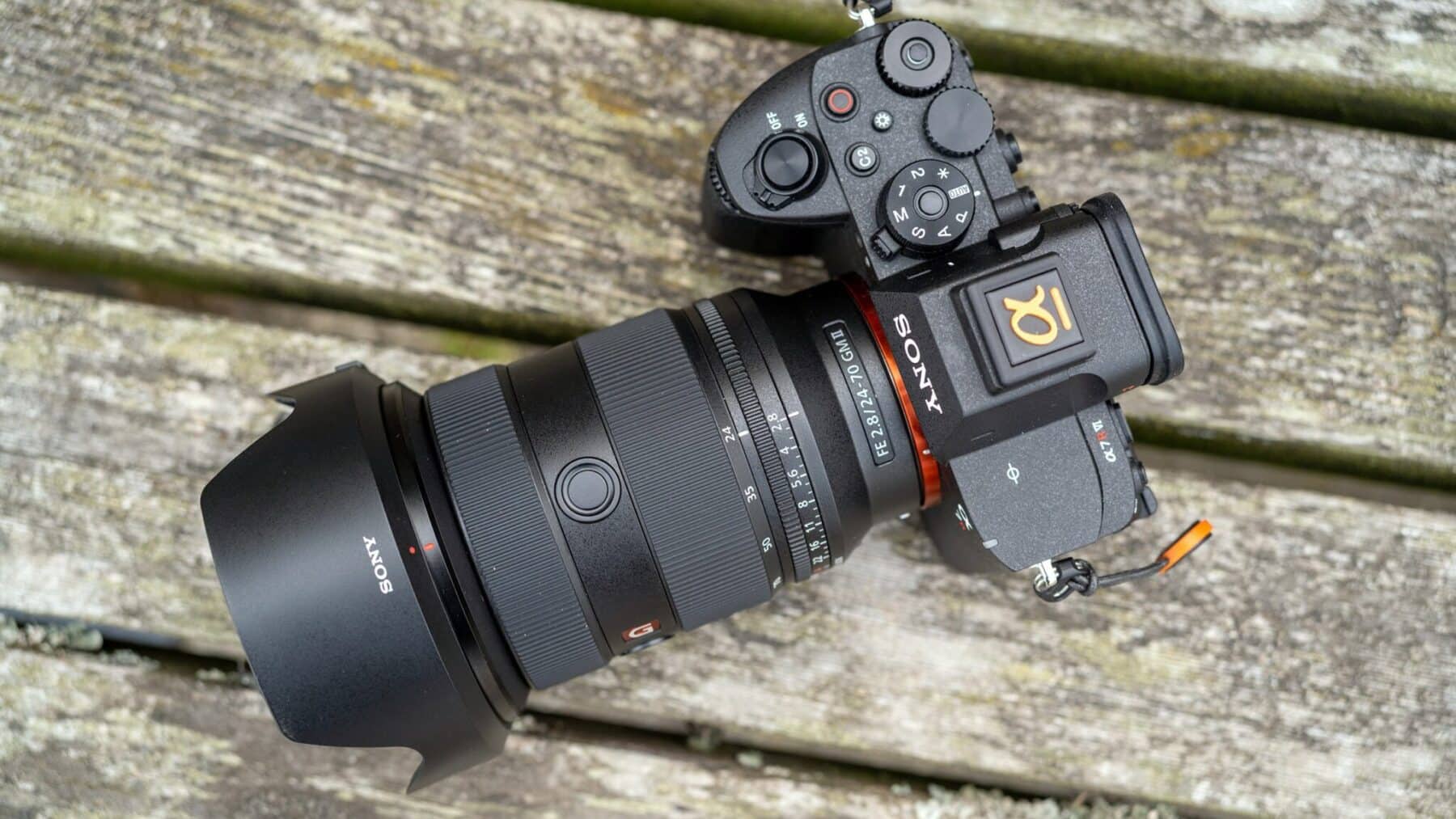
Sony has always offered buyers a choice with its full-frame Alpha cameras: speed or resolution, but not both. The a7R VI ends that trade-off, shooting at 30 frames per second while delivering more detail than any other full-frame stacked-sensor camera, changing a dynamic that has defined the mirrorless category since its beginning.
A compositing mode called Pixel Shift Multi Shooting shifts the sensor while making 4 or 16 consecutive exposures, acquiring approximately 265.8 megapixels of information. For a landscape or studio photographer working from a tripod, that figure is almost incomprehensible: enough resolution to cover a billboard at close reading distance without any visible pixel structure.
Video capability matches the still-photography ambition. The camera records 8K at 30 frames per second with an approximately 1.2x crop. Full-width 4K at 120 frames per second is available when a dedicated field-of-view priority setting is enabled, though that setting trades away in-camera noise reduction. Because the sensor reads out fast enough to reduce rolling shutter compared to its predecessor, handheld footage is noticeably more stable than on the camera it replaces.
Where the verified numbers come from and what they mean against the previous record
Sony Electronics announced the Alpha 7R VI on May 13, 2026, pairing the 66.8-megapixel stacked Exmor RS sensor with the new BIONZ XR2 engine. The camera launched at $4,499.99 and began shipping in June 2026. The previous generation topped out at around 10 frames per second.
Sony tripled the burst rate to 30 frames per second with blackout-free continuous shooting and no reduction in file size. The a7R VI also extends the series’ resolution record by nearly six megapixels over its own previous high. The stacked architecture was the only engineering path to breaking both records simultaneously.
For anyone familiar with how wearable sensors gain accuracy by pressing hardware closer to the signal source, the stacked camera approach works on a similar principle. Layering the processor directly beneath the pixel layer collapses the distance data must travel, and that shortened path is where the speed gain lives.
Where the camera falls short and what the stacked design still cannot fix
The sensor is stacked but carries no DRAM memory layer. Adding DRAM would have consumed die space and substantially raised cost, so the omission is deliberate. It means rolling-shutter performance, while much improved over the a7R V, does not match the near-zero distortion of Sony’s flagship sports bodies, which do carry an integrated DRAM buffer layer.
Sony rates the camera for 120 minutes of 4K-120 recording in a 77-degree Fahrenheit room. Sustained 8K in a warm space may force an automatic resolution drop. Thermal management remains the stubborn engineering problem that no amount of stacking has yet solved for compact mirrorless bodies.
The price is a genuine barrier. At $4,499 for the body alone, the lenses required to match its pixel density push total system cost deep into professional territory. Compare that to a screenless fitness tracker at $99, and the gap in intended audience is plain. This is a tool aimed squarely at working photographers and videographers, not casual buyers.
What comes next and why the resolution ceiling now looks much higher
The significance of this release is less about the number itself and more about what the stacked architecture has unlocked. The former trade-off between speed and resolution is structurally over. Every future high-resolution body from any manufacturer will now be measured against 30fps and 66.8 megapixels as the new baseline.
A new low-light focused body is being reported for later this year, suggesting the stacked sensor architecture will migrate across the lineup. That pattern, a breakthrough feature debuting in one high-end body and then filtering down, is exactly how the previous generation of fast autofocus spread through the entire Alpha range.
For the broader market, the development matters well beyond photography. Stacked sensor technology underpins imaging hardware in high-end phones, security systems, and automotive cameras. The engineering advances wrung from packing 66.8 million pixels onto a chip the size of a postage stamp will eventually reach devices costing far less than $4,499, touching far more people than any single camera body ever will.
