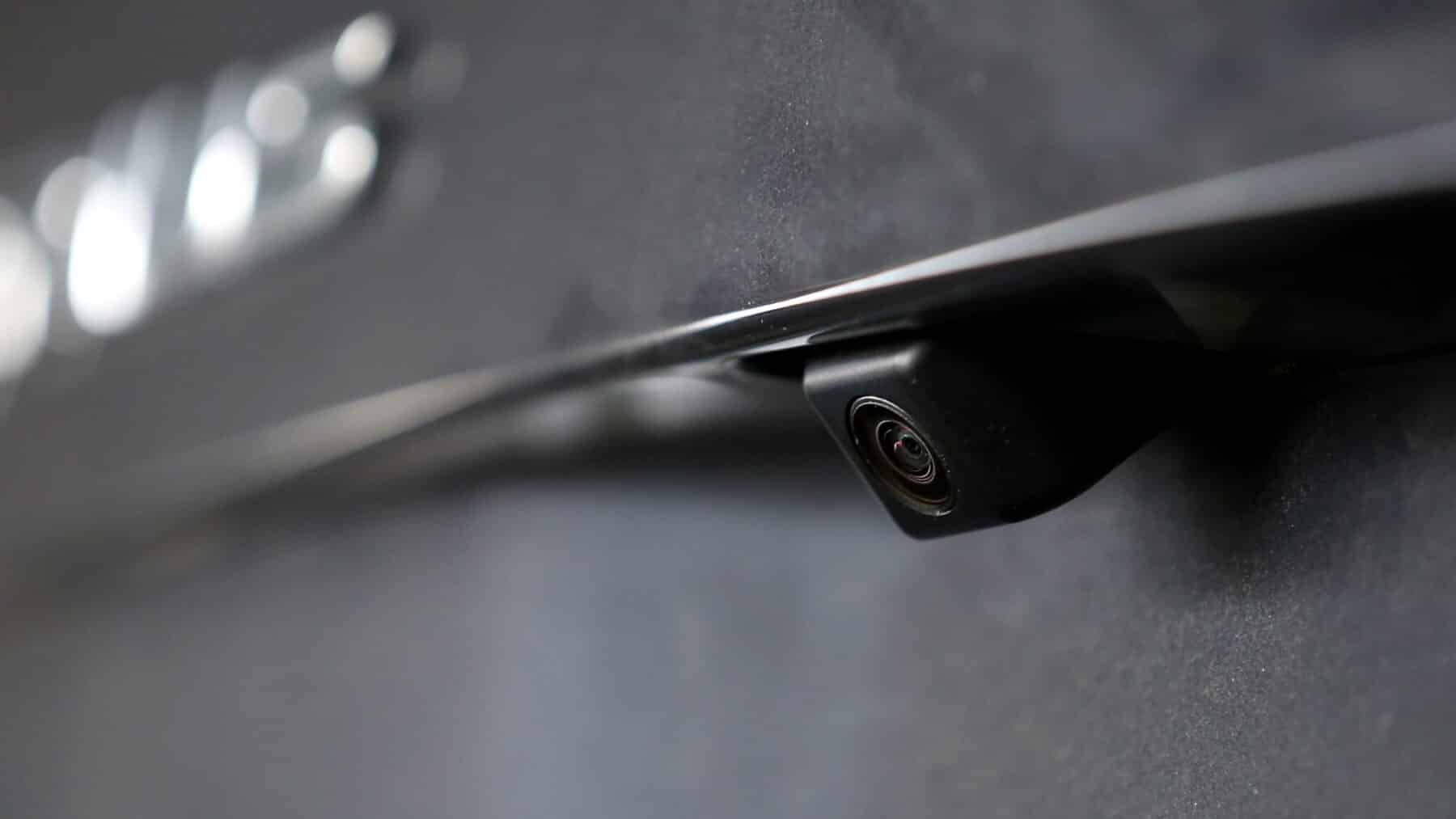
A driver shifts into reverse and waits for the screen to catch up, watching a blank gray rectangle where the view behind the bumper should already be.
That pause lasts only a few seconds. But a few seconds is exactly how long it takes to back into a curb, a cart, or a kid on a bike.
Automakers built an entire safety mandate around that little screen. What nobody promised was that the chip running it could simply shut itself off.
Why the screen goes dark the instant it gets too warm
The part doing the work behind many rearview displays is a small processor bundled into what engineers call an infotainment control module, often mounted somewhere warm, like behind a dashboard vent or near an engine bay. These compact processing units were never designed purely as safety hardware.
They also run navigation, audio, and phone pairing, and that extra workload generates heat the chip was not built to shed quickly. When the module’s internal temperature climbs too high, a built in safeguard trips and cuts power to protect the silicon from permanent damage.
The trouble is that the same shutdown that saves the chip also kills the camera feed, and the module has no separate channel to keep the rearview image alive once it decides to protect itself. So a feature required by federal rule, treated by shoppers as a permanent dependable guardian, can vanish for the exact reason the chip was built.
That single design tradeoff, convenience and cost savings from one shared chip instead of a dedicated safety-only processor, is the root mechanism behind one of the most common patterns in a long and growing list of recalls.
A problem now showing up across nearly every major brand
The scope is no longer a one-brand story. Stellantis subsidiary FCA US has issued a voluntary recall for 848,511 vehicles due to a radio software error that may prevent the rearview camera image from appearing on the vehicle’s infotainment screen when shifting into reverse , with roughly 955,000 vehicles affected worldwide once Canadian units are included.
The recall population includes model year 2026 and 2027 trucks and SUVs, including versions of the Chrysler Pacifica, Dodge Charger, Ram 1500 and 2500, and Jeep Cherokee, Grand Cherokee, Wagoneer and Wrangler. Meanwhile a separate automaker’s trucks and SUVs have hit a related wall from a different direction entirely.
Ford’s version centers on a module engineers call the accessory protocol interface module, and Ford says the rearview camera image appears blank if the accessory protocol interface module overheats and shuts down . That phrasing, repeated across multiple federal filings, confirms a mandated safety feature is riding on hardware never hardened against its own heat.
Other versions of the fault trace back further still, into the camera itself rather than the dashboard module, or into separate software bugs that can flip or freeze the image. Those distinct causes are a reminder that overheating chips are a major recurring thread in these recalls, not the only one.
The scale, confirmed in federal recall filings and independent tallies
None of this is a fringe complaint traded on owner forums. A Bloomberg analysis has found that 21 million vehicles have been recalled for faulty backup cameras since 2018 , the year the federal camera mandate took effect nationwide.
Throw in other covered vehicles such as RVs and small buses and the figure reportedly approaches 28 million. Federal paperwork shows a handful of causes surfacing again and again across different model years and suppliers.
The huge recall figure does not mean that 21 million vehicles definitely had cameras that failed in the same way; others involve the camera itself , while still others trace to connector corrosion or software bugs rather than heat. That spread, buried inside federal filings, shows how several separate manufacturing and design shortcuts can each touch millions of driveways on their own.
Chip based thermal shutdowns tell a parallel story. The Accessory Protocol Interface Module could overheat, reaching temperatures as high as 105°C (221°F) and shut down, causing the rearview camera to stop displaying images as intended. Our earlier look at camera-only driver assist software found a related pattern, where cameras that cannot see past glare or fog create the same kind of blind spot drivers never expect.
Where the fix runs out and owners are still stuck waiting
Even when an automaker identifies the fault, the remedy is not always instant. Many of these recalls are repaired with a simple over the air patch.
Others require a dealer visit and a backordered part, leaving a truck or SUV technically recalled for months before the shop can actually swap the hardware. Worse, the fixes so far mostly patch symptoms rather than replace the shared chip architecture that caused the shutdown in the first place.
A software update can make the module shut down and recover faster, or warn the driver sooner, but it does not give the processor a dedicated cooling path or a safety-only backup channel. That matters because regulators have already raised the bar on what a backup camera has to do.
Updated federal camera standards took effect this year, with reported requirements including improved low light visibility, display latency under 200 milliseconds, expanded field of view, and a glare recovery standard. Tougher specifications mean more processing demand on the same shared chip, which could make heat related shutdowns harder to engineer away.
What it means for anyone buying a car with a screen they trust
None of this means backup cameras make cars less safe than before the mandate. They still catch far more hazards than mirrors alone ever did, and automakers insist most of these recalls have produced no confirmed injuries.
Still, the lesson for a buyer is concrete. A screen showing a live feed is not a guarantee, it is a chip doing a job, and chips have limits a sales brochure never mentions.
Checking a vehicle identification number against the federal recall database before buying, something also flagged in our piece on incomplete accident histories, now applies just as directly to camera hardware.
The broader supplier fixes are still underway, with automakers and parts makers reportedly testing separate thermal paths and sturdier connectors for future models. Until that hardware ships, the safest habit remains the oldest one: glance at the mirrors too, because the chip behind the screen is still learning to handle the heat.
