Picture a steel tube the size of a shipping container, bolted to a triangular weight on the seafloor, humming with 864 servers while the Atlantic slides over it in the dark.
Nobody inside. No maintenance crews, no cooling towers, no fresh water being drained from a nearby aquifer.
Just a cylinder of computing power, sitting 117 feet below the surface off the coast of Scotland, doing its job, and, it turned out, doing something else entirely that nobody planned for.
Why engineers started thinking about sinking computers in the first place
A standard land-based data center can consume millions of gallons of water a day purely for cooling, a figure that scales with the size of the facility and the heat density of its servers.
According to the International Energy Agency, data centers consume around 1 to 1.5 percent of global electricity, of which cooling systems alone can account for up to 30 to 40 percent of a facility’s total energy draw, the single largest controllable load in most buildings.
That single number is what made a former US Navy submariner at Microsoft ask a question that had not been seriously answered before: the ocean is cold, it is enormous, and it is free.
What it actually took to put a data center on the bottom of the sea
The first proof-of-concept vessel ran on the Pacific seafloor from August to November 2015, a 105-day trial off the California coast that confirmed servers could survive and operate underwater.
In June 2018, Microsoft deployed the Northern Isles, a container-sized datacenter filled with 864 servers, 117 feet beneath the Orkney Islands’ coastal waters.
The vessel housed 12 racks of servers with FPGA acceleration and 27.6 petabytes of disk, enough storage for about 5 million movies.
The site was chosen for its renewable energy grid powered by wind, solar, and experimental marine energy at the European Marine Energy Centre.
The air inside was replaced with dry nitrogen, making fires impossible. Zero oxygen. Zero humidity. Zero human hands accidentally nudging a cable.
Two years of silence, and then the engineers came back for it
For two years the datacenter operated in complete isolation, processing real Microsoft computing workloads the entire time.
After the start of the COVID-19 pandemic, it was employed to process COVID-19 research via Folding@home.
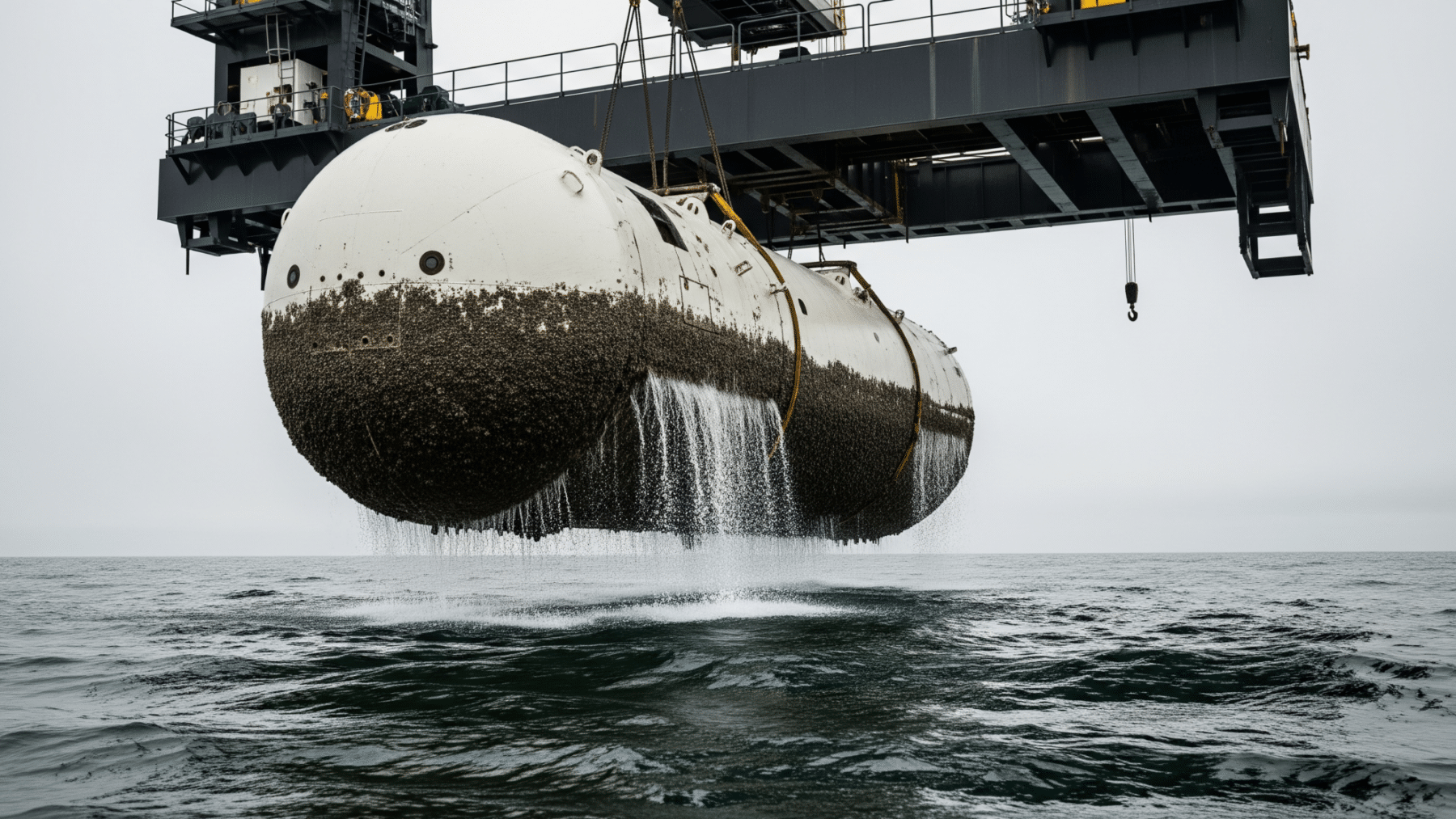
In July 2020, the vessel was lifted out of the water. When it broke the surface, it was not the gleaming white cylinder that had gone in.
The servers inside showed a failure rate of one-eighth that of the land-based control group, attributed to the stable temperature and the removal of oxygen and humidity that causes corrosion.
But the engineering story was not the story that stopped people.
The living reef that grew on a Microsoft data center
This is the part that Microsoft’s own engineers documented with genuine surprise.
Two years underwater allowed a thin coat of algae and barnacles to form on the steel tube, and sea anemones grew to cantaloupe size in the sheltered nooks of the ballast-filled triangular base.
Marine life, crabs, fish, and other creatures, began gathering around the vessel not long after deployment.
The process of colonization by marine organisms, called biofouling, starts with single-celled creatures, which are followed by larger organisms that feed on those cells, and so on up the food chain.
The engineers had been focused on whether the heat exchangers would get clogged.
The sheer ecological richness of the structure caught them off guard.
Microsoft also built a computer vision solution to detect marine life seen by cameras mounted on the datacenter, monitoring wildlife around the vessel throughout its deployment. That same impulse to harness human-generated data now shapes over $200 million in AI contracts.
What the seafloor experiment is teaching the AI industry right now
The pressure on land-based data centers is intensifying. Researchers have begun documenting how dense concentrations of data centers generate localized heat islands, warming the surrounding land and affecting communities near major facilities.
Other countries are following the concept. A $226 million underwater data center built by HiCloud Technology in partnership with the Chinese government and state-backed telecoms operates off the coast of Shanghai, powered by offshore wind.
The core lesson from the Project Natick program is straightforward: datacenters can be operated and kept cool without tapping freshwater resources vital to people, agriculture, and wildlife.
The servers that ran for two years in the dark, growing a garden of anemones on their hull, showed that the most disruptive idea in computing infrastructure might also be one of the gentlest on the planet.
The next time you wonder where the cloud actually lives, the honest answer might be: somewhere a crab is already calling home.
