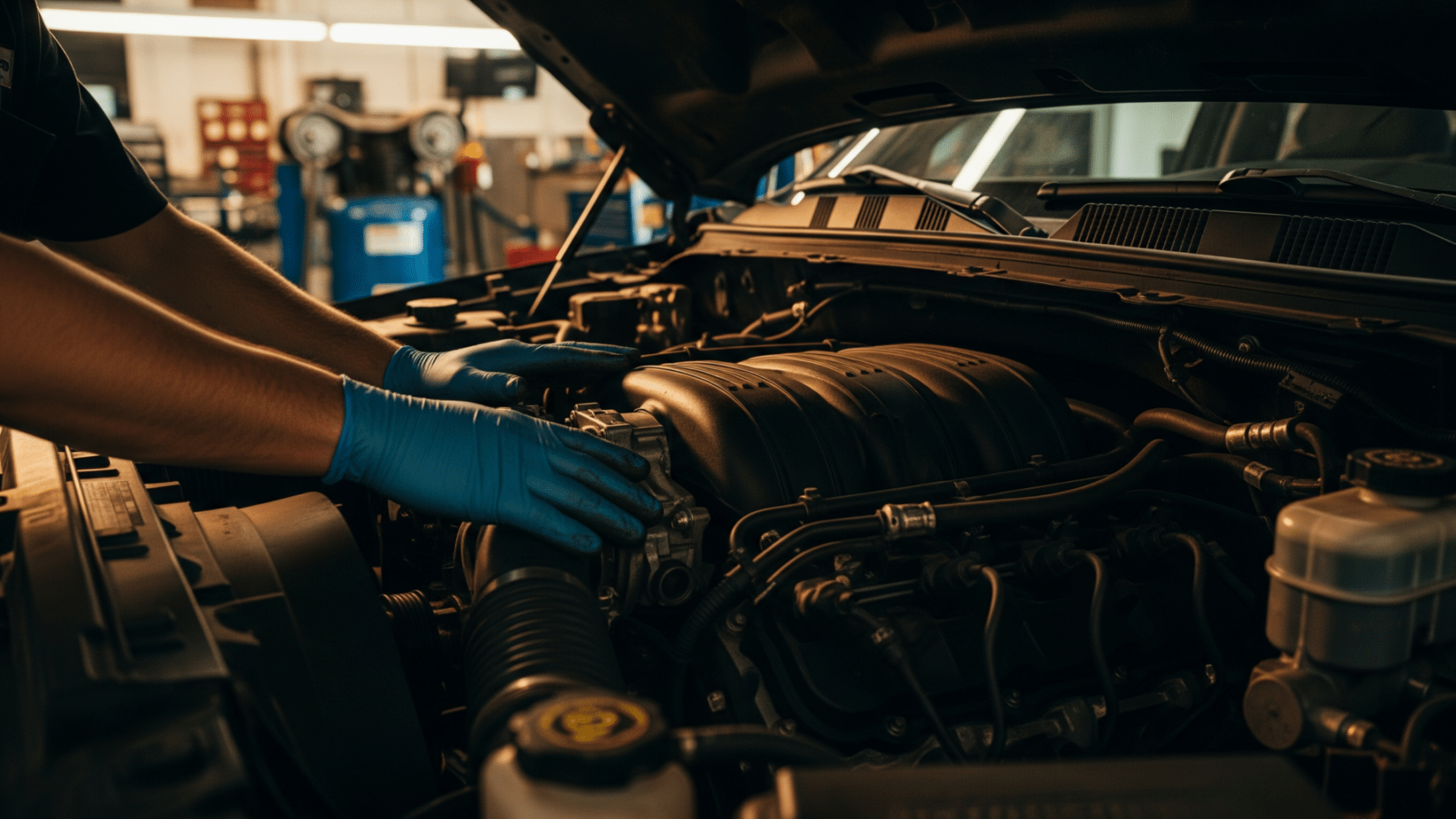
Millions of Americans own a full-size truck or SUV because they trust what’s under the hood. The engine is the one thing that is supposed to be unquestionably reliable. So when an automaker officially recalls it, fixes it at the dealer, and hands the keys back, most owners assume the story is over.
For hundreds of thousands of GM truck owners, it was not.
A premium engine powering some of the best-selling vehicles in America
GM’s 6.2L V-8 engine was first introduced in model year 2019 and is used in some of its top-selling models.
It sits under the hood of the Chevrolet Silverado 1500, Suburban, and Tahoe, the GMC Sierra 1500, Yukon, and Yukon XL, and the Cadillac Escalade and Escalade ESV.
These trucks and SUVs cost anywhere from $55,000 to well over $100,000.
For buyers, this engine was a major selling point. More power. More towing. A flagship powertrain from one of the largest automakers on the planet.
But shortly after the engine launched, something started going wrong.
Complaints started stacking up long before any official action was taken
Shortly after its debut, customers complained of unusual noises, power loss and no-start conditions. GM launched its first investigation into the problem in February 2022.
Two additional investigations followed, closed in June 2023 and July 2024, respectively.
Based on the available information GM had at the time, the root cause was not initially identified, according to the NHTSA recall report.
That is three separate investigations across three years, all closed, problem unsolved.
Meanwhile, real owners were dealing with real consequences.
The failures were severe enough that driving became genuinely dangerous
GM’s internal investigation counted 28,102 reports of engine failure between April 2021 and February 2025, with about half of those failures happening while vehicles were in motion.
The original recall addressed supplier-related manufacturing defects in connecting rods and crankshafts that could cause sudden engine seizure. The company identified two primary issues: rod-bearing damage caused by machining sediment left on connecting rods and in crankshaft oil passages, and crankshafts that did not meet dimensional or surface finish specifications.
NHTSA documents state that GM had identified 12 potentially related crashes and 12 injuries.
There are 42 potentially related fire allegations as well.
A catastrophic engine seizure at highway speed is not a breakdown. It is a safety emergency. The engine stops. The truck loses propulsion. Traffic is still moving around it.
GM issued a recall fix for nearly 600,000 vehicles, and owners went to the dealer expecting it to be over
GM recalled 721,000 vehicles worldwide over engine issues in April 2025, with nearly 600,000 of those in the United States.
That recall addressed manufacturing defects in the connecting rod or crankshaft that could lead to engine damage or failure, resulting in loss of power and increased crash risk.
The fix had two paths. Vehicles that passed inspection were updated to a higher-viscosity 0W-40 oil, given a new oil cap and a revised owner’s manual insert. Vehicles failing inspection were eligible for an engine replacement.
Both remedies sounded definitive. Owners trusted the process and drove home.
Then, the engines started failing again. This story echoes a growing pattern in the industry: as GCN has reported, Kia’s 2024 seat-motor fire-risk fix also fell short, requiring a second recall campaign for the same 462,869 affected SUVs.
The National Highway Traffic Safety Administration’s Office of Defects Investigation opened a probe on Jan. 16 into the adequacy of a previous General Motors recall in April 2025 involving nearly 598,000 SUVs and pickups equipped with 6.2L V-8 gas engines for defects that have led to catastrophic engine failures without warning in some cases.
The catch, the one nobody expected, is the fix itself. It may not have fixed anything at all.
The federal government is now asking whether a dealership repair can actually be trusted to resolve this
The investigation was triggered by 36 separate complaints in which engines catastrophically failed after a dealer inspection and service intended to prevent that exact outcome.
The complaints indicate that both versions of the remedy are failing, meaning owners who received the preventative 0W-40 oil change, and owners who received a complete engine replacement, are both allegedly still experiencing catastrophic engine failures.
Owners have described terrifying scenarios of sudden power loss at highway speeds, including one who reported their truck abruptly lost power at 65 mph with their family inside.
That detail, family inside, highway speed, is what turns a mechanical story into a human one.
Regulators have not ordered a new recall, but the review could lead to additional corrective actions if safety concerns persist.
If NHTSA determines the original remedy was insufficient, that could mean hundreds of thousands of new engines for owners of GM’s various full-size trucks and SUVs running the engine.
For any owner of an affected truck, the starting point is the same. Check your VIN at NHTSA and document any post-repair symptoms in a formal complaint.
As GCN has also covered, Hyundai and Kia EV owners facing battery fire risks were given the same straightforward advice: file, document, and do not assume the first fix was the last word.
The recall was supposed to close the chapter. NHTSA opening a second investigation suggests the chapter was never really finished.
