Nearly two years into her presidency, Mexican President Claudia Sheinbaum remains broadly popular in her country, yet Mexicans’ views of both Sheinbaum and her left-leaning Morena party are measurably more negative than they were a year ago, according to a spring Pew Research Center survey. The findings, published July 16, reveal a widening fracture driven primarily by disillusionment within Sheinbaum’s own ideological base.
Morena’s slide among its own supporters
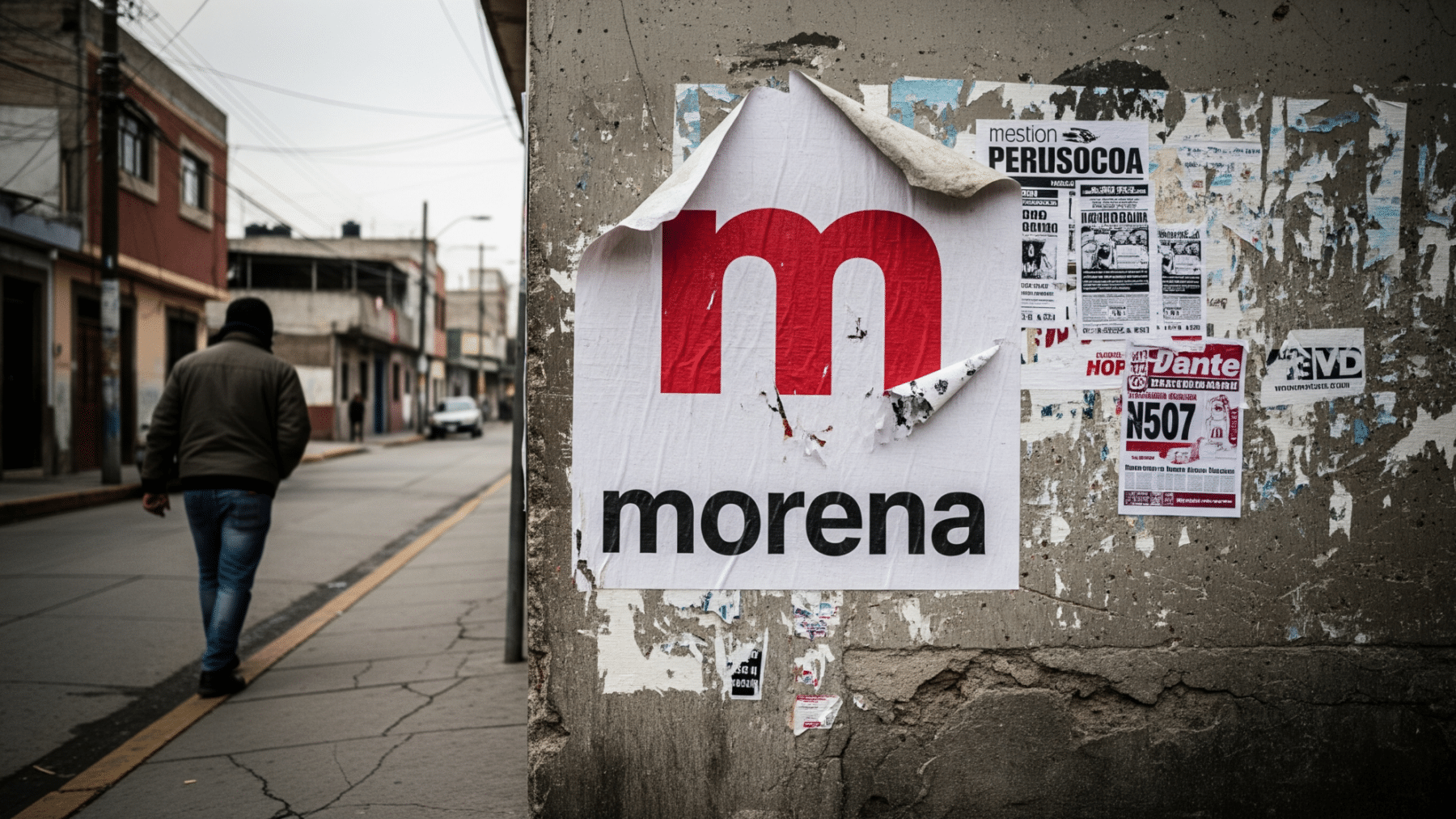
Ratings of Sheinbaum’s left-leaning Morena party have also fallen: 61% of Mexican adults view the party favorably, down from 78% last year. Still, Morena is significantly more popular than any rival political party, in fact, it is the only one that Mexicans view more favorably than unfavorably.
By contrast, Citizens’ Movement holds 44% favorable ratings, the National Action Party (PAN) stands at 30%, and the Institutional Revolutionary Party (PRI) is viewed positively by just 26% of Mexicans.
Around two-thirds of Mexican adults, 64%, hold a favorable opinion of Sheinbaum personally, down from 83% the prior year. The share who view her very favorably has fallen from 46% to 24%.
The survey covered 1,017 Mexican adults interviewed from February 20 to April 10, 2026, designed to represent the views of the adult population in Mexico, and conducted as part of a larger survey of public opinion across 37 places in spring 2026.
Left-leaning Mexicans drive economic pessimism
The erosion in confidence comes as about half of Mexicans now say the economic situation is good, down from 61% last year, a drop that coincides with Mexico’s economy shrinking in the first quarter of 2026. The Mexican economy contracted 0.8% on a quarter-on-quarter basis in that period according to seasonally adjusted preliminary data from the national statistics agency INEGI.
The decline in economic optimism is particularly large among those who place themselves on the ideological left. The share of left-leaning Mexicans who say the economic situation is good fell 24 percentage points since last year, compared with 6-point declines for those on the right and those in the center.
That pattern is significant: the ideological left has traditionally been Morena’s firmest base of support, meaning the party is losing ground most sharply among the voters it can least afford to alienate.
Sheinbaum herself receives mixed marks on specific issues. Majorities approve of her handling of education (65%), the economy (61%) and relations with the United States (55%). However, more Mexicans disapprove than approve of her efforts to fight organized crime and drug traffickers as well as corruption.
For broader context on divided attitudes within Latin American communities, a GCN look at Hispanic identity found similarly complex splits within a single broad cultural group.
Democratic satisfaction at a multi-year low
Views of democracy have also declined. Today, 33% of Mexicans are satisfied with the way democracy is working in Mexico, down from 51% who said the same last year. As with views of the economy, this downward shift is driven mostly by shrinking satisfaction among those on the ideological left.
The pattern mirrors a broader civic engagement shift that Pew has been tracking in other countries. A separate Pew analysis found that public engagement is increasingly shaped by distinct subgroups who hold sharply diverging views of how well their systems are functioning, a dynamic now visible in Mexico as well.
What the findings mean for Sheinbaum’s second year
Sheinbaum’s popularity has underpinned her strong mandate. With the ruling Morena party commanding large majorities in Congress, Sheinbaum is building on the legacy of her predecessor, Andrés Manuel López Obrador, to carry out what their movement calls the Fourth Transformation of Mexico.
On every issue that Pew asked about, those who support Sheinbaum’s Morena party or its allies in the 2024 presidential election, the Ecologist Green Party of Mexico (PVEM) and the Labor Party (PT), are more likely than those who do not support these parties to give her positive marks. That partisan insulation has cushioned her standing, but the 17-point drop in Morena’s own favorability suggests the cushion is compressing.
The Pew survey’s methodology note confirms the sample was designed to represent the views of the adult population in Mexico, conducted as part of a larger survey of public opinion across 37 places in spring 2026.
