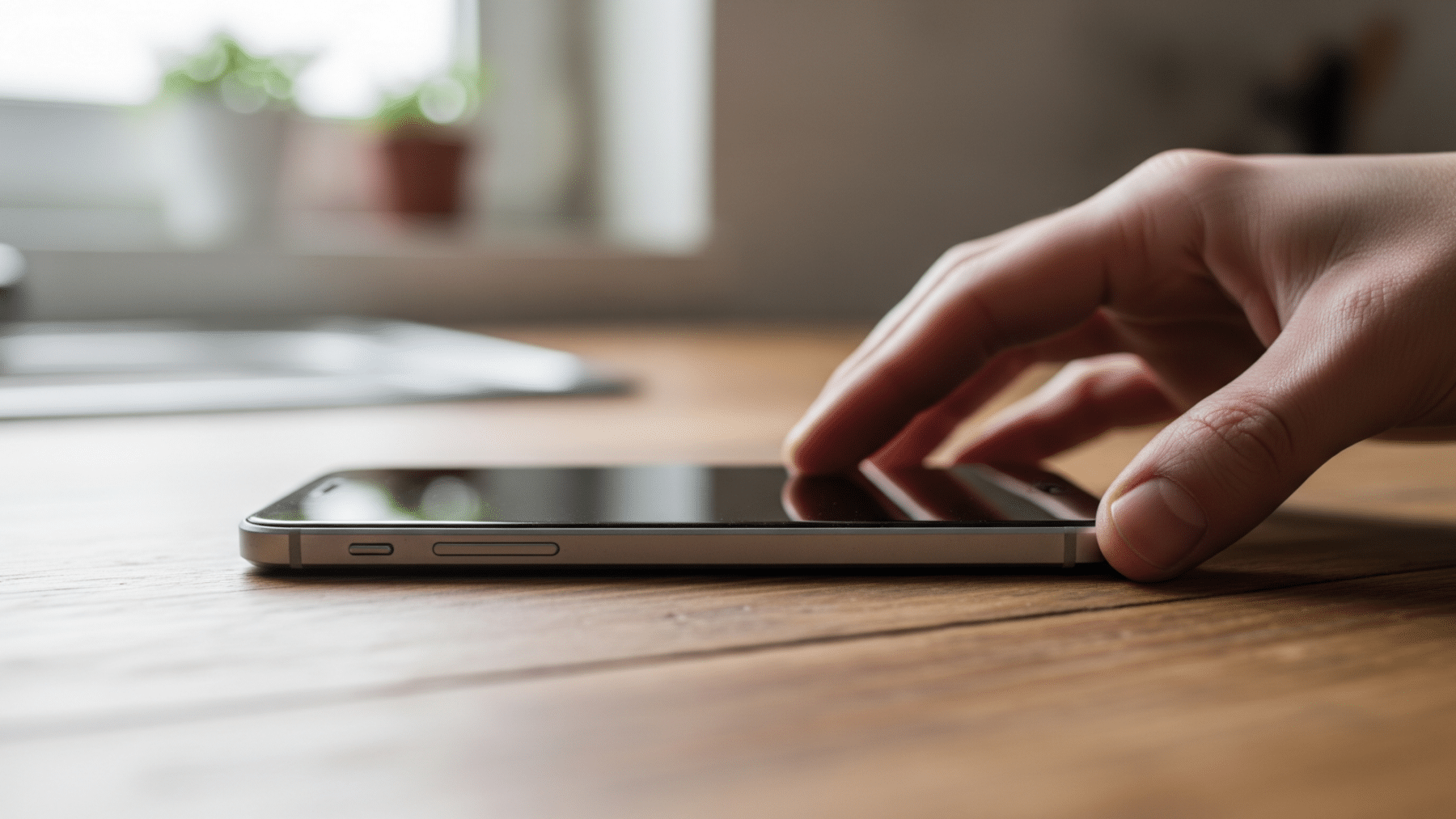
Most people have one. It lives in a kitchen drawer, or on a shelf, or stuffed into the back of a desk. An old phone that still works, more or less, but got replaced when the new model arrived.
It feels like it belongs to the past.
It also turns out to be worth a lot more than most people ever bother to find out.
The habit that costs Americans more than they notice
The data shows consumers are holding on to devices longer before trading them in.
In Q4 2025, the average age of iPhones turned in through trade-in and upgrade programs was 3.76 years, while Android devices surpassed four years on average at trade-in.
Nearly four years is a long time for a device to sit unused. Every extra month it waits is typically a month of depreciating resale value quietly ticking away.
And yet the scale of what Americans did collect in 2025, when they finally did trade in, is remarkable.
Why the secondary market for phones is growing so fast
The used and refurbished smartphone market is expected to grow from USD 65.20 billion in 2025 to USD 69.66 billion in 2026, and is forecast to reach USD 96.99 billion by 2031.
Part of that is pure economics. Flagship devices command four-figure price tags, placing premium hardware beyond reach for many buyers.
Certified units of the same model sell 30 to 40 percent lower, widening the value gap that fuels the used and refurbished market.
For the first time on an annual basis, the most commonly turned-in devices in 2025 were all premium 5G models, including iPhone 13 and iPhone 14 variants.
On the Android side, the Galaxy S22 Ultra 5G was the most frequently turned-in model.
Premium devices, it turns out, are exactly what the secondary market wants most.
What actually drives people to trade in when they finally do
While consumers held onto devices longer overall, 2025 data shows they were more deliberate about when they upgraded, often aligning to major device launches, capability advancements such as AI-enabled features, and competitive trade-in offers.
AI features are now a measurable trigger. Buyers rapidly embraced devices with more personalized artificial intelligence capabilities and 5G, leading to a year of record-breaking activity.
The upgrade decision is no longer just about a cracked screen or a dead battery. It is increasingly about a chip that can run on-device AI well enough to feel meaningfully different.
That shift has fed directly into a secondary market for phones in people’s pockets, which researchers at Microsoft noted in their EuroSys 2026 paper carry underutilized computational resources in their mobile Neural Processing Units, particularly the matrix multiplication units, that go largely untapped during typical on-device AI inference.
The $6.4 billion figure that reframes the kitchen drawer
Here is the number that most people never see coming.
U.S. consumers received more than $6.4 billion in value through mobile trade-in programs in 2025, a 42 percent increase year-over-year, according to Assurant’s Q4 2025 and full-year Mobile Trade-In and Upgrade Industry Trends Report, released in March 2026.
The total is the highest annual value recorded since the company began tracking the data in 2015.
Trade-in activity remained strong through the end of the year, with $2.2 billion returned to consumers in the fourth quarter, the highest Q4 total on record.
$6.4 billion flowing back to ordinary consumers, in a single year, from devices most people assume are worth almost nothing.
“What stood out in 2025 was how clearly value showed up at the moment consumers were ready to act,” said Biju Nair, EVP and President of Global Connected Living at Assurant. “New features continue to spark interest, but trade-in programs play a critical role in turning that interest into action by making value easier to understand and access. At the same time, repair and protection programs are helping devices retain value longer, bringing newer, higher quality phones back into the ecosystem. Together, these dynamics drove the largest annual increase in value returned to consumers we’ve ever recorded.”
What happens to the value sitting in the drawer right now
Most smartphones lose between 30 and 50 percent of their value in the first year, followed by slower depreciation in year two.
After that the curve flattens, but it never reverses.
Mid-priced devices in the $200 to $350 range lead the secondary market with over 54 percent share in 2026, offering an optimal balance of affordability, performance, and features that buyers in that channel actually want.
For anyone keeping up with the broader data economy, the pattern echoes something familiar: the things people assume carry no residual value, an old post, a discarded device, often turn out to be powering a multi-billion-dollar market that analysts are still trying to fully measure.
Devices entering the secondary market increasingly trend newer, supporting stronger resale potential and expanding access to newer generation, high-performance, 5G smartphones, phones designed, protected, and maintained to remain viable well beyond their first ownership cycle.
That old phone in the drawer is not a relic. It is an asset, and in 2025, Americans finally started collecting on it at a pace nobody had recorded before.
