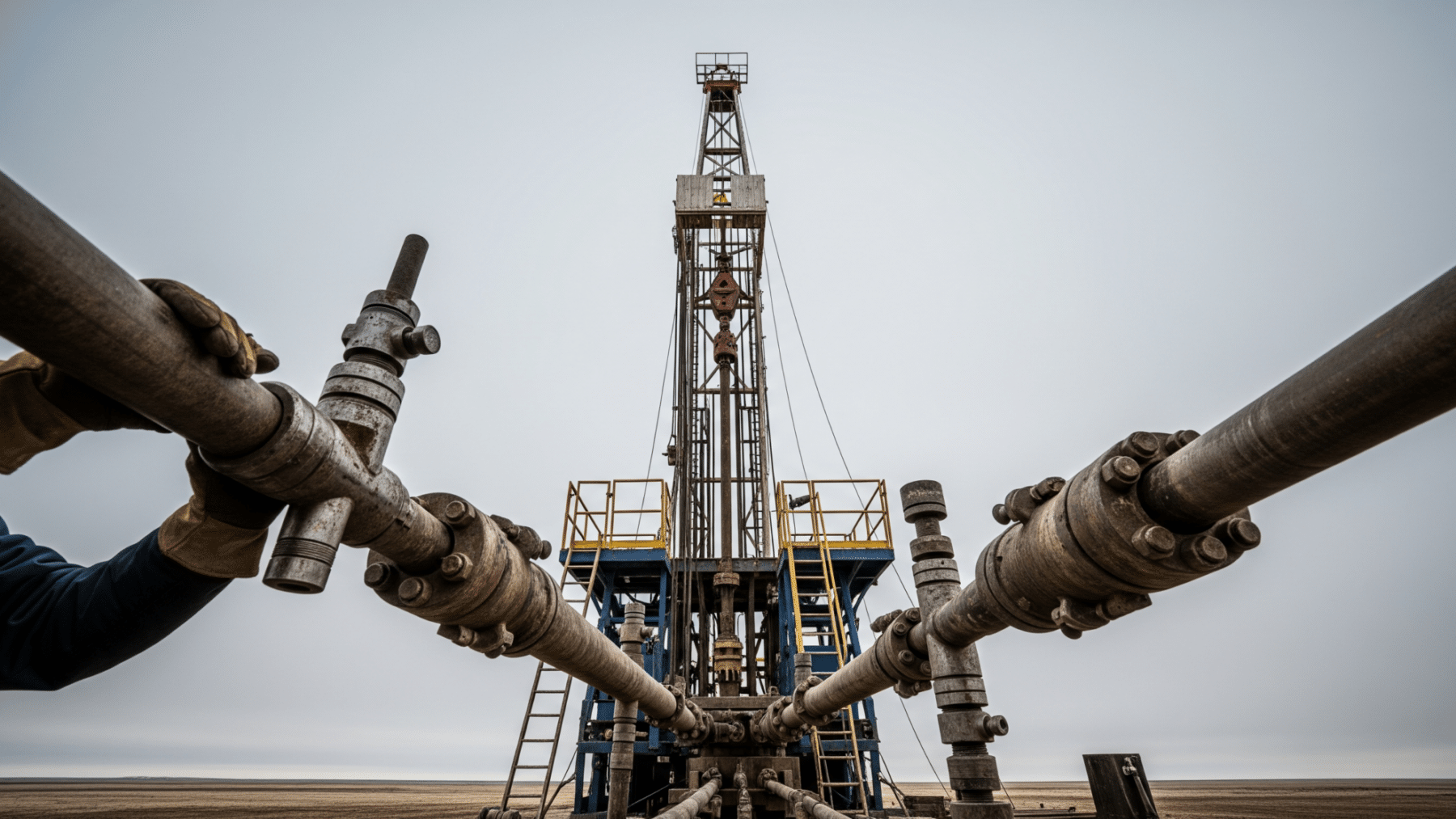
The pitch is almost impossible to argue with. A clean, 24/7 power source that does not need sun, wind, or a river, just the heat already locked in the ground beneath your feet.
And right now, that pitch is landing everywhere.
Utilities, data-center operators and city planners are signing contracts at a pace the geothermal industry has never seen before, backed by hundreds of millions in fresh federal dollars.
But drilling teams working at the frontier of this boom are managing a consequence that does not appear in most of the promotional materials.
A power source that seemed too good to be left underground
For most of its history, geothermal energy had one stubborn limitation: location.
Geothermal power has traditionally come from conventional wells tapping naturally occurring hot-water reservoirs, and those wells are geographically constrained to tectonically active regions, so they have limited potential to scale.
That bottleneck is why the United States, despite leading the world in geothermal capacity, has sat near four gigawatts for years.
Then came a new approach that changed the geography entirely.
Why 26 new contracts landed in just four years
Fifteen of the new power purchase agreements are for conventional geothermal systems, while 11 are for next-generation systems, which can be developed in locations without naturally occurring hydrothermal resources.
That single sentence rewrites the map.
As of 2024, U.S. geothermal power installed nameplate capacity reached 3,969 megawatts-electric, an 8% increase from 3,673 megawatts in 2020.
From 2015 to 2019, geothermal capacity only increased by approximately 1%.
The boom is being driven by next-generation enhanced geothermal systems, or EGS, which crack open tight rock and circulate fluid through it to capture heat that was previously unreachable.
More than $1.5 billion in private capital has been invested in next-generation geothermal companies since 2021.
The federal government moved too.
In February 2026, the Department of Energy announced a funding opportunity of $171.5 million to expand U.S. geothermal energy, noting that DOE analysis shows the potential for at least 300 gigawatts of reliable, flexible geothermal power on the U.S. grid by 2050.
That figure, 300 gigawatts, is roughly 75 times what the country produces from geothermal today.
The grid connection problem these projects cannot ignore
Turning that potential into actual kilowatt-hours requires more than a good drill site.
Every new geothermal plant needs a path onto the grid, and that path runs through an interconnection queue that has grown brutally long.
FERC’s recent order requiring all six U.S. grid operators to justify or overhaul large load interconnection rules reflects exactly how strained that process has become.
The economics are also not trivial. The levelized cost of conventional hydrothermal systems remains steady at $63 to $74 per megawatt-hour for flash-based plants and $90 to $110 per megawatt-hour for binary plants.
The levelized cost of energy for EGS is declining and is projected to hit levels of conventional hydrothermal costs within the next decade.
Cost curves and grid access are the challenges everyone talks about in boardrooms. But the teams actually operating EGS wells are watching a different gauge on their monitors.
What the drilling crews pump into the rock, and what comes back up
Here is the catch that rarely makes the headline.
Enhanced geothermal systems stimulate rocks to enhance permeability, allowing access to heat that would otherwise be locked in the subsurface.
EGS have the potential to scale up access to this source of abundant energy; however, they also have the potential to cause earthquakes.
That is not a fringe concern. It is the subject of a formal good-practice guideline published in Reviews of Geophysics covering seismic risk frameworks specifically for EGS operations.
Enhanced geothermal systems use hydraulic fracturing to inject fluids under pressures high enough to stimulate fractures and increase permeability.
That process also has the potential to cause earthquakes, and induced earthquakes have the potential to end operations or cause development moratoriums.
The real-world record is instructive.
In the Basel Deep Heat Mining project in Switzerland, deep geothermal field development triggered over 10,000 earthquakes, some reaching magnitudes up to M 3.4.
Those events resulted in $9 million in insurance claims and ultimately caused abandonment of the project.
A Mw 5.5 earthquake in 2017 near Pohang, South Korea left 82 people injured and damaged approximately 2,000 houses, and that event has been linked to a nearby deep geothermal project under development.
The DOE’s own flagship proving ground, the FORGE site near Milford, Utah, operates under active seismic monitoring precisely because this risk is real and must be measured in real time.
How the industry is working to keep the lights on and the ground still
The industry’s answer is not to abandon EGS. It is to build better guardrails.
More recent EGS projects have experienced little seismicity of concern for safe operation, including sites in Milford, Utah and Blue Mountain, Nevada.
Both sites benefited from experience gained in previous EGS projects, extensive site characterization, and adherence to best practices developed in response to earlier unsuccessful projects.
Enhanced geothermal systems can expand low-carbon energy production, but fluid injection may trigger earthquakes whose locations and mechanisms are difficult to predict.
That unpredictability is what makes the monitoring protocols non-negotiable.
Researchers are now applying machine learning to seismic data streams from EGS wells to try to forecast where the next micro-event will land before it becomes something larger.
The DOE’s $171.5 million funding opportunity specifically targets field tests for enhanced geothermal systems and drilling for next-generation and hydrothermal resource characterization.
The promise of power from anywhere is real and the contracts are signed.
The grid desperately needs the firm, round-the-clock capacity that EGS can deliver, something no solar array or wind farm can promise alone, as the load surge stressing the grid forecast makes plain.
But every crew pumping fluid into deep rock now does so knowing that the ground itself has a vote, and that managing that vote is the unglamorous engineering problem that will decide whether the 300-gigawatt dream becomes reality or a cautionary footnote.
