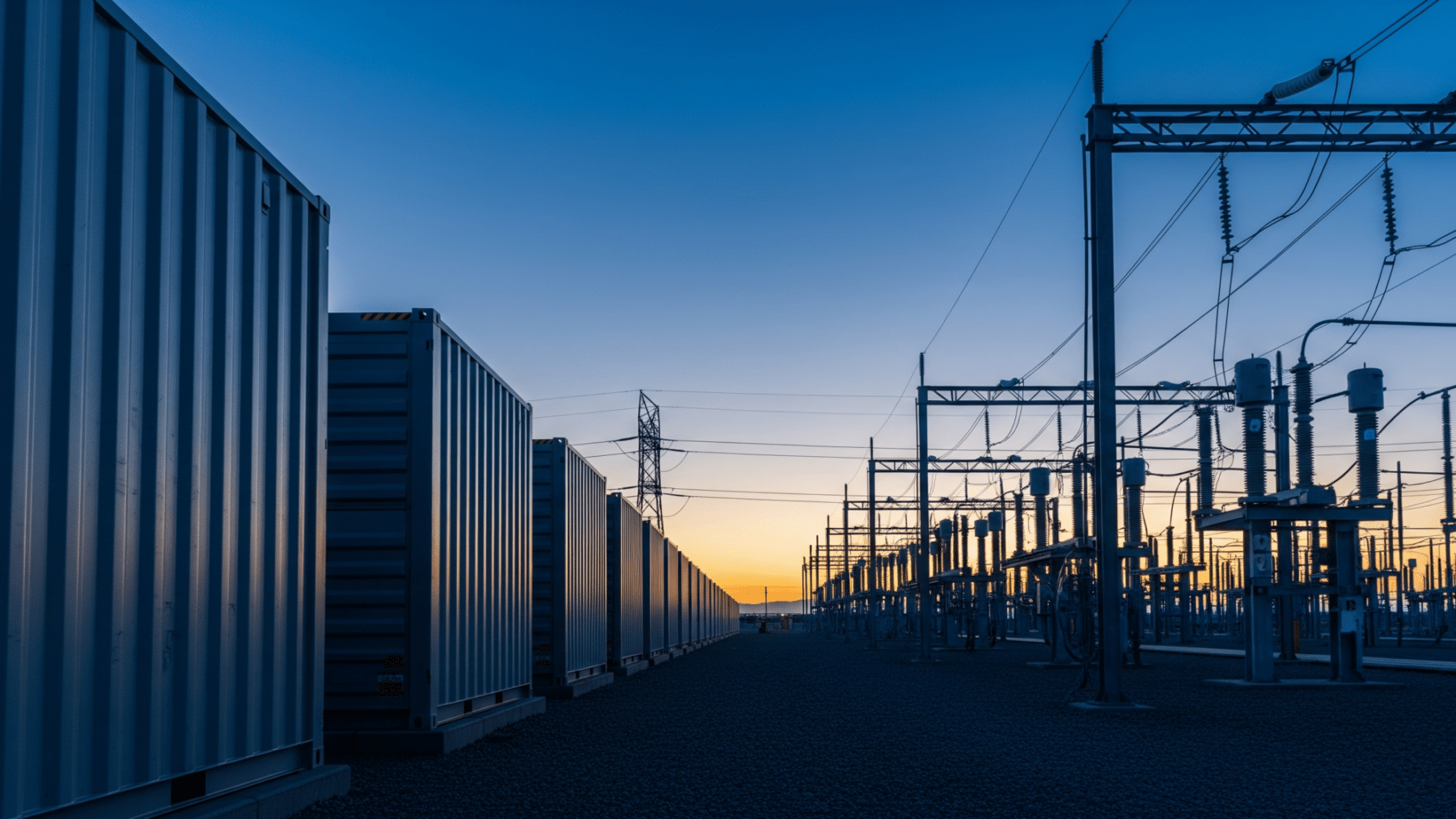
Most people picture the evening grid crunch as a natural gas problem. The sun goes down, demand spikes, and a turbine somewhere fires up.
That picture is already shifting, and a number logged on a warm Wednesday evening in early July just made that clear in a way no chart had managed before.
The moment the lights almost needed gas but didn’t
July evenings are historically the hardest test for California’s grid.
Solar output collapses the moment the sun drops below the hills. Air conditioners are still running. Dinner is being cooked.
Demand is at its peak, and the grid has to find the power somewhere, fast.
For years, grid managers leaned on natural gas peakers, plants kept idling specifically for these hours, to bridge the gap.
On July 9, 2026, something different happened.
A wall of power nobody expected at that scale
As the sun went down that evening, thousands of batteries across California began discharging simultaneously into the grid.
California’s battery fleet discharged a record 12.99 gigawatts of power.
That is more power than New York City consumes on a hot summer day.
At its peak, that storage output covered 36% of total regional energy demand, mitigating supply strain during historically challenging post-sunset peak load hours.
That is not a rounding error. That is more than a third of one of the most energy-hungry grids in the world, supplied entirely by stored electricity.
Why this particular evening was different from every one before it
Evening hours are historically the hardest moment for the grid, but batteries are now stepping up to meet peak demand and spread the solar savings deeper into the evening.
The very next day, on July 10, CAISO set another record, with solar generation reaching 23 GW and supplying 72% of regional electricity demand.
That was the third time California had broken its own solar generation record since June 1, 2026.
Two consecutive record-breaking days. Two different technologies. One grid.
The obvious question is how the fleet got big enough to do this at all.
The battery storage record California just set, and the tax credit that made it possible
The July 9 discharge record did not happen by accident. It is the direct output of a years-long buildout that accelerated sharply once federal policy locked in a financial incentive for storage systems.
One key factor behind the battery boom is the preservation of the federal investment tax credit for qualifying energy storage systems, credits that can offset 30% or more of deployment costs, first authorized by the Inflation Reduction Act in 2022.
Crucially, the One Big Beautiful Bill Act accelerated the expiration of investment tax credits for wind and solar facilities, requiring new projects to be placed in service by December 31, 2027 to qualify, while leaving the longer runway for energy storage intact. The phase-out of the investment tax credit for energy storage facilities does not begin until 2034.
That policy split created a clear runway for batteries that wind and solar did not receive. Developers noticed.
In the first quarter of 2026, 91% of all new grid capacity came from solar and storage, the highest quarterly share the duo has ever recorded.
Solar has been America’s largest source of new electricity generation for the past five years, and storage is quickly catching up, with utilities, businesses, and investors choosing these technologies because they are among the lowest-cost and fastest-to-deploy energy resources available.
The SEIA’s official record roundup lists the July 9 discharge alongside five other all-time marks broken in the first half of this year alone, a pace of record-setting that the industry itself describes as accelerating.
For households already watching their bills climb, electricity costs have risen nearly 40% since 2021, and a grid that can lean on stored power instead of expensive gas peakers during the priciest hours of the day has real financial stakes.
What comes next for the grid that just rewrote its own record book
The commercial, community, and industrial battery segment is growing rapidly, driven by strong behind-the-meter demand in California and an expanding pipeline of community-scale storage projects nationally.
Spurred by tax-code changes that benefit storage systems with more U.S.-sourced content, domestic battery manufacturing is ramping up to meet expected demand.
The U.S. energy storage industry installed 9.7 gigawatt-hours of new capacity in the first quarter of 2026, the strongest first quarter in the sector’s history, according to SEIA, a signal that the pipeline feeding California-style records is still accelerating nationwide.
The investment tax credit for storage has also drawn regulatory attention. For customers in states where utilities are seeking rate increases, including those watching Michigan regulators push new reliability standards on utilities, the growth of storage as a cost-management tool is increasingly part of the rate-case conversation.
The evening of July 9 was, by every measure, a real infrastructure milestone. The next record is probably already queued up for the next hot summer night.
