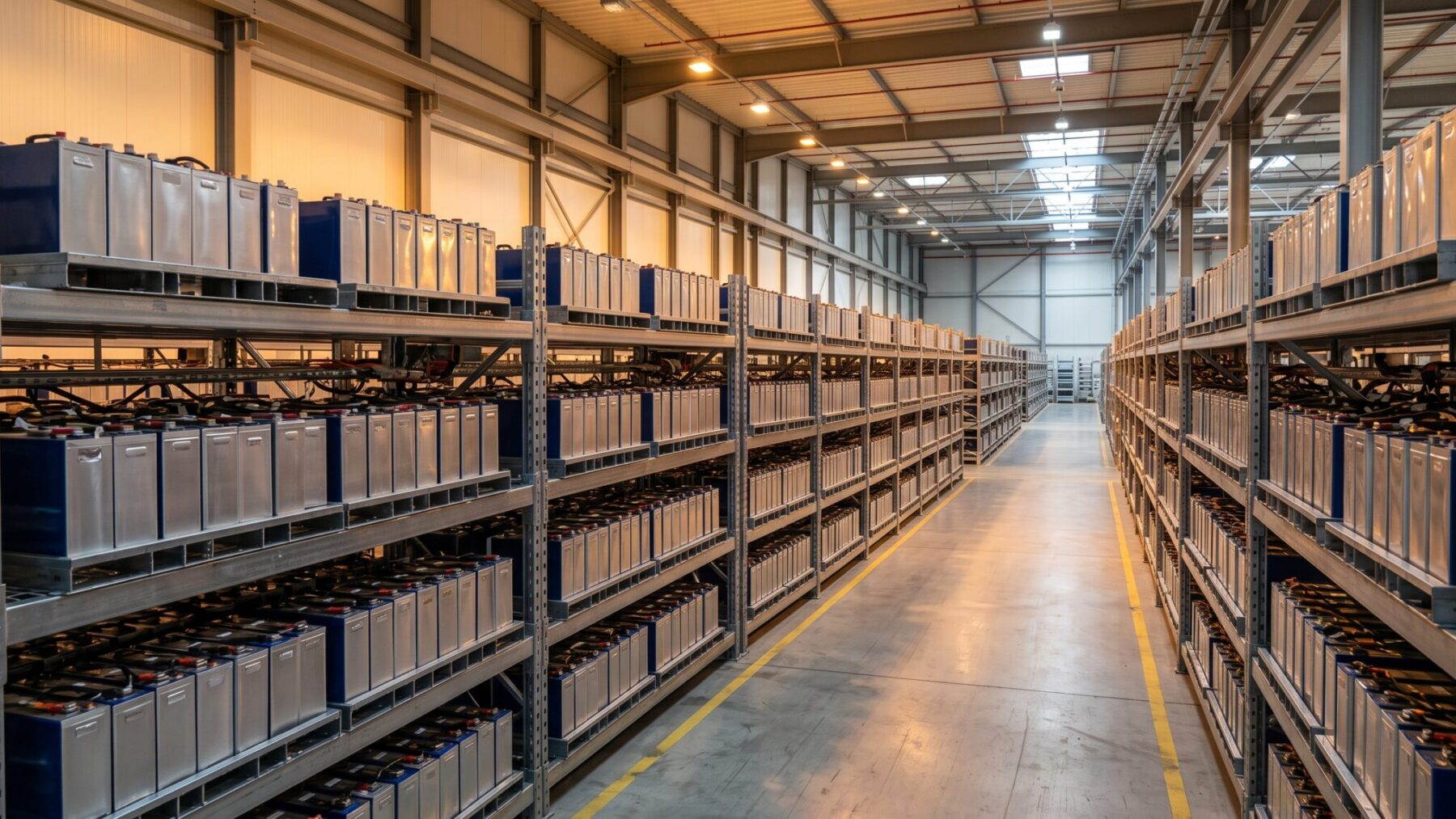
Global energy storage cell shipments reached 467.84 GWh in the first half of 2026, nearly doubling the volume recorded in the same period a year earlier, according to market intelligence firm InfoLink Consulting. The 94.8 percent year-on-year surge marks the latest acceleration in a market that has expanded at a pace no other power technology can match.
A chemistry shift measured in years, not decades
Lithium-iron phosphate (LFP) batteries now account for around 90 percent of deployments; while less energy-dense than rival chemistries commonly used in EVs, LFP batteries are typically cheaper and better suited to more frequent cycling. Just five years ago, the market share of LFP batteries in deployments was well below 50 percent.
The chemistry’s rise is a direct consequence of cost and durability. The IEA, in its Global Energy Review 2026, noted that LFP batteries are typically cheaper and better suited to more frequent cycling , positioning the chemistry as the market standard.
Battery storage is the fastest growing power technology. In 2025, 108 GW of new battery storage capacity was deployed worldwide, 40 percent more than in 2024, with installed capacity now eleven times higher than in 2021. Annual capacity additions surpassed the highest-ever annual capacity additions from natural gas.
The IEA described battery storage as the fastest growing power technology in the world, with capacity additions rising by around 40 percent in 2025 to reach almost 110 GW, more than the highest-ever annual capacity additions from natural gas.
Utility scale dominates; data center UPS adds another layer
Around 80 percent of new battery capacity in 2025 was utility-scale, with the remainder being behind-the-meter capacity installed by commercial and residential consumers.
Battery-based uninterruptible power supplies (UPS), primarily in data centers, also saw significant growth, with capacity additions rising 30 percent to 45 GW in 2025. However, unlike battery storage systems, UPS generally only provide short-duration backup to bridge outages until other backup sources start. That distinction matters for planning: the 45 GW of data center backup power does not contribute to grid balancing in the way that utility-scale systems do, even as the raw installation numbers swell industry totals.
The US manufacturing pivot from EVs to grid storage
The United States added 19 GW of battery capacity in 2025, resulting in year-on-year growth of around 60 percent, with utility-scale batteries accounting for over 16 GW and behind-the-meter additions rising to nearly 3 GW.
In 2025, some battery cell manufacturers began converting electric vehicle production lines toward dedicated energy storage production, redirecting capacity toward LFP chemistry and the battery energy storage market.
Three states are projected to dominate 2026 capacity additions, accounting for roughly 80 percent of new planned installations: Texas at 53 percent, California at 14 percent, and Arizona at 13 percent.
In Puerto Rico, where the grid reliability crisis pushed average outages to 36 hours in 2025, the pace of mainland deployment is being watched closely as a model for storage-led grid stabilization.
Duration and co-location trends point toward longer storage windows
Battery storage durations are gradually lengthening. While most projects still cluster around two hours, an increasing number can be deployed for four hours or more, reflecting the growing value of flexibility in systems with rising shares of solar PV. That pressure is beginning to reshape procurement contracts across PJM, ERCOT, and other organized markets.
Regulators and developers are negotiating how much of a battery’s full-cycle capability can be monetized through existing market structures.
The H1 2026 shipment figures prompted InfoLink to raise its full-year forecast for global energy storage cell shipments to 1,026 GWh, marking the second upward revision this year, representing growth of around 67.5 percent over the 612.39 GWh shipped in 2025. With 467.84 GWh already shipped in H1, the revised forecast leaves around 558 GWh for H2. With manufacturers operating at full capacity and selling all their output, InfoLink considers this a relatively conservative trajectory. For grid planners weighing the infrastructure spending decisions now before state regulators, the availability of storage hardware at scale and falling LFP prices are becoming a central variable in every long-range capital plan.
