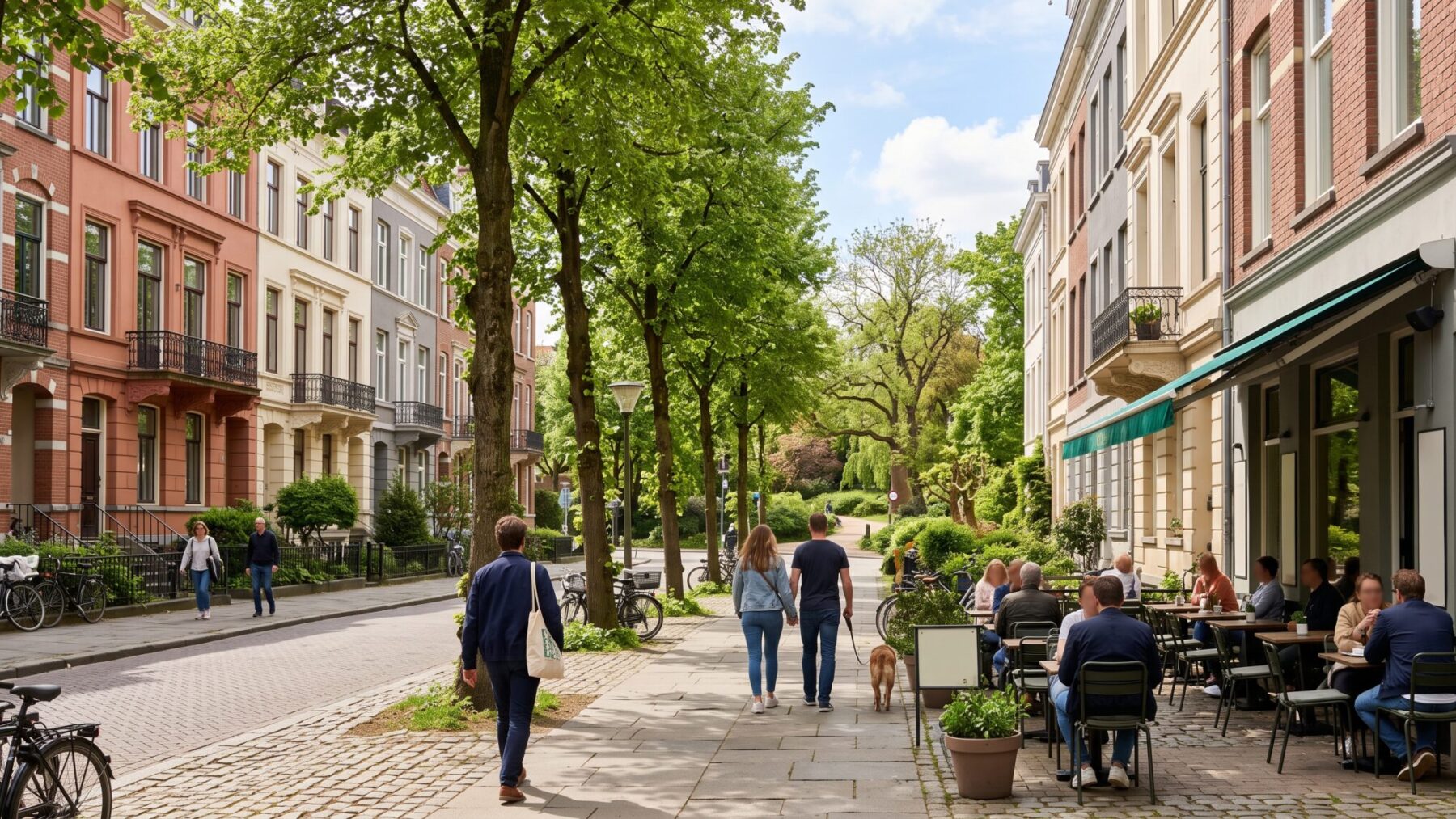
Nearly nine in ten Americans say sidewalks and places to walk are important when deciding where to live, according to a sweeping new survey that suggests the desire to reduce car dependency for daily errands has moved from lifestyle preference to mainstream housing priority.
What the survey found
The 2026 NAR Community Transportation Preference Survey considers smart-growth principles and how community building impacts real estate business. A national poll was conducted in May 2026 of 2,000 adults in the fifty largest metro areas.
The survey found that 89% of respondents consider sidewalks and places to walk important when deciding where to live, while 82% said being within easy walking distance of shops and parks is an important factor. Both figures signal that walkable access to everyday destinations has become a near-universal expectation rather than a niche preference.
The findings indicate that many residents are willing to pay more to live in communities that provide convenient access to daily destinations and reduce dependence on driving. More specifically, 63% of respondents said they would be willing to pay more to live in a community where they could easily walk to parks, shops and restaurants. The survey does not specify a dollar premium, but the breadth of that willingness underscores how deeply neighborhood design factors into residential decisions.
When presented with a choice between a larger lot requiring more driving and a smaller option in a walkable neighborhood, 59% selected the walkable option.
Who was surveyed and how
NAR’s Community and Transportation Preference Survey is a triennial survey of 2,000 residents in America’s 50 largest metropolitan areas to assess their preferences related to Smart Growth principles, and is part of NAR’s Building Better Communities campaign celebrating over 25 years of support to state and local Realtor associations to advance advocacy efforts to strengthen communities across America.
Because the survey covers only the 50 largest metros, it likely understates walkability demand in smaller cities and rural areas, where pedestrian infrastructure is thinner and car dependency is higher.
Still, the sample captures the living-choice calculus of the population segments most actively competing for housing in dense urban and suburban markets.
The 15-minute city idea goes mainstream
The results land as the so-called “15-minute city” concept moves from academic circles into everyday real-estate conversation. The idea holds that residents should be able to reach work, shops, schools, and parks within a quarter-hour on foot.
American planners and developers have increasingly pointed to European cities that have advanced compact, mixed-use planning as a benchmark for what walkable communities can look like at scale.
The preference shift also intersects with a long-running tension over the daily commute that millions of hybrid and in-office workers navigate every week. For many households, choosing a walkable address is partly a strategy to shrink or eliminate that trip altogether, rather than simply enjoying a pleasanter stroll to a coffee shop.
What it means for families and housing
The data carry particular weight for households balancing work, school runs, and after-school activities. The demand for proximity echoes findings from other recent research showing that time pressure is a defining feature of modern family life.
More than half of full-time working parents say their job makes it harder to be a good parent, and cutting a car trip from the daily schedule is one of the few levers families can pull without changing employers.
The survey found broad support for community designs aimed at reducing long driving trips, with 46% of respondents saying local governments should make it a high priority to encourage communities where residents can more easily access work, shopping and services without lengthy drives, while another 39% said it should be a middle priority.
For homebuyers and renters, the NAR findings confirm that walkability is no longer a secondary amenity listed alongside granite countertops. It ranks alongside price and school quality as a front-line filter, one that builders, city planners, and transit agencies will need to reckon with as America’s urban landscape continues to reorganize around where and how people want to move through their days.
