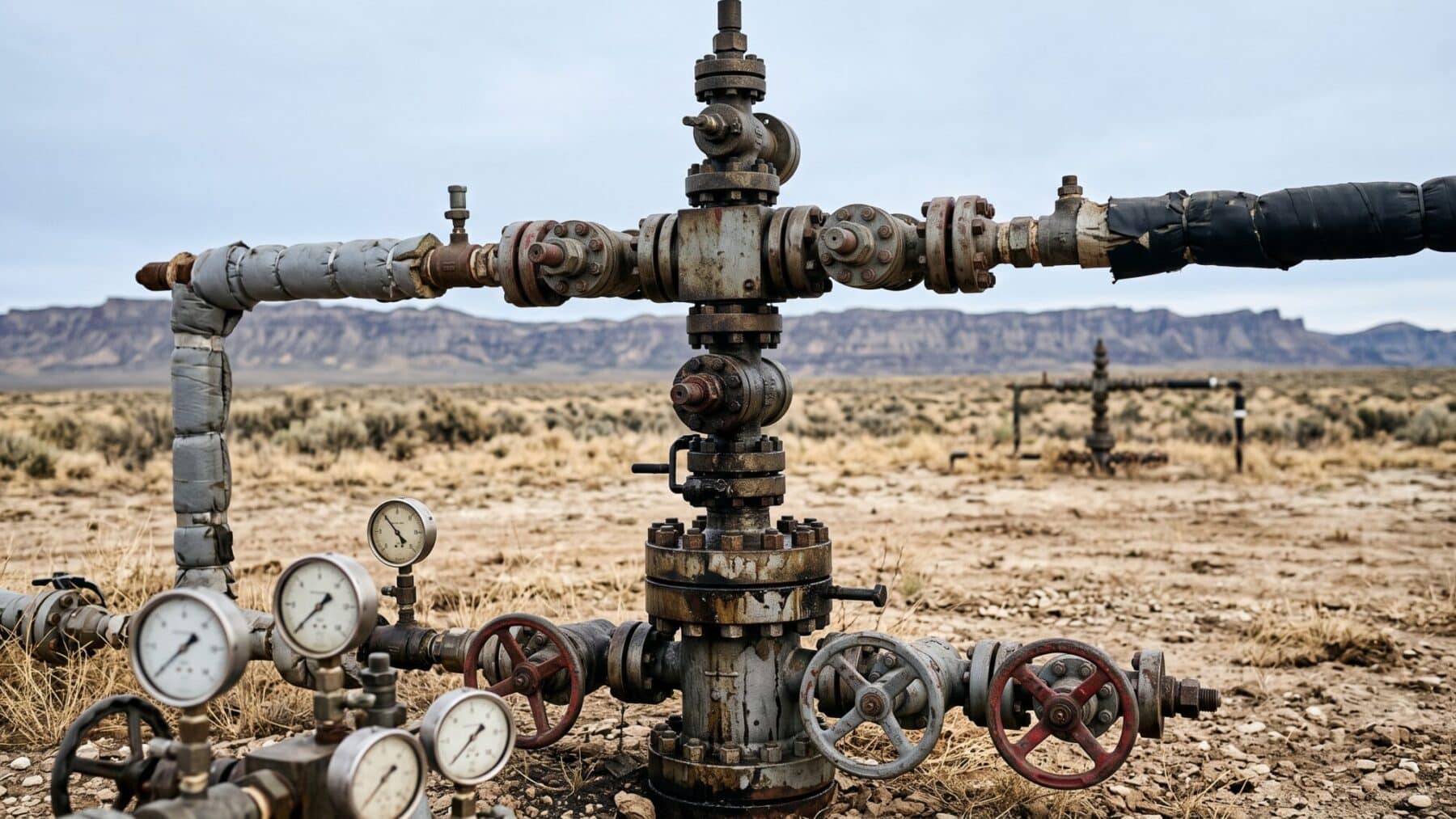
Utah FORGE has launched its most demanding field experiment to date. The federal geothermal research laboratory has begun an extended circulation test at its field laboratory near Milford, Utah, expected to continue for up to four months, allowing researchers to evaluate long-term reservoir performance, thermal decline, water loss, and water treatment requirements under continuous flow conditions.
What the test measures
The Utah Frontier Observatory for Research in Geothermal Energy has begun the extended circulation test at its pair of production and injection wells to evaluate the long-term performance of an Enhanced Geothermal System. The Department of Energy listed the milestone on its geothermal news page on August 17, 2026.
The plan includes an initial injection of five barrels per minute, stepped up to 7.5 barrels per minute, and finally ramped to 10 barrels per minute over approximately 48 hours to ensure system stability. Engineers will track how fluid temperature, pressure, and flow change across that ramp and then sustain themselves under continuous load for the months that follow.
Dr. Kristie McLin, Principal Investigator of Utah FORGE, described the significance of the test. “This extended circulation will allow us to study heretofore unknown variables required to ensure long term EGS production remains commercially viable,” she said.
There is still much the industry does not know, she added, and the extended circulation will provide answers to pressing questions about thermal decline and water loss, allowing geothermal companies to continue growing.
Why long-duration data matters
Earlier tests at the Milford site confirmed the basic plumbing works. Utah FORGE previously completed an extended circulation test at its field laboratory facilities near Milford, Utah, during which more than 90 percent of the produced fluid was recovered and the temperature was maintained at approximately 370 degrees Fahrenheit. Those results provide positive indications for the long-term behavior of the reservoir and the amount of heat that can be extracted.
But shorter tests leave the most commercially critical questions unanswered. Investors and power purchasers need to know whether a reservoir slowly cools, loses working fluid to rock fractures, or demands water treatment systems that would erode project economics over a 20- or 30-year operating life. The current test is designed to let researchers evaluate precisely those variables under continuous flow conditions.
Analysis of the data collected during the circulation test is currently underway, and results will be made available on the Geothermal Data Repository. That open-data policy is central to FORGE’s mission: every dataset is published so that commercial developers, universities, and national laboratories can build on the findings without repeating the same expensive field work.
The broader commercial context
Utah FORGE is a dedicated underground field laboratory sponsored by the Department of Energy for developing, testing, and accelerating breakthroughs in Enhanced Geothermal Systems technologies. Utah FORGE is managed by a team at the Energy & Geoscience Institute, part of the University of Utah’s John and Marcia Price College of Engineering. The project is funded by a DOE grant to the university’s Energy and Geoscience Institute and involves numerous institutions and industry partners.
The stimulation strategies and best practices established by Utah FORGE through years of drilling, stimulation, and testing have contributed to laying the foundation for the current era of EGS projects, which is on the verge of breaking into commercial-scale operations. Eight projects selected in the DOE Office of Geothermal Technologies’ GRID initiative will separately quantify the economic value of geothermal’s benefits to the U.S. grid.
Geothermal power’s appeal to grid planners lies in its ability to run around the clock without weather dependence, a profile that complements the rapid build-out of variable resources. That dynamic is already reshaping capital planning: a Washington utility recently proposed a $3.2 billion grid plan driven in part by the need for firm, dispatchable capacity, while the accelerating deployment of short-duration storage, documented in 8.3 gigawatts of new battery additions in a single half-year, underscores that no single technology fills every grid role.
Next steps
Longer-term tests planned for the next phase of the project will allow for further evaluation of the reservoir’s performance and sustainability. The four-month window of the current test is itself a stepping stone toward those deeper evaluations.
Whether private capital flows to EGS projects in the United States at commercial scale will depend heavily on the kind of multi-month reservoir performance data that Utah FORGE is now generating.
