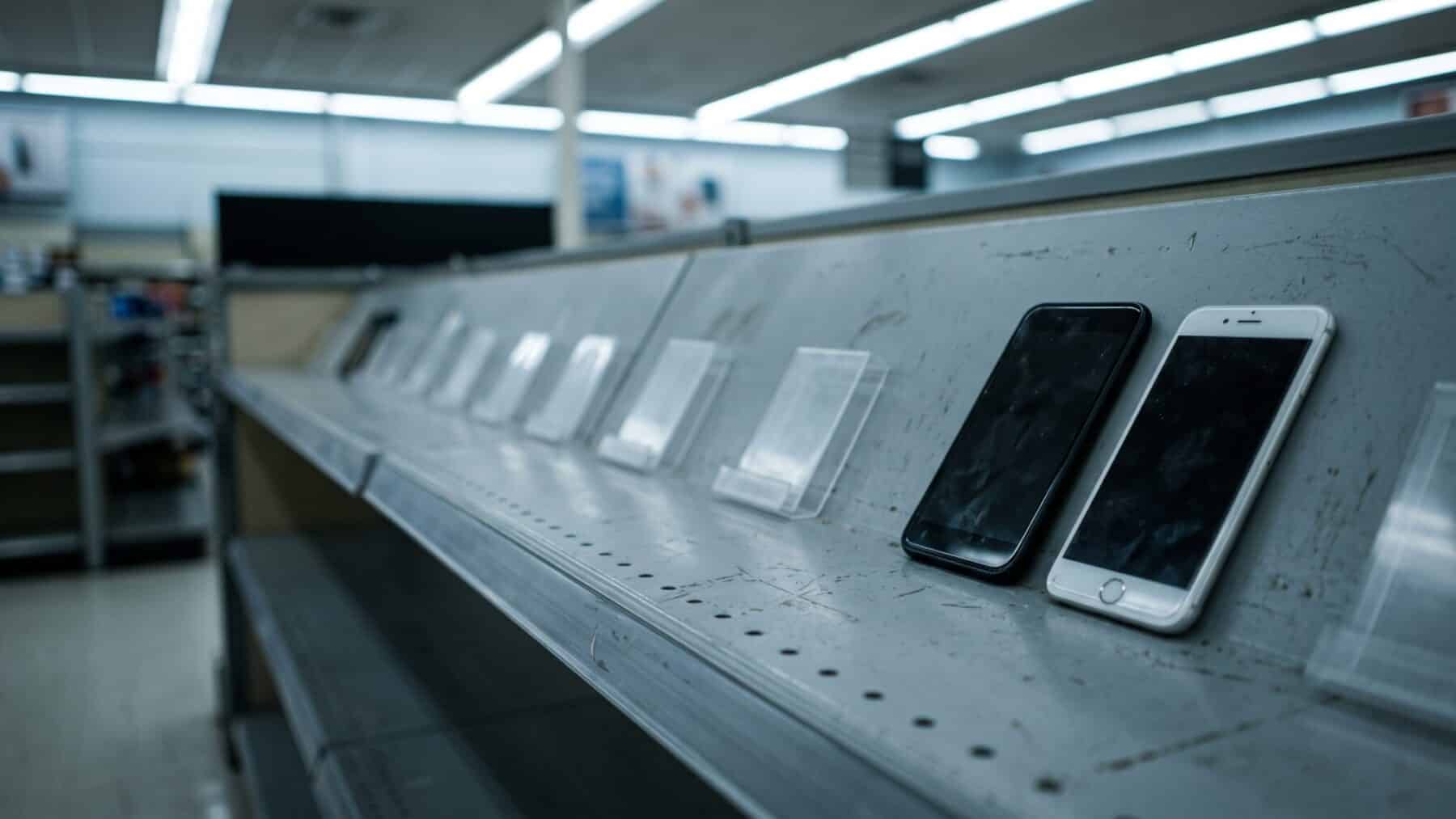
Walk into a carrier store this summer and the bottom shelf looks different.
The $79 Androids are gone. The $49 prepaid options have vanished. A price tag under $100 has become almost impossible to find on a new phone in America. The question is what, exactly, drained that shelf.
How the memory crunch physically removed cheap phones from stores
Every modern smartphone needs DRAM and NAND flash storage, and both components now compete directly with a far wealthier buyer: the AI data center. Rising RAM demand from hyperscalers has increased memory costs significantly for smartphone manufacturers. AI infrastructure build-outs are competing with consumer devices for the same DRAM and NAND capacity, while memory suppliers continue to favor higher-margin server and HBM products.
The math is brutal at the low end. Memory components represent a substantial share of the bill of materials for budget smartphones. A phone designed to sell for $89 carries margins of a few dollars at best. When the memory package inside it rises sharply in cost, there is no cushion to absorb it.
The price must rise, the model must be dropped, or the brand must exit. Tariff fears and a weak prepaid market in 2025 had already driven several smaller brands to leave the US market or downsize their operations, the most notable being HMD, which exited the US market last year. The memory pricing crunch then finished the job.
What the empty shelf looks like across the actual US market right now
Sub-$100 smartphone sales declined 64% year-over-year in Q2 2026 as manufacturers either stopped shipping these devices or were forced to increase prices to offset increased memory costs. It is not a slow fade. It is a category in freefall.
US smartphone sales fell by 5% year-over-year in Q2 2026 as memory price hikes and other macroeconomic factors weakened consumer demand. That headline figure conceals a far sharper divide underneath it. Cumulative sales for the Big Four manufacturers in the US market, Apple, Samsung, Motorola, and Google, fell 4% year-over-year in Q2 2026, while the rest of the market fell by 45% as smaller manufacturers struggled to navigate component cost increases. Established scale bought survival; everyone else faced a cliff.
Although prepaid sales in the US declined 11% year-over-year in Q2 2026, Samsung and Motorola increased their share of prepaid sales as they capitalized on weakness and market exits by other low-end manufacturers during the pricing crunch. Samsung’s share increased by 9 percentage points, reaching 47% of that segment, while Motorola’s share jumped from 28% to 32%.
The hard evidence behind the numbers and where it comes from
Counterpoint’s US Smartphone Channel Share Tracker Monthly Report was published August 12, 2026, and covers April through June, drawing on channel-level sell-through data across carriers and retailers. The year-over-year comparison is directly apples to apples.
The global picture confirms the same direction. According to IDC’s Worldwide Quarterly Mobile Phone Tracker, worldwide smartphone shipments are forecast to decline 13.9% year-on-year in 2026 to 1.09 billion units, a further downward revision from IDC’s February forecast of a 12.9% decline, and what would mark the steepest annual contraction in smartphone history. This has disproportionately affected the low end of the smartphone market, where thinner margins have made the situation more difficult to navigate. Smaller brands have been unable to absorb the shock the way their larger rivals could.
IDC’s full-year forecast is even starker for budget devices. The decline is concentrated at the bottom of the market, with the sub-$200 segment, where margins are already thin and consumers are most price-sensitive, set to shrink the most. This is consistent with what the global chip market has signaled all year: AI demand is crowding out consumer electronics at the component level.
Where the collapse does not hold and which buyers are finding workarounds
Not every part of the market is shrinking. Premium demand has held even as the low end craters, with flagship buyers proving far more resilient than households shopping on a tight budget.
The $200 to $299 price band grew by nearly 200% year-over-year, largely because Motorola’s decision to increase prices for several models pushed them into this previously underserved price bracket. That is not new demand appearing. It is old budget customers being pushed upward by cost inflation whether they wanted to move or not.
Secondhand devices are absorbing some of the displaced buyers. FDM CCS Insight forecasts the global organized secondary smartphone market to grow 15.4% in 2026 as demand shifts away from new devices. For many Americans who depended on sub-$100 phones, a refurbished mid-ranger is now the only practical path to a working handset.
The advanced chip packaging race may eventually ease component costs, but relief is not arriving this year.
What the consolidation means for phone buyers and the industry going forward
The immediate consequence for consumers is straightforward: fewer choices per price tier, and the options that remain cost more than they did a year ago. Counterpoint expects average selling prices to continue increasing in the third quarter of 2026.
For smaller brands, the window to re-enter is not open yet. Analysts expect DRAM and NAND price growth to slow in the second half of this year, but slowing inflation does not mean components return to previous prices. Supply and pricing are not expected to stabilize until mid-2027.
A brand that exits during a downturn rarely re-enters at full strength: distribution relationships fray, carrier agreements lapse, and brand recognition erodes. The structural winner is consolidation itself.
The larger players have been able to use the leverage of scale to acquire component inventory that smaller brands have been unable to access at justifiable costs, leaving even less spot-market supply for anyone else. That gap compounds over time. The American smartphone shelf, already narrow, is likely to get narrower still before memory capacity catches up with the appetite of the data centers that displaced it.
