Bloomberg reported on September 10, 2026, that Microsoft plans to expand its global data center capacity to more than 38 gigawatts by 2032, up from roughly 12 gigawatts today, citing people familiar with the plans. Microsoft is reportedly targeting more than 38 gigawatts of global data center capacity by 2032, up from about 12 gigawatts today, according to Bloomberg. The disclosure reveals one of the most aggressive infrastructure buildouts in the company’s history, driven by demand for AI compute that has already outpaced what Azure can supply.
A capacity shortage forcing hard choices
Despite adding 88 data centers during fiscal 2026 and capital expenditures expected to reach approximately $175 billion for calendar-year 2026, capacity bottlenecks have forced adjustments across the business.
Supply constraints pushed some customers like Temu to competing cloud providers, forced GitHub to redirect AI agent traffic to Amazon Web Services, and temporarily limited Xbox cloud streaming.
Microsoft CFO Amy Hood said demand continues to exceed available capacity and gave no estimate of when that gap closes.
Azure and other cloud-services revenue grew 43 percent year-over-year in Microsoft’s fiscal fourth quarter, driving total Microsoft Cloud revenue to $59.3 billion for the quarter and $214.4 billion for fiscal 2026.
What 38 gigawatts actually means
Microsoft plans to more than triple its data center capacity to about 38 gigawatts by 2032, Bloomberg News reported, citing people familiar with the plans. The company currently has about 12 gigawatts of capacity, according to Bloomberg’s reporting.
Around 2 gigawatts is currently centered on AI-specific chips, while that share is expected to reach about one-third of the planned 38-gigawatt footprint by 2032. If that reported capacity mix is reached, around 12.7 gigawatts of Microsoft’s footprint would be dedicated to AI-specific chips.
On the July 29, 2026, earnings call, Satya Nadella said Microsoft added 31 new data centers across five continents in the June quarter, bringing the fiscal year total to 88. He said the company added another gigawatt of capacity in the quarter and remains on track to roughly double its overall capacity in two years.
Dock-to-live times for new GPUs in Microsoft’s largest regions also fell by nearly 50 percent over the fiscal year.
Microsoft’s fiscal 2026 Form 10-K disclosed $329.1 billion of commitments for leases that had not yet commenced at June 30, up from $196.6 billion the prior year. That backlog represents the physical pipeline underpinning the reported target, as the broader AI cloud infrastructure sector sees capital pouring in from every direction.
Infrastructure, silicon and cooling
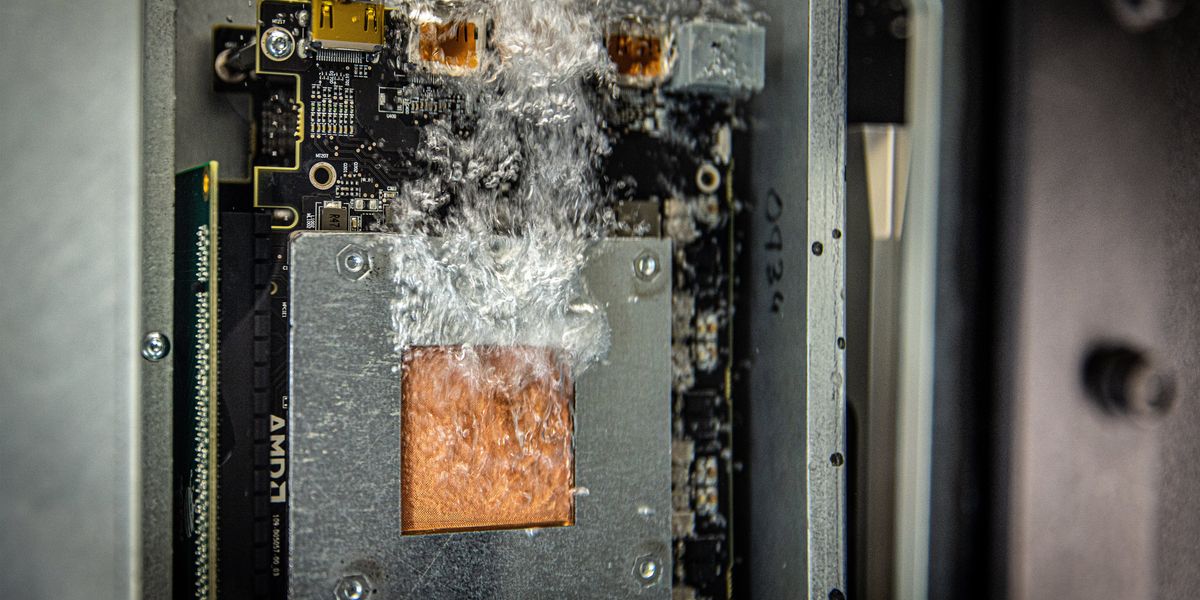
Microsoft is also deploying its own AI silicon alongside accelerators supplied by companies including Nvidia and AMD. Its Maia 200 inference system uses a two-tier Ethernet architecture designed to scale clusters to as many as 6,144 accelerators and incorporates Microsoft’s second-generation closed-loop liquid cooling hardware.
Microsoft said its Fairwater facility can operate at about 140 kilowatts per rack and 1.36 megawatts per row, and uses a closed-loop liquid cooling system that continuously reuses coolant after its initial fill.
Expanding global data-center capacity to 38 gigawatts introduces severe logistical, electrical, and political hurdles. The six-year build faces data center moratoriums in Texas and New York, grid interconnection queues lasting four to seven years, and $329 billion in lease commitments.
Microsoft said in February that it had contracted 40 gigawatts of new renewable energy capacity across 26 countries since 2020 through more than 400 agreements with utilities and developers.
Caveats and competitive context
Microsoft has not stated the figure in any filing, press release, or earnings call, and Reuters reported that Microsoft did not respond to a request for comment. Bloomberg’s sources cautioned that the projections could change with customer demand, new technology, and long construction timelines.
BloombergNEF estimated that the four largest hyperscalers, Amazon Web Services, Google, Meta, and Microsoft, already controlled 42 percent of American data center capacity.
Goldman Sachs projected the four companies’ combined capital spending at an estimated $5.3 trillion between fiscal 2025 and fiscal 2030.
The pressure this buildout places on power grids has drawn community pushback, with security costs compounding the operational challenges hyperscalers now face as AI infrastructure scales to previously unimagined levels.
