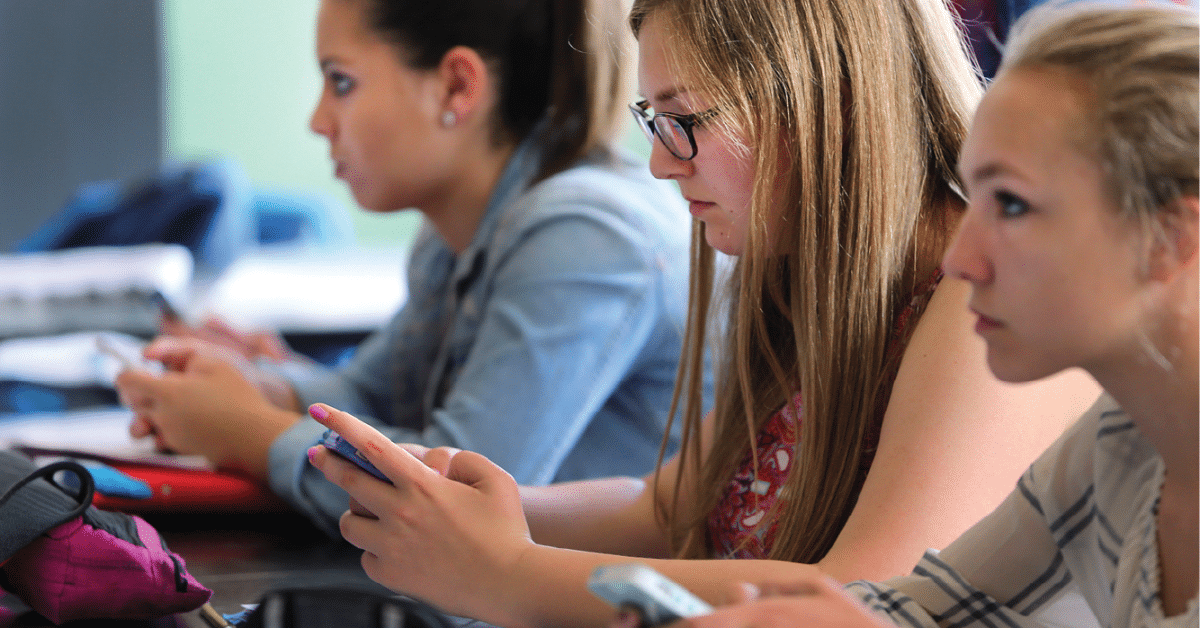
About three-quarters of US adults, 77%, now support in-class cellphone bans for middle and high school students, marking the second consecutive year of rising support for the policy, according to a Pew Research Center survey conducted May 26 to June 1, 2026.
Support has climbed nine points over two years, up from 68% in 2024, with just 18% of adults now opposed.
All-day bans cross majority support for the first time
For the first time, more Americans support than oppose banning cellphones during the entire school day. About half of US adults, 48%, back “bell-to-bell” bans for middle and high school students, up from 36% in 2024, while 43% oppose the idea and 8% are unsure.
The survey covered 9,750 US adults, all members of the Center’s American Trends Panel, and is designed to represent the views of the full US adult population.
The growth in support for all-day bans comes as more states have enacted such policies. In a 2025 survey by the Center, majorities of US adults said all-day bans would improve students’ grades, social skills, and class behavior. Far fewer said the same about students’ physical safety, a concern that frequently surfaces in debates over allowing phones during lunch and passing periods, when parents may want to reach their children in an emergency.
A sharp generational divide on the all-day question
Young adults ages 18 to 29 were the least likely to support all-day school cellphone bans, at just 28%, though that same age group was much more likely to support device bans specifically during class, at 57%.
By comparison, at least half of Americans aged 30 and older back all-day bans. Younger adults’ lower support for all-day bans tracks the same concerns about emergency contact, accessibility tools, and after-school logistics that surface in public debates over the policy.
Republicans and Republican-leaning independents support in-class bans at 81% and all-day bans at 55%. Democrats and Democratic-leaning independents come in at 74% and 44% respectively, making in-class restrictions one of the more reliably bipartisan positions in current education policy.
Teen behavior tells a different story
A separate Pew survey published in January 2026 found that most teens oppose even classroom cellphone bans, with only 41% of students in support. The survey of 1,458 US teens was conducted in fall 2025.
K-12 Legal Insights reported that 38 states and Washington, D.C. required school districts to ban or restrict student phone use in schools, suggesting policymakers have moved broadly in step with adult opinion even as enforcement remains imperfect.
The broader pattern echoes findings from GCN’s parental control report, where motivated teens bypassed most of 18 tested applications within 48 hours.
Why the public mood keeps shifting
The word “ban” covers at least three distinct interventions: the lightest requires phones to stay in bags during class, a stricter model uses magnetically sealed pouches that lock devices from arrival through dismissal, and the most restrictive prohibits students from carrying phones on campus at all.
The operational gap between those options helps explain why in-class bans command near-consensus while all-day bans still divide the public almost evenly.
The shift in adult attitudes also tracks a wider behavioral trend. Researchers and consumer analysts have separately documented rising interest among younger Americans in setting boundaries around device use, a pattern GCN reported on when examining how adults under 30 are deliberately slowing their digital lives.
Whether schools can convert majority sentiment into consistent on-campus practice remains the central question heading into the next academic year.
