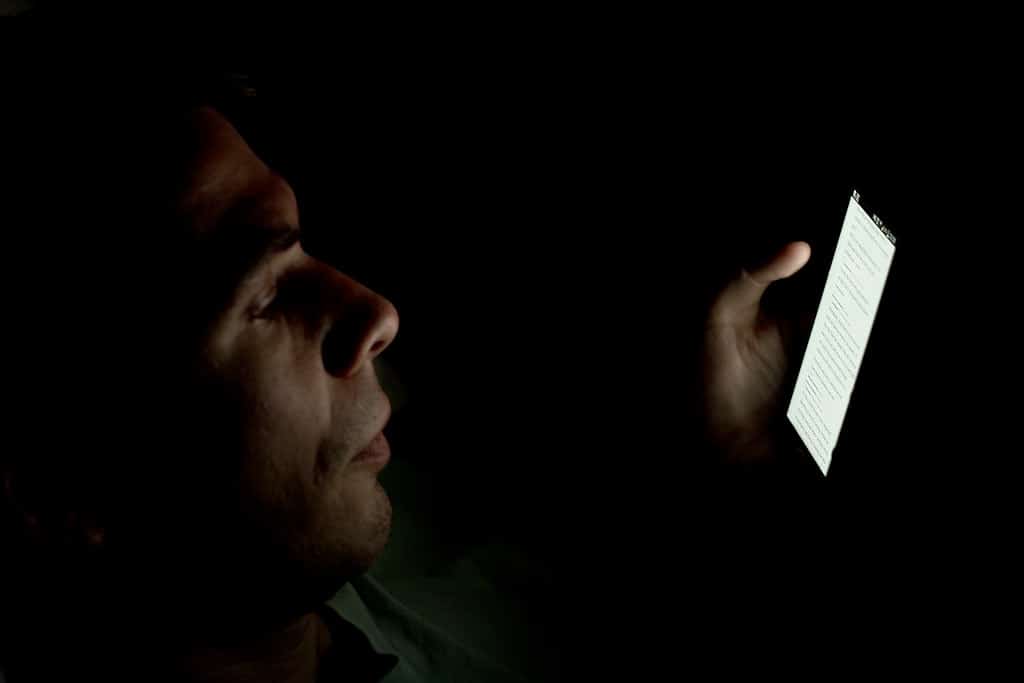
A phone buzzes on the nightstand, and the lock screen already has the number ready, four hours and twelve minutes, up from last week.
The owner stares at it for a second, maybe winces, then opens Instagram anyway.
That small ritual repeats on millions of phones every single night.
The apps promise insight, a mirror held up to a habit nobody can quite see from the inside.
But a growing body of research keeps landing on the same uncomfortable question: what happens after someone actually looks at that number?
Why seeing the number does not change the habit
The mechanism is simpler, and more frustrating, than most people expect. Screen time trackers work by building passive awareness of a behavior, not by interrupting it. They show a graph after the scrolling has already happened, which means the information arrives too late to compete with the automatic reach for the phone in the first place.
That timing gap matters because most phone pickups are not planned decisions. They are small, automatic habit loops triggered by boredom, a notification, or simply an empty hand, and a chart reviewed once a week cannot interrupt a loop that fires dozens of times a day.
So the data piles up, people nod along to their own statistics, and the behavior underneath barely moves. Researchers describe it as a split between knowing and doing, where the self-awareness layer improves sharply while the actual usage curve stays flat.
Which is exactly the opposite of what the marketing promises. App store listings lean hard on language about taking back control, yet the mechanism they are actually selling is a mirror, not a brake.
Inside the app store, a promise built on a chart
Open any app store today and the pitch looks nearly identical across dozens of competitors: colorful weekly graphs, streaks, a breakdown by app, sometimes a cheerful notification congratulating a user for using the phone less than last Tuesday. The design language borrows heavily from fitness trackers, as if screen time were just another number to optimize.
Some of these tools add a harder edge, locking an app behind a timer or a short delay before it opens. Those features sit closer to blocking than tracking.
That distinction turns out to matter enormously once researchers start measuring results rather than reading marketing copy. Even the built-in phone tools used by hundreds of millions of people without ever installing a third-party app lean mostly on the same reporting model. A chart appears, a weekly summary lands in notifications, and the rest is left entirely up to willpower.
That gap between a gentle report and a genuine barrier is where this story’s catch lives, and it is not a hunch. It shows up directly in controlled research on how people respond once the novelty of a new app wears off.
What the actual data shows once researchers looked closely
The clearest evidence comes from a field study published in the Journal of the Association for Consumer Research. Researchers found that screen-time tracking improves digital self-awareness but that it is less likely to lead to a reduction of mobile usage.
The same study also found a small negative association between smartphone usage and performance at university.
A second part of that same research project ran a separate experiment and uncovered something close to a paradox. Consumers prefer informational tracking over more restrictive alternatives, blocking and digital nudges, despite evaluating it as less effective for reducing screen time, especially those highest in smartphone dependence.
In plain terms, the people who stood to gain the most from a harder block were the ones most likely to pick the softer option.
That finding lines up with a separate multimethod 2023 review that looked at dozens of apps built to curb phone use. Evidence of the efficacy of 13 of the 55 apps was identified, across 19 papers. Among the small set of tools with confirmed results, the strategies that stood out were features like grayscale mode, app limit features, and mixed interventions , which were tied to genuine reductions in use.
So the pattern researchers keep finding is not that tracking is worthless. It is that a number on a screen, by itself, rarely crosses the line into a change in behavior unless something else forces the issue, like a locked app icon or a delay a user cannot easily skip.
Where the pattern breaks down and friction starts winning
None of this means every screen time feature is decorative. The same body of research draws a sharp line between apps that simply report and apps that physically get in the way, and the second group performs far better in trial after trial.
Because the difference is not cosmetic, it is architectural. A report arrives after the scrolling session ends, while a lockout or a timed delay sits directly between the impulse and the app opening, which is precisely the moment habit researchers say actually matters.
Even then, the effect fades for plenty of people the moment a restriction feels inconvenient. Nothing stops a determined user from disabling a block, which lines up with Pew Research Center findings that nearly half who try fail anyway, often after a promising first week.
And it echoes a broader split this desk has already found in how people relate to their own phone habits. Half of adults already say they spend too much time on their phones, which suggests awareness was never the problem in the first place.
What this means for anyone staring at their own weekly report
None of this should scare anyone away from checking their numbers. Awareness is still a reasonable first step, and plenty of people genuinely do use that weekly chart as a nudge toward smaller, deliberate changes elsewhere in their day.
But the honest takeaway from the research is that the chart alone is not doing the heavy lifting people assume it is. If a four hour daily habit matters enough to change, the evidence points toward tools that physically interrupt the moment of reaching for the phone, not just ones that summarize it afterward.
That is a fixable gap, and an encouraging one.
The same body of research that found tracking falls short also identified specific, testable features, like timed app locks and grayscale mode, that genuinely moved usage down in controlled trials. So the fix was never really about better graphs. It was always going to be about friction at the right moment, and that is something every phone already has the tools to add.
