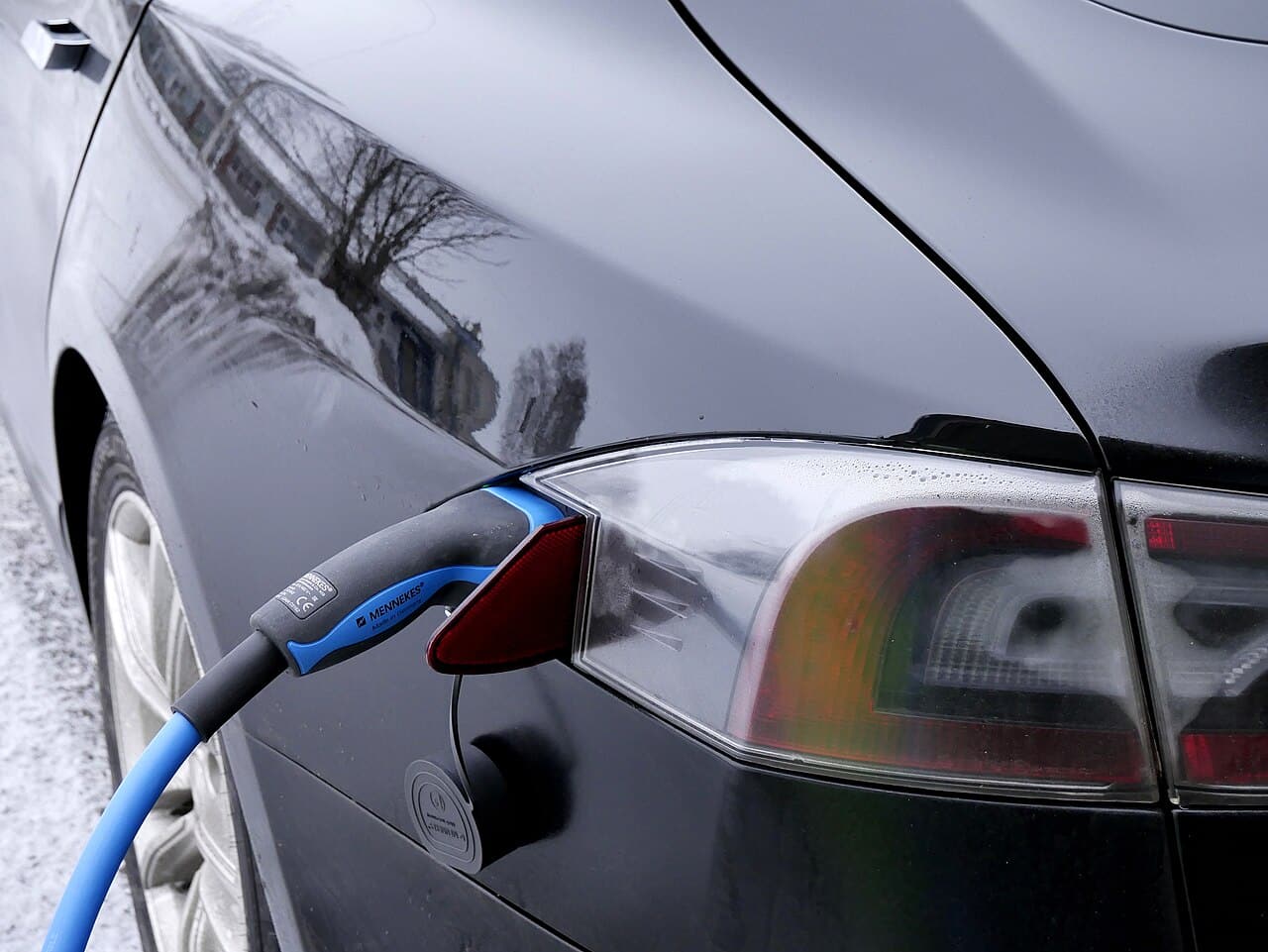
A driveway charger blinks green at midnight while a sedan tops off its battery outside a split-level home in Bergen County.
For years that overnight habit earned the owner a small monthly rebate, like clockwork.
No more.
The flat reward for plugging in after dark is being phased out across New Jersey’s largest utility territory, and in its place comes a rate that punishes daytime charging and rewards the night far more sharply than before.
So why would a utility walk away from a credit that worked for five years?
The pricing switch that replaces a flat rebate with a moving target
The old system was simple: charge an EV between midnight and morning, and earn a credit of a few cents per kilowatt-hour no matter what else was happening on the grid that day. It was a flat, predictable cash reward that asked drivers to do almost nothing except glance at a clock.
That structure is giving way to time-of-use pricing, where the price of every kilowatt-hour changes by the hour instead of staying fixed. Between June 1 and September 30, switching from the standard rate to time-of-use means paying 10.4 cents/kWh during off-peak hours, 27.4 cents/kWh during mid-peak hours and 59.9 cents/kWh during on-peak hours, while between October 1 and May 31 the off-peak rate runs 10.5 cents/kWh, mid-peak 26.5 cents/kWh and on-peak 38.5 cents/kWh.
The gap is not small.
That shift moves the financial risk from the utility’s books onto the driver’s own habits. A flat credit paid out no matter when a car charged within the window, but a time-of-use rate punishes the wrong hour and rewards patience, turning a passive perk into a daily choice.
What is happening on driveways and apps across the state right now
Picture the timeline building toward this fall. The EV Program stopped accepting new enrollments for the off-peak charging credit effective January 13, 2026 , and the Electric Vehicle Off-Peak Charging Credit will be discontinued on October 1, 2026 .
Drivers already enrolled are watching two numbers at once, the shrinking credit on their current bill and the new time-of-use option waiting to replace it, and some are running their own math before switching since this sprawling rate change rewards planning far more than the old flat system ever did.
The new plan sets on-peak hours overnight from 12 a.m. to 6 a.m. as off-peak, with on-peak hours from 4 p.m. to 9 p.m. and mid-peak hours from 6 a.m. to 4 p.m. and 9 p.m. to 12 a.m. on weekdays , the exact window when homes and offices draw the most power at once. Everything outside that stretch, especially overnight, counts as cheaper.
A driver who used to earn a few cents back for charging at 2 a.m. now instead avoids a much steeper afternoon price. Similar overnight to afternoon swings already run in utility territories reshaping charging schedules, and operators managing public fast chargers are watching the same forces in how demand charges shape stations.
The regulatory order and the numbers behind the switch
This change traces back to a state regulatory process rather than a company decision made alone. New Jersey’s Board of Public Utilities considered a petition to add a Basic Generation residential Electric Vehicle Time-of-Use rate option and associated cost recovery in a 2023 docket, building on an earlier arrangement in which the Board approved a stipulation in January 2021 giving residential customers with EV chargers a time-of-use option, with customers receiving a quarterly credit for charging during off-peak hours, a change implemented on February 1, 2021 .
Other utilities have run similar managed-charging programs at meaningful scale, though the exact size of each varies by territory and is not always publicly broken out the same way.
New Jersey’s program followed the same basic playbook before this fall’s shift. Regulators approved nine new active managed charging programs last year, according to the state EV policy North Carolina Clean Energy Technology Center’s review , as reported by trade outlet Utility Dive, showing this change sits inside a much broader pattern rather than standing alone.
Where the new math gets complicated for ordinary drivers
None of this guarantees every driver comes out ahead. A flat credit paid the same reward regardless of a household’s total electricity use, but a time-of-use rate changes the price of every kilowatt-hour in the home, not just the ones feeding the car.
That means a family running air conditioning, laundry and a dishwasher during the expensive afternoon window could see their total bill rise even as EV charging costs fall. The charger rebate program itself remains untouched, offering installation help, but the monthly reward tied to charging behavior is what actually changes.
Drivers who shift flexible household use into the cheap overnight window stand to save more than they ever earned from the flat credit.
Solar-equipped homes face another wrinkle. Utility documentation shows credit calculations for solar customers will be capped at net consumption, the gap between power drawn from the grid and power sent back, a layer most drivers never faced under the old system.
What the shift signals for the next wave of EV households
Because electric vehicles keep adding load to local grids, utilities nationwide are leaning harder on pricing signals instead of flat rebates to spread demand across the full day. Utilities are working with third-party software providers and automakers to develop and scale managed charging programs that can spread out the EV charging load and avoid creating peaks that stress local systems , and New Jersey’s switch is one state’s version of that trend.
That broader trend suggests flat charging credits may be a fading model nationally. Time-of-use pricing gives utilities a tool that automatically adjusts as more cars plug in, without a new credit program every time enrollment grows.
Check the new hourly schedule, move charging later into the night, and treat the old flat reward as a feature quietly retiring.
Utilities elsewhere are already building on similar foundations, including programs that let drivers earn money by feeding stored power back to the grid, a model already running in New England’s payment pilots. New Jersey’s own next chapter may well follow that same road.
