A browser tab sits open on a sign up page promising real quantum hardware, free, no credit card required.
A countdown clock ticks beside it, because the free time is not unlimited.
Ten minutes a month sounds generous until a circuit actually starts running.
Then a second number appears, one that changes everything about what comes next.
That number is what turns a hobby project into a real decision about money.
Why the free minutes vanish so fast
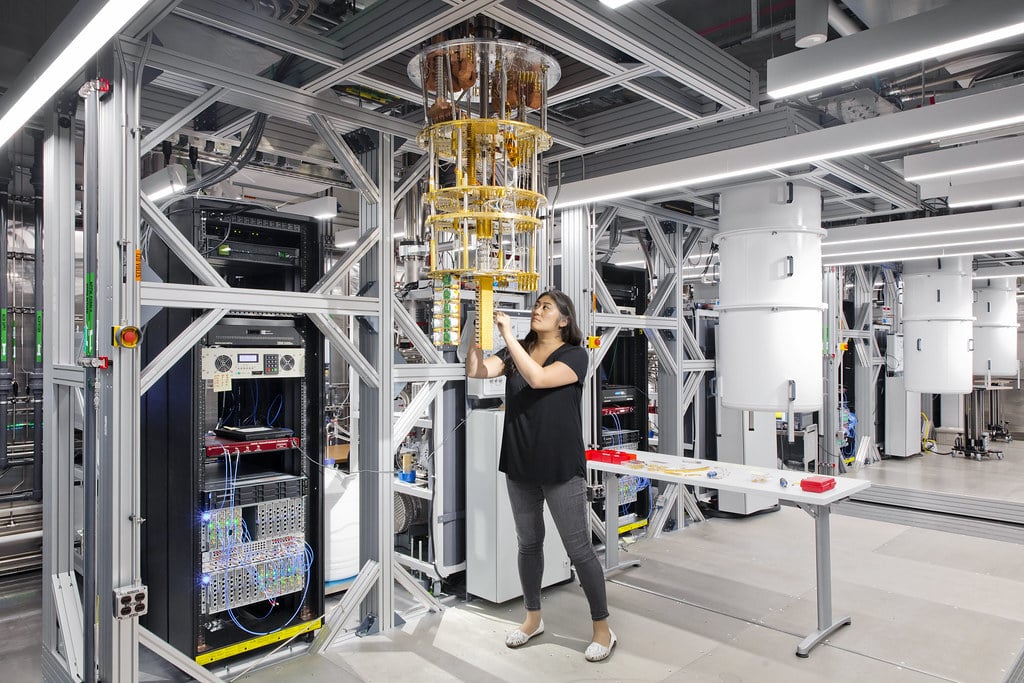
The mechanism is simple once you see it: quantum chips sit inside dilution refrigerators cooled to near absolute zero, hardware that can cost hundreds of thousands to millions of dollars to build and run, and every second a chip is active costs real electricity, real cryogenic upkeep, and real queue time shared among thousands of users.
A company giving away compute on that hardware is not handing out spare capacity, it is handing out a sliver of an extremely expensive machine. So the free plan is throttled to protect that machine, not to be stingy for its own sake.
IBM’s Open Plan provides free access to IBM quantum computers for up to 10 minutes of runtime per month , and that runtime is measured down to the second a circuit is actually executing on the chip, not the time spent waiting in line for a turn.
Once that allotment runs out, there is no overage button, no slower free tier to fall back on. The next rung up is a straight commercial plan, and that is where the second number lands, the one that reframes the whole offer.
What a real circuit actually costs once the clock resets
Here is the number that catches people off guard: IBM Quantum offers several access plans based on your compute needs. The Open Plan is free, Pay-As-You-Go starts at $96 USD per minute, Flex starts at $72 USD per minute, and Premium starts at $48 USD per minute.
That is not a typo and not a one time fee, it is a running rate for every minute a chip is working on a problem. Run the arithmetic forward and the picture gets sharper.
At the entry Pay-As-You-Go rate, a single hour of dedicated quantum time runs close to six thousand dollars, a figure confirmed when outside pricing trackers multiplied IBM’s published per-minute rate out to sixty minutes for comparison against rival clouds, landing at 60 minutes of QPU runtime x $96 = $5,760 .
And the discounts do not come free either. The Flex Plan drops the rate to $72 a minute, but only against a prepaid allotment of quantum compute time, starting at 400 minutes per year , while Premium falls to $48 a minute only against a 5,200-minute annual minimum . So the cheaper rates are reserved for customers who commit money up front, not casual experimenters testing an idea.
Where this number comes from and how it compares
These figures are not estimates pulled from a forum, they come directly from IBM’s own quantum products page, the company’s primary listing of its access plans.
Independent pricing trackers that audit cloud quantum rates across providers reached the same figures when they cross checked IBM’s public page against its published plan details this fall.
That matters because quantum pricing across the industry is genuinely scattered. Rival clouds charge by the shot instead of the minute, with a ten thousand shot circuit on one competing platform on AWS Braket costing about $4.55 for Rigetti Cepheus-1-108Q , a structure that can look dramatically cheaper for small jobs but scales unpredictably once a workload grows complex.
So the real catch is not that quantum time costs money, every computing resource does. It is that the free plan’s ten minute ceiling creates a cliff edge pricing jump, where a small developer can explore for free right up until a project gets interesting.
Where the free tier still genuinely holds up
None of this means the free plan is a trick. For learning the basics, writing a first program, and testing small circuits, ten minutes of real hardware time goes a long way.
In practice, most research circuits run in milliseconds of actual QPU time, and the limit is rarely hit by individual developers experimenting with quantum algorithms , according to independent guides tracking how people actually use the free tier.
Even so, that cushion disappears the moment someone tries anything with depth, like simulating a real optimization problem or testing error correction across many repeated runs. Those workloads chew through runtime fast.
That is precisely the point where the free plan stops being a sandbox and starts being a locked commercial door. Which is why the jump feels so sudden to newcomers.
A pattern similar in spirit to how a quantum chip needed 288 physical qubits just to hold a dozen error free ones shows up elsewhere in the field. The real cost shows up only once you dig into the fine print underneath the headline number.
What it means for anyone curious about trying quantum computing
None of this should scare off a curious reader. The free plan remains one of the most open doors in advanced computing, a real chance to run code on hardware that cost significant sums to build, at no charge and with no application required.
But anyone planning to move past hobby experiments should budget for that cliff now, not after the countdown clock hits zero. Treating the free minutes as a trial, rather than an ongoing resource, is the difference between a pleasant surprise and an unexpected bill.
Meanwhile, the broader industry is still sorting out how this pricing should work at all, much like how an AI lab’s infrastructure had to be overhauled after its daily code merges surged tenfold in a matter of months.
Quantum cloud pricing is likely to keep shifting as more providers compete for the same curious users, which is, in its own way, good news for anyone willing to wait and watch the rates evolve.
