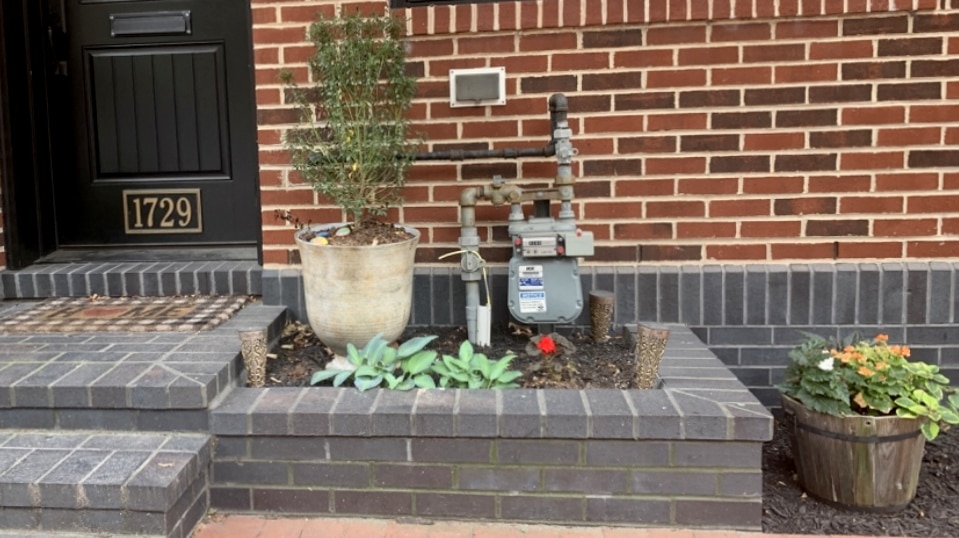
A small metal box bolted to the side of a Pennsylvania house ticks along all winter, measuring nothing more than whether the gas line is still connected.
It does not care if the furnace ever kicks on.
Every month it earns its owner a flat fee no matter what.
That fee just climbed again, and state regulators had to decide how far it could go.
The number they landed on explains a line millions of households barely notice until it jumps.
Why a flat fee shows up before any gas gets used
Every residential gas bill carries two very different kinds of charges, and the customer charge is the one most people never question. It is a fixed monthly fee that applies whether a household burns ten therms or zero, built to cover the cost of keeping a meter installed, reading it, and mailing a bill at all.
So when a utility wants more revenue, raising this flat fee is an easy lever to pull. Unlike the per-therm delivery charge, the customer charge lands the same on every account, from a studio apartment to a house running the furnace nonstop.
That is the lever UGI Utilities reached for in its latest Pennsylvania filing, asking regulators to let the monthly charge on its gas division jump well past where they were willing to let it go.
The scene inside a typical Pennsylvania gas bill
UGI Gas serves a wide swath of the state, and its case was never just about the customer charge alone. The company asked for $99.4 million, or 8.1% , framed around the cost of maintaining pipes and meters across its territory.
UGI also proposed an increase in its residential customer charge, from the current $16.25 to $23 per month. For a household that barely uses gas in a given month, that alone can swing the bill noticeably before a single therm gets billed.
UGI initially sought a one-time increase of $9.91, or 8.7 percent, on the average residential account.
What regulators actually approved, with real numbers attached
The Pennsylvania Public Utility Commission voted on October 1 to approve a settlement rather than the company’s original filing, and the gap between the two is the real story here. Instead of the full revenue request, the commission’s own announcement describes a settlement reducing UGI Utilities Inc.’s rate changes by nearly 35% .
Because the deal is phased, the customer charge will not jump straight to $23. The settlement allows for a smaller, incremental increase in the residential customer charge from $16.25 to $20 per month, with the customer charge set at $19, effective Oct. 1, 2026, and then $20, effective Oct. 1, 2027 , well short of what the utility wanted but still a real increase from $16.25.
The average household using 68.8 Ccf per month will see its bill climb from $113.76 to $117.69 in the first phase, and then to $120.21 in October 2027, a total two-phase increase equal to $6.45 per month, or 5.7% . That is roughly a third smaller than the 8.7 percent jump UGI originally proposed.
Where this settlement still leaves room to disagree
The vote was not unanimous. The commission voted 3-1 to approve the settlement, with Vice Chair Kimberly Barrow dissenting over what she called a 30-year pattern of “black box” settlements. She said the company has settled its rate cases as far back as 1995 without a specified rate of return, which leaves too little transparency on cost of capital and capital structure.
Even the commission’s own chairman acknowledged the tension. Chairman Stephen M. DeFrank voted to approve the settlement, saying his vote should not be read as dismissing transparency concerns, and noted that the commission voted at its previous meeting to create a Rate-Making Working Group that will examine rate case transparency, including whether settlements should identify a return on equity.
None of that changes what customers will actually pay starting this month.
What households actually got out of the trade
In exchange for accepting a real increase, Pennsylvania regulators secured a promise that protects ratepayers from the next request landing too soon. UGI agreed not to file another base rate increase before Jan. 15, 2029 , meaning the customer charge should hold at $20 for roughly a year and a quarter once it reaches that level in October 2027, and for more than two years counting from the first step of the increase this month.
This mirrors a pattern playing out across the country as fixed charges draw more scrutiny in utility filings, echoing the same fight already shaping a gas rate cut elsewhere. Flat fees are easy for companies to justify and easy for households to overlook.
Which is why commissions increasingly treat them as their own fight inside a larger case, not an afterthought.
