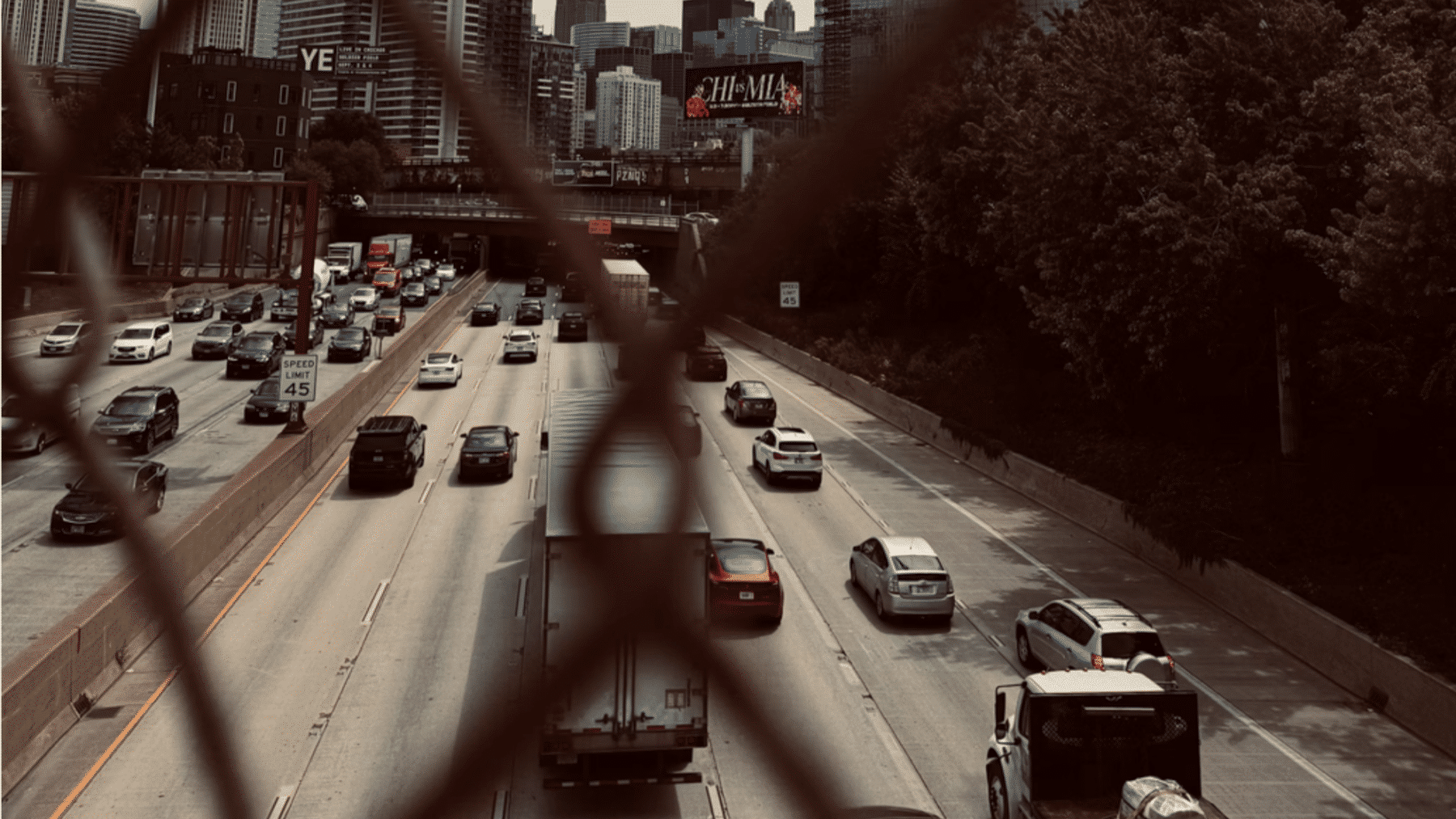
A commuter glances at a phone mounted on the dashboard and follows the blue line without a second thought.
The route looks ordinary, maybe even a little slower than expected.
Nobody honks, nobody questions it, the dashboard just keeps talking.
Behind that calm screen, a company had spent six months testing something far stranger on roads in ten American cities.
What was actually happening to the traffic around that car while it drove.
How the detour engine actually works under the hood
The trick is simple once you see it: the app does not try to make every single driver faster. Instead it looks at a handful of the most clogged road segments in a city and makes them look slightly less appealing to the routing math, even when they are still technically the quickest path for an individual car.
The system modifies at the routing stage the perceived cost to trips passing through pre-selected segments depicting disproportionately high levels of demand and/or congestion, a nudge often worth only a few seconds on paper but enough to peel off a sliver of traffic onto a nearby parallel route. Because the system does this across roughly 100 highly congested road segments across 10 major US cities rather than one road at a time, the effect compounds without any single driver noticing a dramatic change.
So the app is not finding you a shortcut. It is rebalancing a whole grid of streets, one small discouraged turn at a time, using live congestion data most riders never see.
And because the adjustment only ever points drivers toward alternatives with similar travel times and segment types, almost nobody ends up dramatically worse off, even though a few individual trips do run longer than the fastest possible path.
What the ten city experiment actually looked like on the ground
Researchers ran the experiment in 10 major US cities to demonstrate the effectiveness of targeted low-cost routing interventions in improving overall traffic conditions , with cities chosen based on the congestion levels and ground truth availability . Each city held roughly 100 of these pressure point segments during peak hours.
None of this required new sensors, cameras or road paint.
Yet the scale was enormous. Even though under 2% of observed trips received altered routing recommendations , that was enough volume across ten dense metro areas to move the needle on citywide traffic patterns, much like the invisible routing habits explored in a recent survey on commute satisfaction.
The hard numbers behind the claim, and where they came from
The study, led by researchers including Neha Arora, Alexandre Bayen, Theophile Cabannes and Haizheng Zhang at Google Research, identified and selected road segments in 10 major US cities (~100 per city) depicting historically large levels of demand or an overabundance of congestion during peak demand intervals, then over a 6-month period dispersed traffic away from these segments by altering the costs assigned to suggested routes passing through them , alternating between the treatment and the control routing algorithm over consecutive days to compare traffic with and without the nudge.
On the targeted segments, results showed a median ~2% increase in driving speeds on targeted segments and a 0.5, 1.0% decrease in fuel consumption rates . The company’s own research summary frames that as proof that networked navigation technology can be a powerful tool for proactively shaping traffic flow for the benefit of society, and by coordinating a small fraction of trips, systemic gains can benefit all road users , and the full methodology appears in a peer reviewed paper published in Nature Cities, titled “Urban congestion relief experiments through routing-app interventions.”
Those percentages sound small in isolation, but applied across the sheer volume of daily trips in ten major cities, the research points to meaningful fuel savings and, as the company’s own summary notes, potential savings of thousands of tons of CO2e emissions per city per year .
Critics outside the project have pointed out a real limit: every author works or worked for Google Research, and the public cannot inspect the company’s trip and traffic data , only the published statistical methods and results.
Where the trick runs into real limits
Even the researchers are careful not to oversell the result. Understanding how this would scale if applied to a much larger share of trips, rather than a slim 2 percent, remains an open question for future work, since nobody has tested what happens if the nudge is applied far more aggressively.
Because the average time saved per trip was so small, ordinary day to day variation in traffic from weather, accidents or simple randomness can dwarf the benefit on any single commute. Google’s own paper admits that its users and drivers were unlikely to notice any changes.
There is also the standard worry with any road fix. A co-author of the study has cautioned that the gains could erode if adopted too aggressively, warning that “you cannot be too successful, because if you are too successful, then more people will start driving, and essentially you’ll be back to ground zero.” The experiment measured only the immediate effect rather than what happens once word gets around.
Still, the underlying idea connects to a broader theme this desk has tracked before, where small automated habits quietly reshape how people move through their day, echoing the mental routines described in a prior look at commuting behavior.
What it means for the next drive you take
None of this changes what a driver sees on their own screen tomorrow morning. The blue line still looks like the fastest way home, because in nearly every case it still is.
What has changed is the quiet admission that a private routing algorithm now functions less like a convenience feature and more like a piece of public transportation infrastructure, tunable in the same spirit as a traffic signal or a toll lane. That raises a fair question city planners are only beginning to ask.
Who gets a say when a smartphone app, rather than a transportation department, decides which streets absorb the overflow.
For ordinary drivers, the honest takeaway is modest and a little reassuring. The detour under the hood is real, it is backed by published research, and it appears to make the whole system marginally better off without making any single trip meaningfully worse.
