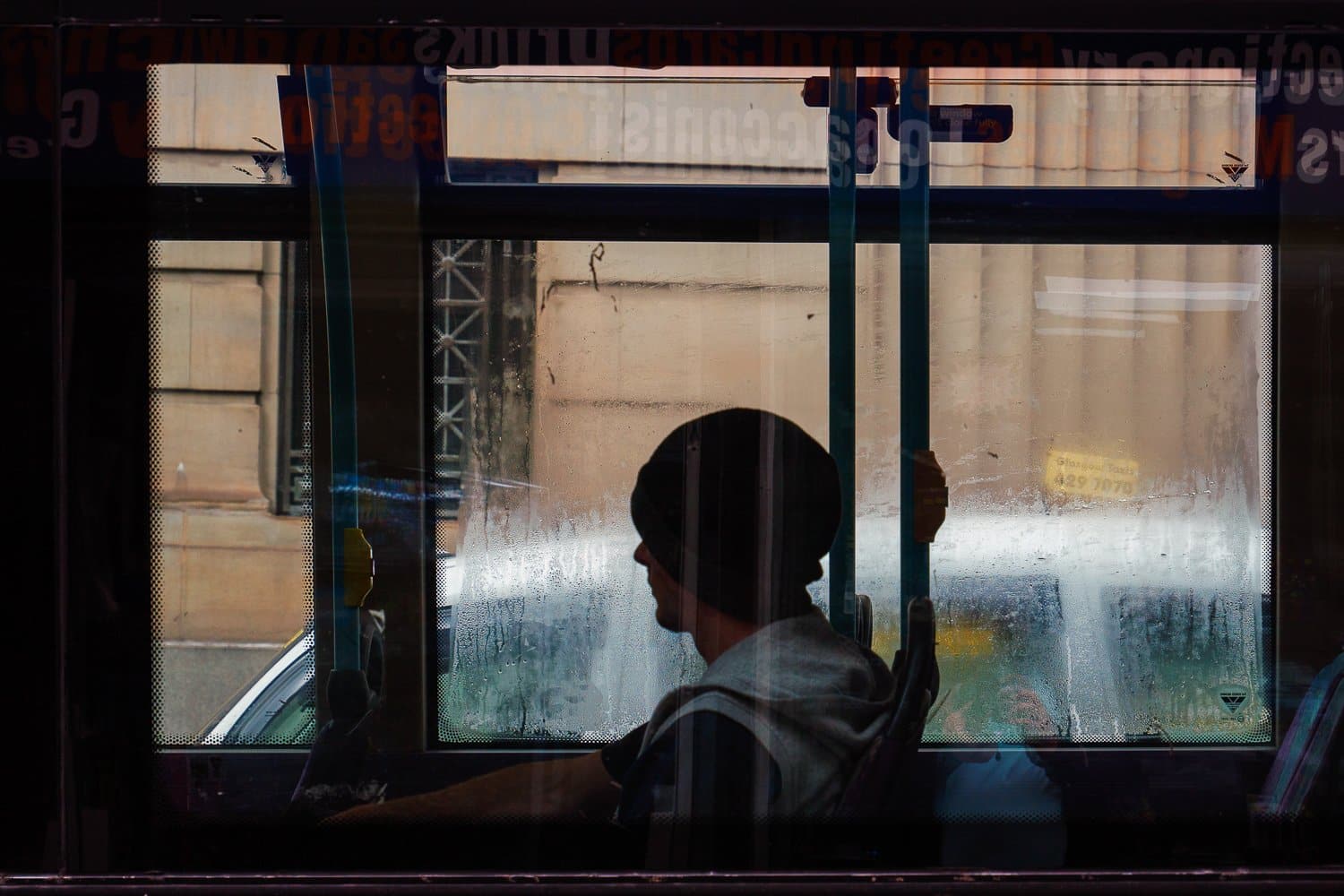
A bus pulls away from the curb and a rider settles into a window seat, phone dark in a pocket, eyes drifting past storefronts.
No music, no scrolling, just a quiet half hour before the first meeting of the day. Most people would call that wasted dead time.
Researchers who tracked how workers actually spend that stretch found something different. What a rider does with that silence changes the whole shape of the day ahead, and the question is why.
How the brain uses the ride to switch gears
Commuting researchers describe the trip to work as a kind of in-between zone, neither fully home nor fully office, where the mind is free to drift or focus. People who deliberately think through what their workday will look like, a habit researchers call role-clarifying prospection, arrive less rattled than those who stare out the window with no plan at all.
The mechanism is simple. A commuter holds no defined role in transit, not quite the person who left the kitchen table, not yet the employee at a desk. One study found that gap becomes useful the moment someone fills it with intention rather than letting it drift.
So the fix is not a shorter ride or a better playlist. It is mentally rehearsing the tasks ahead, the first meeting, the overdue email, the stalled project.
Two people can sit on the same train for the same 40 minutes and walk in completely different. One prepared. The other just endured it.
What an ordinary commute actually looks like
Picture the scene repeated across millions of driveways and train platforms every weekday morning. Workers worldwide commute an average of 38 minutes each way, wedged between two different identities, parent or roommate on one end, employee on the other.
That gap is not evenly tolerated. People low on self control and those juggling heavy work family conflict report the longest commutes as the most draining, the same research found. The ride does not create the stress so much as expose how unprepared someone already feels for the handoff.
Yet almost nobody wants the commute gone. Asked to name an ideal travel time, workers rarely say zero.
One widely cited estimate puts the preferred commute length near 16 minutes, enough to decompress but not drag, which tracks with how commute satisfaction varies across cities. The complaint is rarely the trip itself. It is what happens, or fails to happen, inside it.
The evidence behind the habit
The clearest proof comes from field studies run by researchers at Harvard Business School and Columbia Business School, who tracked more than 1,700 commuters across three separate projects, including a monthlong intervention. In one experiment, 443 participants commuted roughly 52 minutes a day, mostly by car, and were coached to mentally rehearse their workday en route.
The pattern held. Workers assigned that rehearsal reported feeling the negative pull of a long commute far less sharply, and the effect lasted the full month rather than fading.
A separate strand of research backs the same idea from the other direction. Scholars studying what employees missed once lockdowns erased their commutes found many had unknowingly used that travel time as liminal space, a buffer closing one role before opening another.
Without it, some struggled to leave work behind at the kitchen table, a problem a 20 minute drive used to solve automatically.
Where the habit runs into limits
None of this means every long commute is secretly good for you. Stress matters more than distance. Commute related tension, not trip length, does the most damage to a rider’s ability to switch off.
So someone stuck in gridlock, white knuckled and late, gets little benefit from rehearsing a meeting since the nervous system is busy handling traffic. That is why researchers suggest a deliberately longer scenic route home can beat a shorter, more frustrating one.
The habit is not free, either. It takes discipline to use quiet transit time for planning instead of the phone, especially since a single buzzing alert can hijack attention within seconds, as other recent research on focus has shown.
And it helps some people more than others. Workers already managing heavy friction between home and work got the biggest lift from the practice, while calmer lives showed a smaller, still measurable gain.
What it means for the next ride to work
None of this requires an app, a subscription or a gadget. It asks for roughly five unstructured minutes thinking through the day’s first tasks before the doors open or the ignition turns off.
That is a modest ask given the payoff: steadier moods at the office, less stress carried home, and a habit that costs nothing beyond attention already being spent anyway.
Remote workers lose this transition entirely. Some researchers now recommend manufacturing one, a short walk before logging on or after closing the laptop, to mimic the boundary a real commute used to provide, built around that same deliberate mental shift.
So the next bus ride or stretch of highway that feels like dead air might be worth treating as a small rehearsal room instead. It does not have to be enjoyable. It just has to be used.
