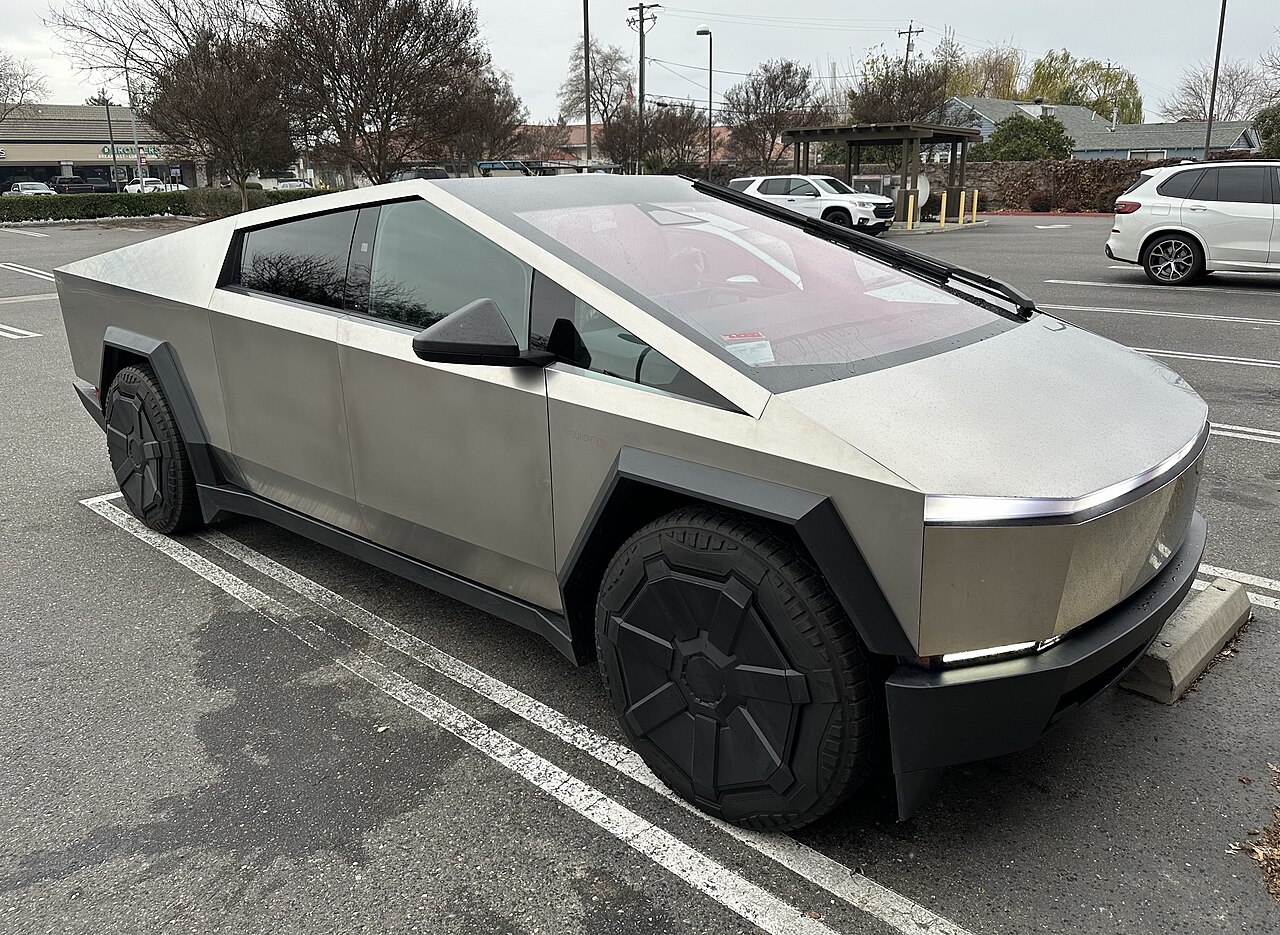
Tesla will wind down production of its Cybertruck electric pickup at its Texas factory around the middle of 2027 and refund deposits to many customers whose orders cannot be fulfilled before the line closes, chief executive Elon Musk said this week.
Musk disclosed the production timeline in a post on social media platform X on Friday, Nov. 6, saying the change would free up factory space for increased output of the Cybercab, Tesla’s two-seat autonomous robotaxi. In a post on X, Musk said: “Tesla will be winding down production of the Cybertruck at Gigafactory Texas around the middle of next year to make room for increased Cybercab production.”
He followed up on Monday with the news that many customer deposits will have to be returned because the Cybertruck order rate “far exceeds” Tesla’s production rate , Musk wrote Nov. 9 in a post on X .
“We will try to make as many as possible before shutting down the line in about 8 months, but will have to return deposits for a lot of people,” the Tesla CEO wrote.
Musk disputes profitability concerns
Musk pushed back on suggestions that Tesla is killing the Cybertruck because it loses money.
He wrote that “This is not a case of Cybertruck being unprofitable, as has been misreported by legacy media, but rather that the opportunity cost of the complexity of Cybertruck is vastly outweighed by the value of incremental Cybercab production.”
The comments followed an earlier post on Saturday in which Musk wrote on X that the Cybertruck order backlog is “far more than we can make before dismantling the line for Cybercab expansion around June/July next year.”
The wind-down announcement itself came on Friday, with Gigafactory Texas floor space being reassigned to Cybercab production, according to Musk’s posts on X.
A rocky run for the angular pickup
Tesla began Cybertruck deliveries in late 2023. Musk had once projected that annual Cybertruck sales could reach 250,000 vehicles, but the company only sold 20,237 Cybertrucks in the U.S. last year, down 48 per cent from 38,965 in 2024 .
The truck’s unconventional stainless steel exterior drew both fans and sharp criticism. The Cybertruck and its polarizing design gained a niche following, but it did not achieve mass-market sales and was the subject of 11 voluntary recalls, according to the National Highway Traffic Safety Administration .
Musk also reshared a post from Cybertruck lead engineer Wes Morrill that described the truck as a technology development platform whose work carries on through the Cybercab.
The production changeover marks another shift in how Tesla allocates its US manufacturing capacity, a question that has become increasingly central to the industry as automakers juggle EV demand against new model investments.
GCN has previously reported on how plants retool quickly for different vehicle types, including a Michigan stamping press that swaps dies in minutes rather than hours to keep up with shifting model lineups.
Cybercab takes priority
Tesla has positioned the Cybercab as central to its push into autonomous ride-hailing and robotics.
In response to a user on X, Musk called the Cybertruck the “best vehicle Tesla has ever made” and the wind-down the “end of an era.”
Musk hasn’t said how many deposits will go back or what they add up to, and Tesla hasn’t published anything on it.
The automaker’s broader EV manufacturing strategy continues to evolve alongside industry-wide shifts in assembly methods, including approaches like a Kentucky prototype line that bolts together fewer, larger components to speed up truck assembly.
Tesla’s fourth-quarter earnings report, expected in late January, will offer the first detailed look at how the Cybertruck wind-down and Cybercab ramp-up affect the company’s production costs and vehicle mix going into 2027.
