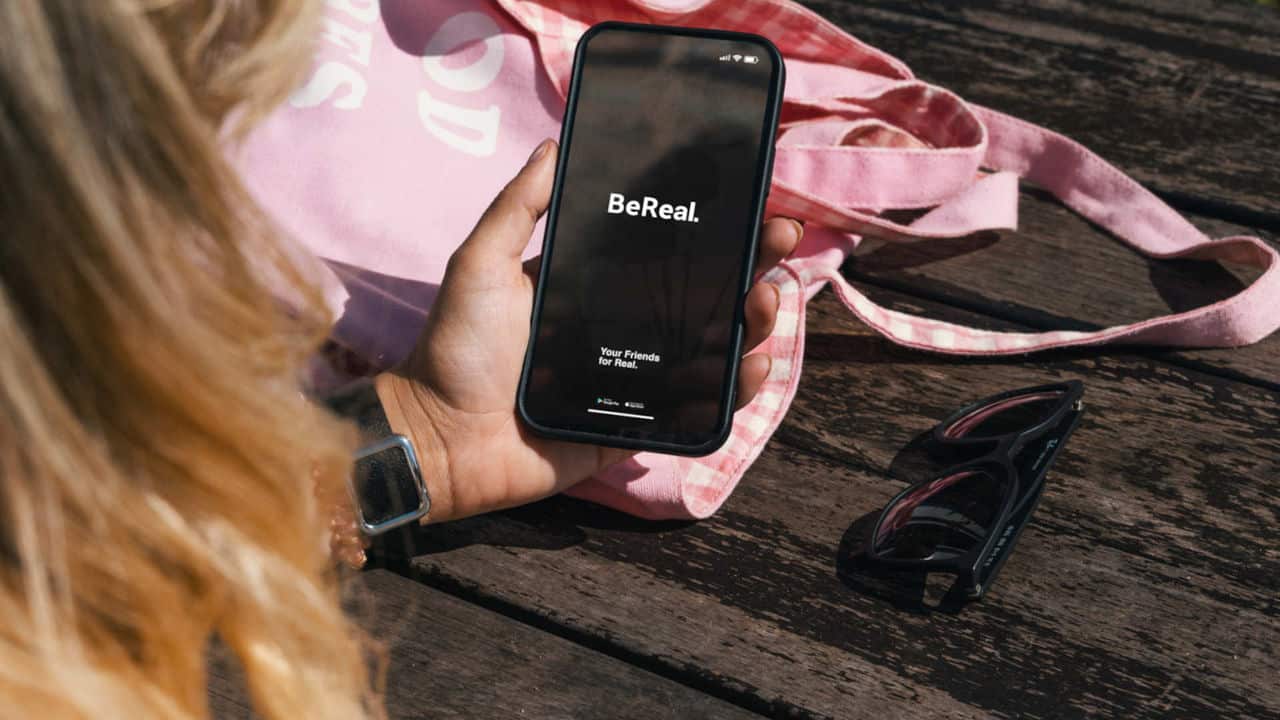
A phone buzzes without warning, and for two minutes a friend group races to snap whatever is actually in front of them, unfiltered and unposed.
That single notification once felt like a small daily ritual among friends.
It promised something rarer than likes, a true glimpse of someone else’s ordinary afternoon.
Millions of people signed up for exactly that.
Then, just as quietly, many of them stopped opening the app at all.
Why the whole idea depended on a trick that could only work once
The appeal was simple and almost impossible to fake. Once per day, BeReal notifies all users that a two-minute window to post is open. The app pushed a notification and gave users a narrow two minute window to capture a front and back camera image at the same time, flagging posts if they were retaken or shared late.
That randomness was the entire mechanism, because nobody could plan the shot in advance. A user could not curate a highlight reel the way traditional feeds reward.
A built-in rule made the mechanism self-enforcing, since a user could not view any friend’s post until they had shared their own for the day. So the incentive to open the app was never really about the picture, it was about not being the one friend who left everyone else locked out.
The scene that made it a phenomenon for one wild summer
By the back half of one summer, the app had become a genuine cultural moment among younger users, who treated the daily alert like a shared joke. After a couple of years of relative obscurity, it rapidly gained popularity in early and mid-2022, growing from 21.6 million to 73.5 million users between July and August , an extraordinary climb for any app in weeks that made it impossible to ignore, as noted on this related feature.
The pitch, to let friends share real, unfiltered experiences with close friends, resonated with a generation tired of posed feeds.
But a crowded, performative version of friendship kept creeping back in anyway. In August 2023, in an attempt to make BeReal more social, another feature was added so that users are now able to see their friends of friends’ BeReal , pulling the experience further from the tight group chats where it first caught on, the same private logic covered elsewhere on this desk.
The numbers behind the slide, and why they are disputed
Growth peaked that August, before experiencing a decrease in use in 2023 and continuing to decline to 23 million users at the beginning of 2024 , and the slide did not stop there by some measures.
Third-party analytics firms have since reported starkly lower numbers than the company itself claims. One tracker cited monthly active users at roughly 16 million as of March 2025, but that figure conflicts directly with what the app’s current owner reports, and industry writeups note the gap likely reflects different measurement methods rather than a single agreed count.
In 2023, worldwide downloads totaled an estimated 31.5 million, which decreased 60% year-over-year to 12.7 million in 2024 , according to analytics firm Appfigures. Before its acquisition, BeReal had ceased user growth by late 2022 and lacked monetization , with one industry estimate describing significant monthly cash losses at the time, though the exact figure is not independently confirmed by the company.
Where the authentic pitch actually held up, and where it did not
None of this means the whole concept failed everyone. Despite explicit awareness of the app’s shortcomings, participants in one academic study felt BeReal was as close to authentic as social media could get , which suggests the core idea had real value for people using it as intended.
Yet that same research points squarely at the catch.
One participant quoted in the study, published in a peer-reviewed journal, said the friends of friends feature where you can see the BeReals from mutual friends just takes away the personal, authentic feature from BeReal for them as they use it with close friends only , precisely the layer added in pursuit of growth. These changes resulted in a loss of feeling BeReal was a close personal social network and impacted authentic self-expression , a tension that echoes how Americans now communicate across more channels without necessarily growing closer.
What the story means for anyone chasing the next unfiltered app
Even after its slide from the 2022 peak, the app has not vanished. The company disclosed in a release tied to its new advertising push that it counts an estimated 40 million monthly active users, including 5 million monthly active users in the U.S. , well off the 2022 high but still a functioning service with a sizable core, even if outside trackers put the real number far lower.
That stabilization, by the company’s own account, matters. It suggests the format did not die, it just shrank to something closer to the size its original premise could actually support, since a closed, reciprocal circle scales naturally to dozens of people, not to the hundreds of millions an advertising business often chases.
Which is the real lesson for anyone drawn to the next app promising genuine connection over curated posts. The feature that makes an app feel authentic, a small trusted circle and mutual vulnerability, is frequently the exact feature that caps how big that app can ever get, and that catch was built into the pitch from day one.
