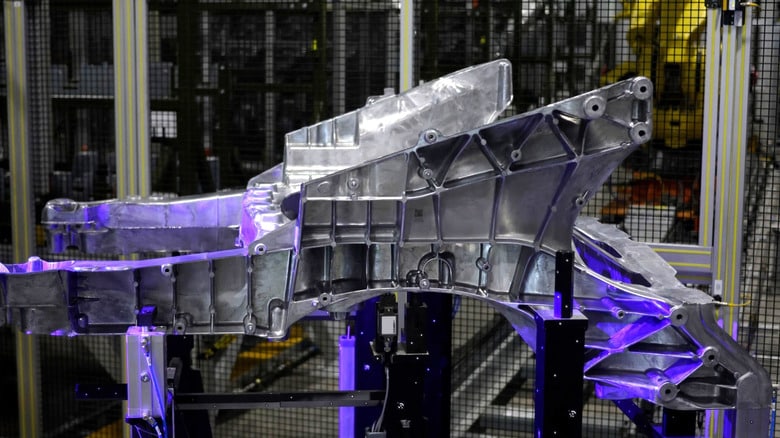
A single electric SUV rolled off an Illinois assembly line faster than its two bigger siblings combined last quarter.
Workers on a second shift kept the line moving around the clock.
Executives called it the best quarter in the company’s history.
Wall Street noticed, and so did the company’s own sales forecast.
What changed inside that factory explains why.
Why one cheaper model flipped the entire sales mix
The shift comes down to price and timing working together. The automaker’s original full-size SUV and pickup start well above $70,000, which kept the brand firmly in luxury territory. The new compact SUV, called the R2, launched this spring with a roughly $58,000 special edition model, and that gap alone opened the lineup to a much bigger pool of buyers who had never considered the brand before.
So when the company started a second R2 production shift at its Normal, Illinois plant to build more of the new SUV, the effect showed up almost immediately in the delivery numbers, with more vehicles reaching driveways every single week as the line kept running.
The larger SUV, pickup, and delivery van were never built at this volume. Once the new SUV could finally match demand, it reshuffled the whole mix almost overnight.
Inside the numbers behind a record quarter
The scale of the swing shows up clearly in the company’s own release. Revenue reached $2.155 billion, up 38% from a year ago, with deliveries of 19,248 vehicles, a sharp jump for a company that spent much of the past year wrestling with tighter production and parts shortages.
And the new model did not just add volume, it took over. Rivian said R2 was already its best-selling vehicle by volume, outselling both its R1 lineup and its delivery van in the third quarter.
Even so, the climb came with a cost, a pattern similar to what played out with a range extended electric truck entering an already crowded lineup. Rivian posted an adjusted EBITDA loss of $435 million, with a gross profit of $176 million, with rising operating expenses tied to scaling sales and service support.
Where the hard evidence came from
These figures are not estimates pulled from an analyst note. They come directly from the company’s own third quarter financial results filed with federal regulators on October 29, alongside a live earnings call the same day.
Because of that strong showing, the automaker raised its delivery guidance to between 67,000 and 70,000 vehicles, from a previous range of 65,000 to 70,000. That marks the second upward revision this year.
Meanwhile, the chief executive tied the whole strategy directly to this one vehicle. CEO RJ Scaringe said in the shareholder letter that R2 production continued to ramp during the quarter, including the start of a second production shift, calling R2 “an attractively priced option for everyday adventures” that the company expects to be a long-term driver of growth and profitability.
Where the picture gets more complicated
None of this means the company has solved its cost problem. Building a brand new vehicle at a much lower price than its existing trucks is expensive in its early months, and that shows up plainly in the ledger even as deliveries surge.
The automotive gross loss narrowed to $80 million from $130 million a year earlier. That improvement came mostly from higher volumes at a better per unit margin, even as the company absorbed rising costs tied to ramping the new SUV.
Every unit sold still costs more to build than it earns. That mirrors what this site found when a Detroit automaker’s new assembly system promised faster output but needed time to pay off. Worse, today’s buyers are still paying for the priciest trim, since the less expensive, entry-level version of the vehicle, starting at $45,000, is not expected to be available until late 2027.
What it means for the road ahead
Even with those costs, the direction is hard to miss. A compact, mid-priced electric SUV has, within one full quarter of wide availability, become the engine of an automaker’s entire sales story, a notable reversal for a brand built on expensive trucks and vans.
So the real test now shifts to the next few months, as the company works to ramp R2 production further and narrow the remaining gap between what each vehicle costs to build and what it sells for.
That would mark a genuine turning point. If cheaper trims arrive on schedule, the lead over its pricier siblings looks likely to grow, not shrink, giving the automaker its clearest shot yet at turning strong demand into lasting profit.
