A phone buzzes face down on a kitchen counter, rings out twice, then goes quiet.
No one picks it up.
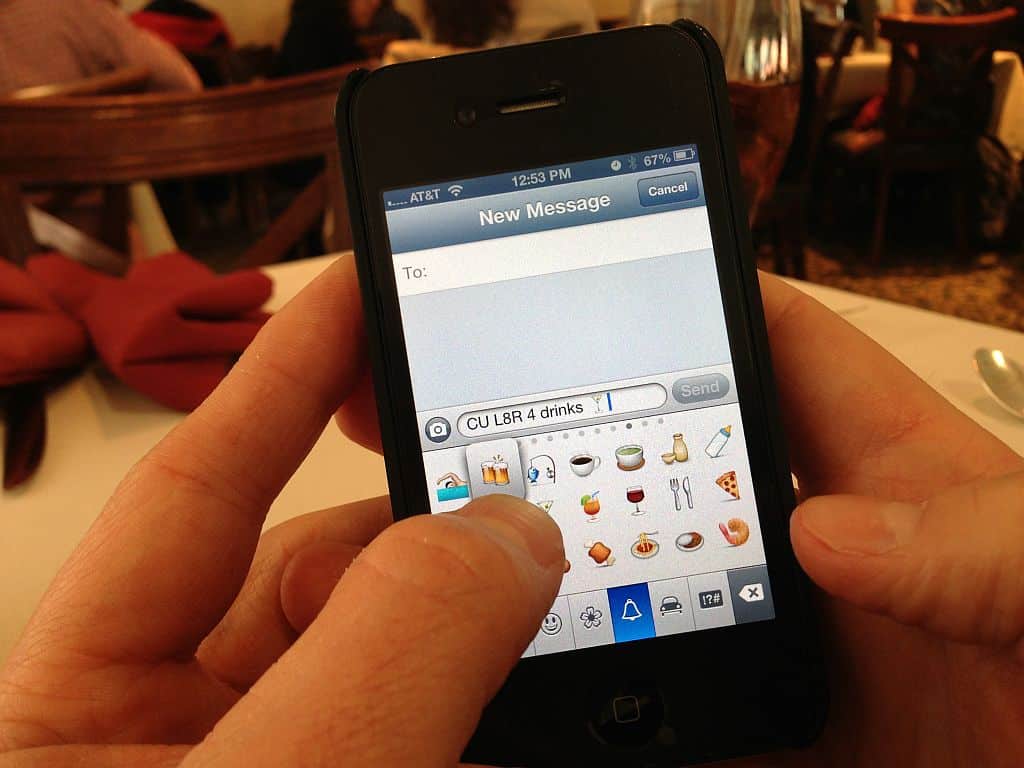
Seconds later a thumb taps out a short reply instead.
That small swap, call avoided, text sent, now happens so often among younger adults that researchers gave it a name.
What looks like a brush off turns out to run on something far more deliberate underneath, backed by measurable anxiety data.
Why a missed call now gets a text back instead of a voicemail
The mechanism is simpler than it looks, and it comes down to one word researchers keep returning to: control over timing. A live call forces an answer in real time, with no pause to think, no chance to edit a sentence before it lands.
A text lets the sender draft, delete, and reword before anyone else ever sees it. That gap, between speaking and composing, is what a 2025 study in the journal Communication Reports zeroed in on. Research consistently shows that people with higher social anxiety strongly prefer texting over calling. This is not merely out of convenience, but because text-based communication offers something voice calls cannot: the ability to compose, edit, and control your message before it reaches anyone else.
So the behavior is not about dodging a person, it is about managing the moment. Voicemail demands an instant, unscripted, recorded answer, and it offers none of that editing room.
What that split actually looks like across a family group chat
Picture a family text thread where a grandparent leaves a cheerful two minute voicemail and a grandchild answers with four words typed back. Neither side is wrong, they are running on different defaults built up over decades of different tools, and a recent UK survey of more than four thousand people captured that gap in hard numbers.
In a survey of 4,067 people in the UK, 46% of Baby Boomers would leave a voicemail if a call went unanswered, and 53% of Gen Z would send a message if a call went unanswered, and only 12% would leave a voicemail.
That split held across age bands in between. If a call goes unanswered, 46% of Baby Boomers and 49% of the Silent Generation leave a voicemail , against 14% for Gen Alpha, 12% for Gen Z, 16% for Millennials, and 28% for Gen X , so every earlier generation leans harder on the recorded message than the one after it.
The harder evidence behind the habit, and where it was measured
Peer reviewed research backs up what the survey numbers suggest. The Communication Reports study, conducted among adult participants in their twenties through fifties and published in 2025, set out to measure something that had only been assumed before: whether younger adults really do show more call related tension than older ones.
It found exactly that pattern, with younger adults (in their 20s and 30s) reporting stronger preferences for texting and higher call anxiety than older adults (in their 40s and 50s) . Age was negatively associated with social anxiety and controllability in texting, suggesting that younger individuals are more socially anxious and value the control afforded by text messaging.
But the same body of research complicates the story. The same study found the reverse for loneliness: lonely people preferred voice calls and experienced texting as less intimate. That detail separates two things constantly lumped together in generational chatter, social anxiety and social withdrawal.
Where the pattern gets complicated and does not hold evenly
Even so, the generational line is not as clean as headlines about it suggest. The differences between generations diminish substantially when it comes to calling family and friends, which only 15% of Gen Z say makes them feel uncomfortable, compared to 11% of Millennials and 5% of Boomers , according to separate YouGov polling on British adults’ phone habits.
So the anxiety is tied to strangers and unscripted conversations, not to people they already trust. Gen Z do admit to being uncomfortable making phone calls, but this only applies to calling strangers, with almost two thirds of Gen Z saying a phone call to a stranger makes them feel uncomfortable. Context shifts the calculation too, much the way an old contact’s name sitting untouched in a phone reveals more hesitation than indifference.
The same person who ignores an unknown number will often answer a parent without a second thought, and urgency still wins, in ways a single generational label cannot capture, much like how a reply as small as a single thumbs up emoji can carry wildly different meanings depending on who sends it.
What the swap means for anyone staring at a missed call
None of this means voicemail is dying because people stopped caring about staying in touch. It means a tool built for one era of phones is losing its fit for a generation that grew up composing every message before sending it.
That is a useful reframe for anyone who has felt snubbed by a text instead of a return call. The sender is likely managing real, measurable friction around live, unscripted conversation, not signaling that the relationship matters less, and a short check in text before a call tends to work for both sides.
The takeaway is calm. People picking text over voicemail are not failing at communication, they are choosing the version that lets them show up steadier and more themselves, a reasonable trade whatever year someone happened to be born.
