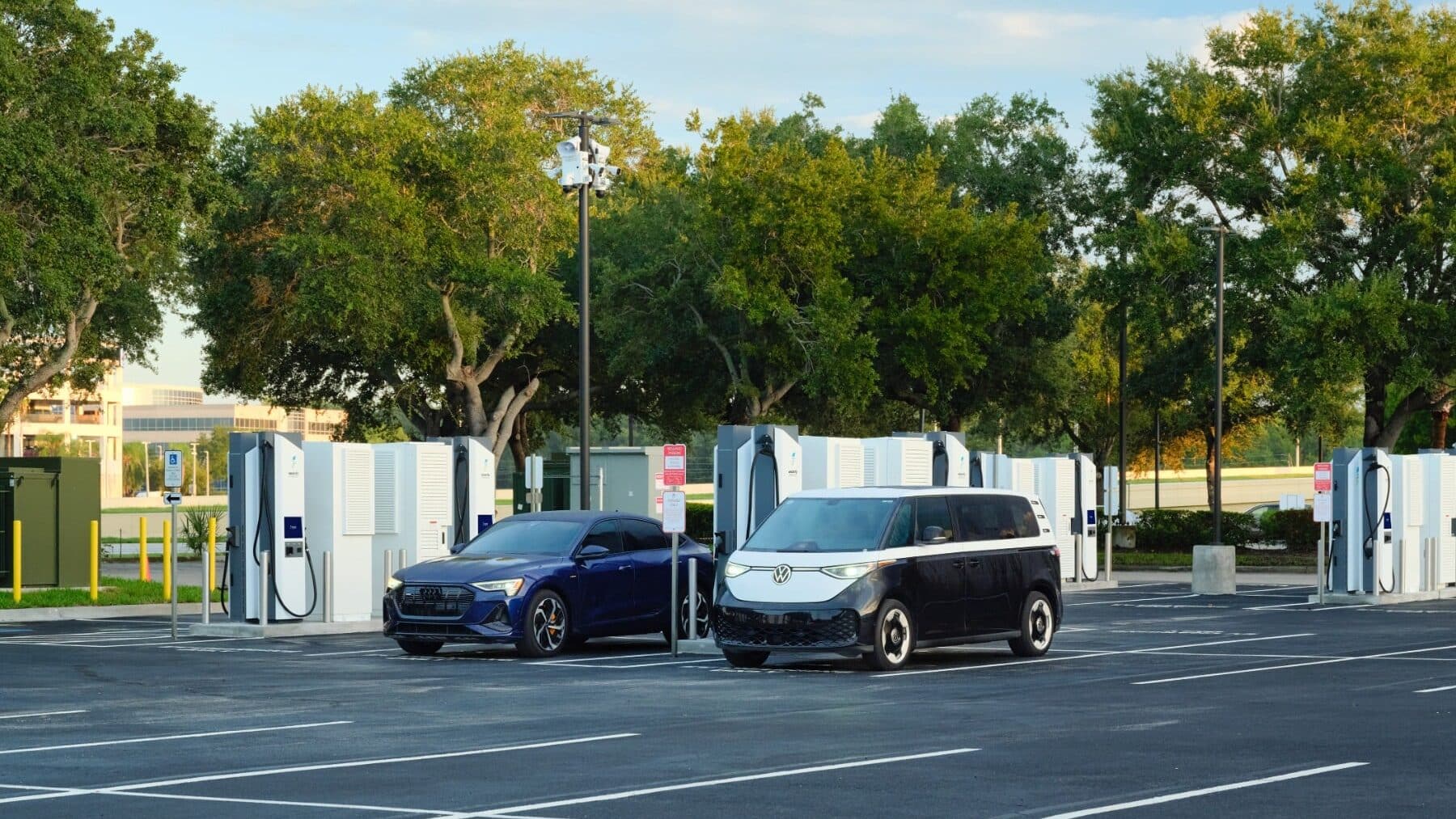
A row of cars sits nose in at a highway rest stop, cables stretched taut, screens glowing in the dark.
Inside, drivers scroll their phones while meters climb.
Nobody waiting there thinks of themselves as part of a record.
But across the country that same scene repeated itself millions of times in a single month this summer.
Add it all up and the country had never plugged in that often before.
So what actually pushed the count that high?
What pushed so many drivers to the plug at once
The surge did not come from a single new gadget or a sudden rush of car buyers. It came from a network that has been quietly getting both bigger and busier at the same time, so more stalls simply meant more chances for a session to start. Warmer weather plays a physical role too, since batteries generally accept a charge faster when they are warm, and that alone changes how people use a charger.
Summer road trips tend to produce shorter, more frequent stops rather than long waits. Each of those quick top offs counts as its own session in the data.
Then there is simple math. More EVs on the road means more cars eligible to stop at any station on any given day, and none of that required a breakthrough, just the existing system working at a larger scale.
Inside a record month at the plug
Picture the busiest stretch of interstate charging stations around the Fourth of July, when vacation traffic stacks up alongside the usual daily commuters topping off before work. Those two groups rarely overlap in winter, but summer pushes them into the same parking lots at the same hours, and that overlap is a plausible piece of why a popular off ramp can feel busier than a normal midweek stop.
Because so many of the newest stations are being built with more plugs per site, a single location can now absorb a crowd that might have caused a line in past years. That matters most at the kind of interstate rest stops where delay used to be the biggest complaint drivers had about going electric.
Even so, added stalls do not erase every long weekend wait. They simply raise the ceiling before anyone notices a slowdown, and that quiet capacity growth is part of what turns into a national record once it gets tallied.
The hard numbers behind the record
According to a charging data platform’s quarterly report, the network logged a record 17 point 6 million sessions in July, the single busiest month on file. That tally came from federal and industry tracking of the public fast charging system nationwide.
Trackers counted 80,964 ports installed at more than 14,600 locations by the end of the third quarter, a meaningful jump from the prior year when the network carried far fewer high power stalls.
Quarterly totals climbed too, reaching a record total topping 50 million sessions for the three months ending in September, up 26 percent from the same quarter a year earlier, according to industry data tracking every operator’s reported port counts.
The pattern holds across nearly every major network, not just the largest one. That suggests broad usage growth rather than a single company’s expansion.
Where the growth is starting to level off
Growth is not accelerating evenly everywhere. New port installations in the most recent quarter actually slowed compared to the pace set a year earlier, even as total sessions kept climbing, which means existing stalls are simply working harder rather than new ones carrying the load.
That gap matters for anyone planning a trip through a smaller town.
Rural corridors and secondary highways still have far thinner coverage than interstate hubs near major cities, with urban markets taking the large majority of new stations built last quarter. So a record national count can mask stretches of road where a driver still has very few charging choices.
Meanwhile, some operators are prioritizing fewer but far larger stations, a shift visible in projects like the first Tesla Supercharger hardware site one network just opened in Chicago. That approach concentrates reliability in dense areas while leaving the broader buildout to catch up gradually elsewhere.
What the record suggests for the months ahead
None of this means every charging stop has become effortless. Drivers in rural stretches or during peak holiday weekends still report waits, and the network’s growth, while real, has not fully closed the gaps that made charging anxiety a common complaint in the first place.
Still, a record session count is a useful signal.
It shows that the infrastructure already built is being used at a scale that would have seemed unlikely just a few years ago, and that usage is spreading well beyond the drivers of any single brand, a shift visible even as sticker prices keep shifting for new buyers.
If session counts keep climbing faster than new stalls get installed, pressure will build on operators to add capacity at busy sites rather than simply chasing new locations. That shift would directly shape how road trips feel for ordinary drivers next summer.
