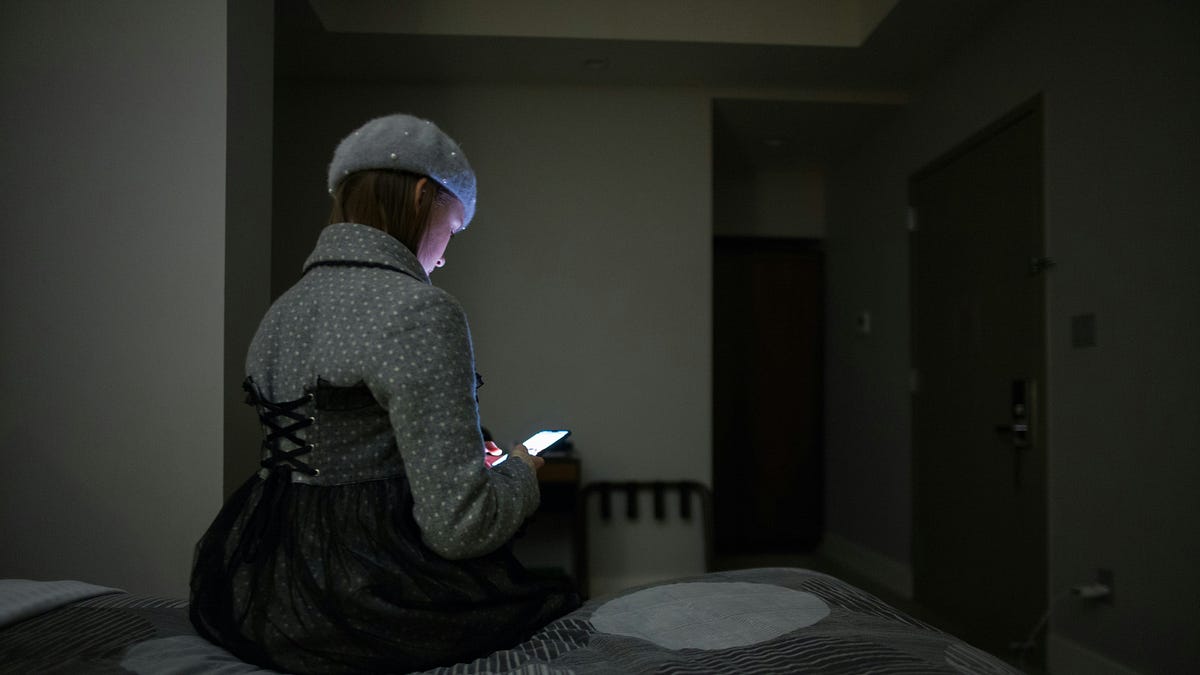
A new Pew Research Center survey finds that sleep is the single clearest downside Americans associate with their smartphones, with 41% of US adults saying phone use hurts how much sleep they get, compared with just 5% who say it helps.
The gap is far wider among younger adults, where 62% of those ages 18 to 29 report smartphones are cutting into their sleep.
A generational divide in self-reported harm
Adults under 30 are the only age group in which a majority, 62%, say smartphones hurt their sleep, while 52% of those ages 30 to 49 also say this.
The share drops sharply with age, falling to 36% among adults 50 to 64 and just 14% among those 65 and older, according to Pew’s analysis of its survey data.
Pew’s researchers describe sleep as the clearest perceived downside of smartphones that researchers asked about, since much larger shares say their smartphones hurt than help the amount of sleep they get.
Still, nearly half say their phone has no impact on their sleep at all.
Survey methodology and broader findings
The findings come from Pew Research Center’s American Trends Panel (ATP), conducted from May 26 to June 1, 2026, with 9,750 panelists surveyed.
Sleep was not the only category Pew measured. The same survey asked respondents whether smartphones help or hurt how informed they feel, how connected they feel to others, their productivity and their mood.
On those other measures, the picture looks different. Thirty-four percent of American adults said smartphones negatively affected their productivity, while 22% believed the devices had an adverse impact on their mood.
Phones scored far better on information and connection, where most respondents reported a positive effect rather than a negative one, with roughly three-in-four adults saying their smartphone helps them stay informed, and about half saying it helps them feel connected to others.
Many Americans say they are trying to cut back
The sleep findings sit alongside a related Pew measure of overall smartphone use. More than half of adults in the United States say they spend too much time on their smartphones. For 18-to-29-year-olds, it’s 70%.
Despite that concern, follow-through is mixed. The survey of nearly 10,000 people shows that 45% of U.S. adults surveyed say they have tried to cut back on their smartphone use in the past year.
Among those who attempted to limit their screen time, 25% described themselves as very or extremely successful, another 52% said they were somewhat successful, and 23% said they were not too successful or not successful at all.
The persistence of heavy use shows up in how often people check their devices. About 1 in 4 adults in the U.S. say they’re on their smartphones “almost constantly.”
That pattern echoes other recent attention research, including a study that found a text message replaces the voicemail for many young adults, part of a broader shift in how younger generations manage phone-based communication.
Why researchers see sleep as a distinct case
Sleep researchers outside Pew have pointed to mechanisms that could explain the generational gap. Blue light emitted by screens can disrupt the body’s circadian rhythm, which naturally prepares for sleep at night.
Some specialists note that simply having a phone nearby, even unused, can interfere with staying asleep because of anticipated notifications. Jamie Zeitzer, a professor of psychiatry and behavioral sciences at Stanford University and codirector of the university’s Center for Sleep and Circadian Sciences, said notifications, and anticipating them, can trigger arousals that can be disruptive in the middle of the night. As Kristin Szuhany, a clinical psychologist who specializes in cognitive behavioral therapy for insomnia at NYU Langone Health, put it, “Oftentimes, what we’re doing on our phones is keeping our brains more active.”
The sleep finding also lines up with Pew’s broader mobile device research, which has tracked Americans’ growing reliance on smartphones throughout 2026.
That broader body of work, including recent Pew findings on digital community habits, suggests Americans increasingly recognize a tension between the convenience smartphones offer and the toll continuous use takes on everyday routines like sleep.
