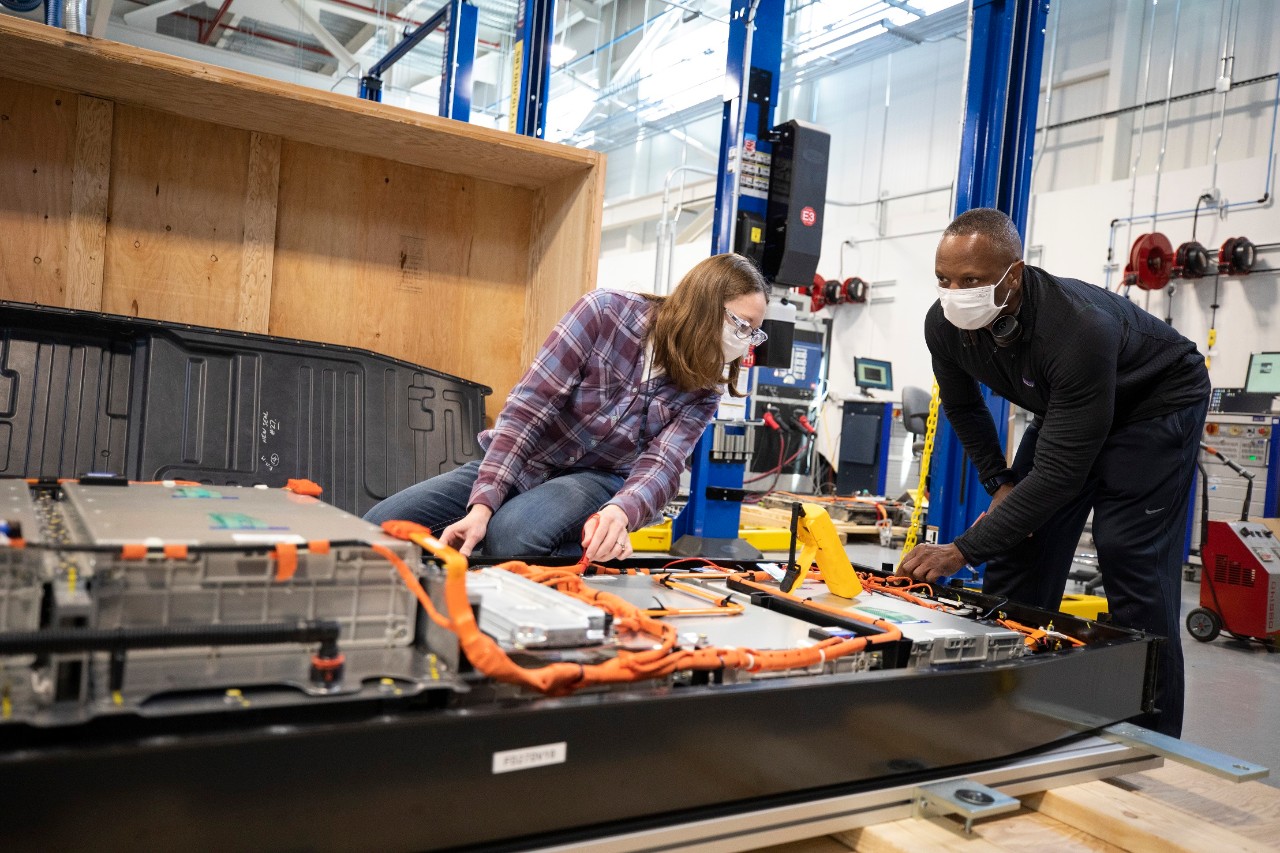
Ford said this month that its electric vehicle batteries are holding up better than many drivers expect, retaining more than 90 percent of their original health on average after 100,000 miles of use.
The automaker released the figures from its own fleet data covering the Mustang Mach-E, F-150 Lightning and E-Transit, detailed in a report published on Ford’s From the Road site.
What Ford’s data shows
Aggregated across the full battery-electric lineup released over the last five years in the U.S. and Canada, the pattern holds: our packs are designed to last at least 10 years, and in the wild they’re maintaining, on average, greater than 90% health at 100,000 miles , Ford said, and according to Ford, the Mach-E’s battery has retained 92% of its health on average over the past five years.
Across its full EV lineup, including the F-150 Lightning and E-Transit, Ford said its battery packs maintain more than 90% health on average after 100,000 miles.
The company drilled into its earliest electric vehicles to make the point. Of 2021 model-year EV owners, Ford said, more than 2,000 have crossed 100,000 miles with their original battery averaging better than 91% health, while over 30 have crossed the 200,000-mile mark and average 88% health. Ninety-five percent of those vehicles fall between 87% and 97% health.
Battery degradation has been one of the most persistent consumer worries about going electric, since a worn-out pack can mean reduced range and costly replacement.
Why Ford is sharing the numbers now
Ford uses those driving records to guide owners on vehicle care, including drivers new to battery technology.
The disclosure arrives as the automaker leans on long-term ownership data to reassure buyers weighing an EV against a gas or hybrid alternative, after the $7,500 credit that was a major price discount for buyers of EVs ended on Sept. 30, 2025 , a shift that has since seen the average price of a new EV plummet 12.3% to $58,071 six months after the credit’s expiration, according to Cars.com listing data.
Ford has introduced new features in the Ford App to help owners maintain battery health specific to their vehicle and will continue to use the data to improve the experience as it introduces its next-gen EVs.
The tools are meant to guide charging habits, such as avoiding frequent fast charging to full capacity, that can accelerate long-term wear.
A larger battery becomes standard
Alongside the health data, Ford confirmed a hardware change for its best-selling EV. The 2027 Mustang Mach-E drops the standard-range battery offered in the 2026 model and now comes standard with the larger 88 kWh battery.
The extended-range (88 kWh) battery provides an EPA-estimated driving range of up to 320 miles in RWD models. Dropping the smaller pack simplifies the lineup and pushes the baseline range figure higher for new buyers.
The move follows a broader pattern across the industry of automakers publishing degradation data to counter skepticism about EV ownership costs. Ford’s figures are self-reported rather than independently audited.
The company said the figures are drawn from telemetry across its connected vehicle fleet, covering more than 36,000 vehicles and two billion all-electric miles across all 50 states and Canada , rather than a limited test sample.
What it means for buyers
For consumers cross-shopping new and used electric vehicles, battery longevity directly affects resale value and total cost of ownership.
Strong health retention figures could bolster confidence in the growing used EV market, where certified pre-owned sales rose, according to recent GCN reporting on dealer trends.
It could also feed into how auction houses price used electric vehicles, since a hidden wholesale price feed already shapes sticker prices before a used EV reaches a dealer lot.
Ford did not say whether it plans to publish updated battery health figures on a regular schedule. The company has not released degradation data broken out by climate, charging frequency or driving style, variables that independent testers have found can cause wide swings in long-term battery performance.
The company’s disclosure follows years of separate scrutiny on EV charging networks, including GM’s recent move to add plug and charge capability at Electrify America stations, part of a wider industry push to make public charging and long-term ownership feel more routine for mainstream buyers.
