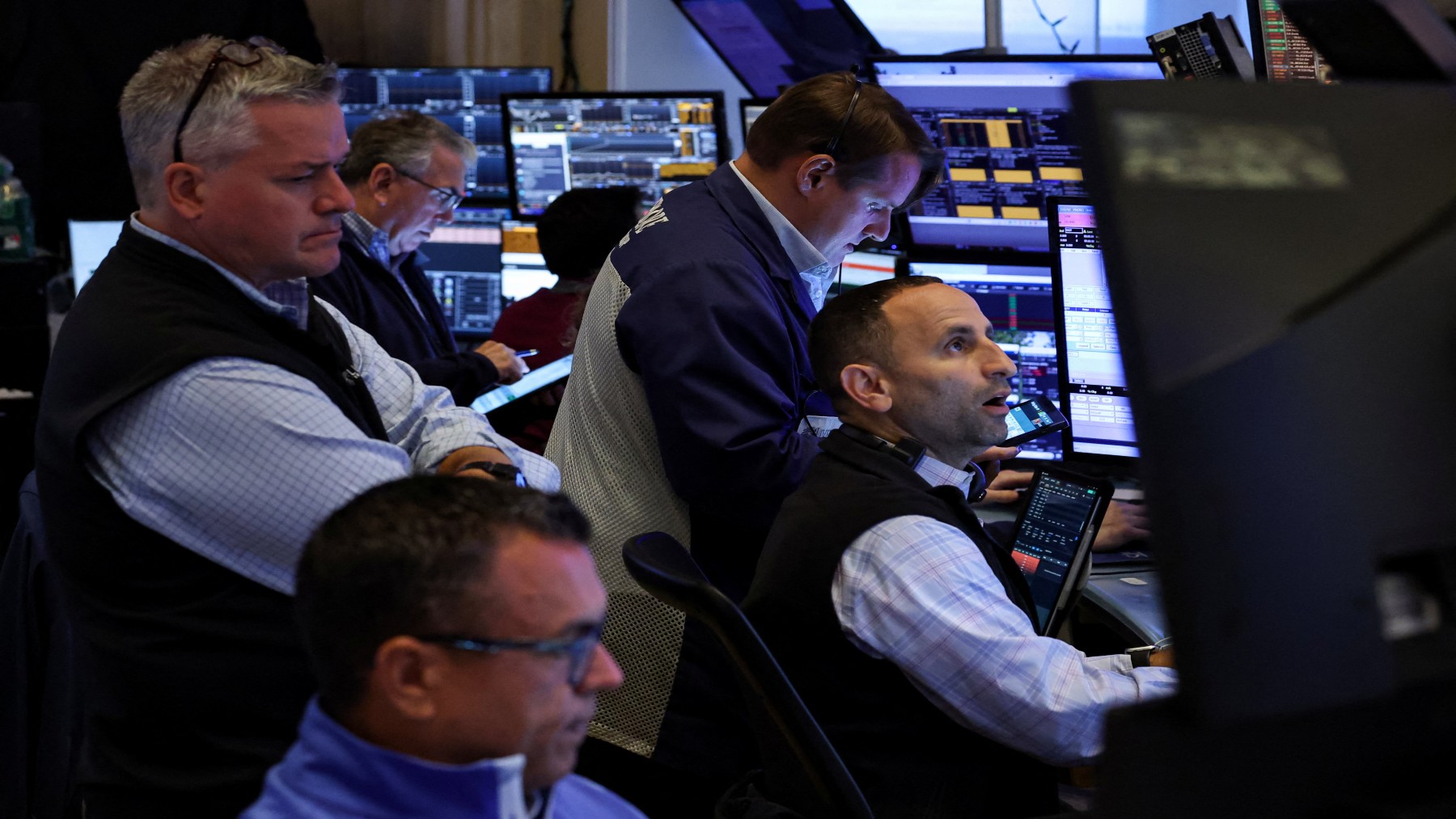
Wall Street’s mixed performance reflects growing uncertainty about consumer resilience as Home Depot’s earnings reveal the complex challenges facing American retailers in an era of persistent inflation and trade tensions. The home improvement giant’s decision to maintain annual forecasts despite missing quarterly estimates demonstrates how companies are navigating between tariff pressures and weakening consumer demand for big-ticket purchases.
Home Depot’s earnings reveal shifting consumer spending patterns
This earnings spotlight comes at a critical moment when investors desperately need clarity on whether the American consumer, who drives 70% of economic activity, can sustain spending momentum amid rising costs and economic uncertainty.
Wall Street’s main indexes were set for a mixed open on Tuesday as investors assessed retailer Home Depot’s earnings for insights on the health of the American consumer and awaited a key Federal Reserve conference scheduled later in the week.
Consumer spending accounts for around 70% of the total U.S. economy, and traders are keen to know the impact U.S. tariffs have had on corporate forecasts and individual expenditure. Data last week showed the levies had dented consumer confidence in July.
Home Depot’s shares edged up 1.8% in choppy premarket trading after the home-improvement retailer kept its annual forecasts intact, despite quarterly results missing estimates as homeowners reduced spending on big renovations in favor of smaller DIY projects.
Reports from rival Lowe’s as well as big-box retailers Walmart and Target are expected later this week.
The Federal Reserve conference timing creates additional market uncertainty this week
On the policy front, remarks from Fed Vice Chair for Supervision Michelle Bowman are due later in the day.
Bowman, who is under consideration for the central bank’s top job when Chair Jerome Powell’s term ends next year, has voiced support for at least three interest rate cuts this year, in line with President Donald Trump’s calls for lower borrowing costs.
Interest rate futures point to a total of two rate cuts this year, worth 25 basis points each, with the first expected in September, according to data compiled by LSEG.
“People are a bit hesitant to spend right now with the level of interest rates and some of the uncertainty created by inflation,” said Robert Pavlik, senior portfolio manager at Dakota Wealth. Until they get clarity, hopefully in the form of fewer tariff hikes and maybe some interest rate cuts, we’re probably stuck in this bit of malaise.”
At 08:42 a.m. ET, Dow E-minis were up 106 points, or 0.24%, S&P 500 E-minis were down 1.25 points, or 0.02%, and Nasdaq 100 E-minis were down 25.25 points, or 0.11%.
Wall Street’s main indexes have recovered since their April lows, when trade uncertainty struck global markets, and have picked up steam following a better-than-expected earnings season and on the rate-cut expectations.
How the Jackson Hole symposium could reshape market expectations
The key event this week is the Fed’s annual symposium at Jackson Hole, Wyoming, from Aug. 21-23, where Powell’s comments will be scrutinized for any clues on the central bank’s outlook on the economy and monetary policy.
Dow component Caterpillar rose 1.7% after brokerage Evercore ISI upgraded the construction equipment maker’s stock to “outperform” from “in line”.
The Jackson Hole symposium represents a pivotal moment for market direction as investors seek definitive guidance on Federal Reserve policy amid conflicting economic signals that have created uncertainty about the appropriate monetary response to current conditions. Powell’s anticipated remarks will likely address the delicate balance between supporting economic growth through lower interest rates and maintaining vigilance against inflationary pressures that continue to affect consumer purchasing power and corporate cost structures.
The market’s focus on this event underscores how dependent current investment strategies have become on central bank policy signals, particularly as traditional economic indicators provide mixed messages about the underlying strength of the American economy.
GCN.com/Reuters.
