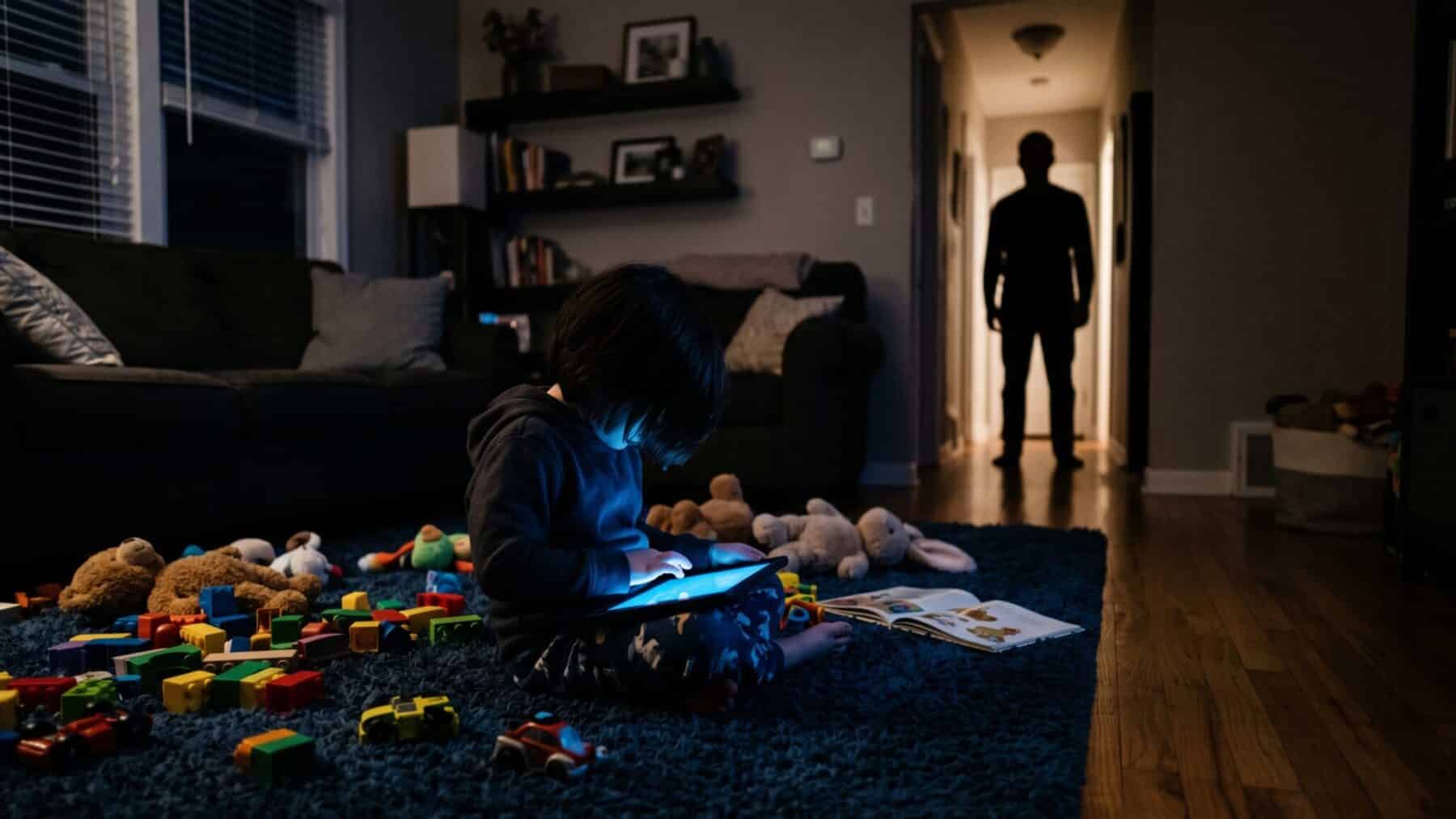
It starts with one video about dinosaurs.
By the time a parent looks up from the dishes, their four-year-old is watching something else entirely, and nobody in the room pressed play.
That familiar scene turns out to have a very specific engine running behind it, one that most parents have never seen explained and that two major research bodies have now put hard numbers on.
How many kids are really on YouTube every single day
A Pew Research Center survey of 3,054 parents of children ages 12 and under, conducted in May 2025, produced a number that surprised even researchers who study this space.
Most parents, 85%, say their child 12 or younger watches videos on YouTube, and about half of parents of children ages two to four say this happens daily, a share that has risen sharply in recent years.
That is not a screen-time statistic. That is a platform penetration rate that rivals broadcast television.
Five years ago, 45% of parents of children under the age of two reported that those children watch YouTube. In the latest survey, that number jumped to 62%.
And 35% of parents say their child under two watches YouTube daily, up from 24% five years ago.
What parents say they are doing to manage it
Most families have rules. The Pew data make that clear.
About four in ten parents say they could be doing better at managing their kid’s screen time, while a larger share, 58%, say they are doing the best they can.
Parents set timers, check in from across the room, and pick the first video themselves.
Those are real efforts. But they address only the moment a child starts watching, not what happens in the minutes after.
And with cost pressures reshaping daily family life, many parents are simply stretched too thin to monitor every session closely.
The part of the session parents hand off without knowing it
The average parent pictures a child picking a video, watching it, then picking another.
That is not quite how the platform works at scale.
Scrolling an algorithm-based feed does not equate to the same opportunities as video-chatting with friends, creating digital art, or working with teammates in a multiplayer game.
Researchers and child-development experts are increasingly focused on exactly this distinction, and a fresh wave of findings explains precisely why.
Current guidelines call on caregivers to distinguish among types of media and to take into account a child’s individual characteristics, family members’ own use of screens, and the type of content children are spending time on.
The scoring system that actually decides what your child watches next
Here is the mechanism most parents have never seen laid out plainly.
The Pew Research Center survey of 3,054 parents confirmed that YouTube’s reach into the youngest households has grown faster than almost any other platform, even as most parents remain unaware of how its recommendation system actually operates behind every session.
YouTube’s recommendation system pulls videos each viewer is most likely to watch using factors like watch time, click-through rate, satisfaction surveys, and viewing habits, with the algorithm’s goal being to show users the most relevant and valuable content in order to keep them engaged and on the platform.
The engine’s primary goal is not finding the best video for a child. According to YouTube, the goal is to ensure the platform remains a place for exploration while empowering parents to guide the journey. But the underlying recommendation system has historically measured success through watch time and retention, signals that do not map neatly onto what a parent would recognize as quality.
In 2015, YouTube began measuring viewer satisfaction directly with user surveys, and also prioritized direct response metrics like shares, likes, and dislikes. Around 2015 and 2016, satisfaction became a core concept in a published white paper, with user surveys and long-term viewing patterns becoming part of ranking decisions, the point where viewer happiness started to factor alongside pure engagement metrics. Watch time and satisfaction now both shape what loads next, but neither is a signal a parent is aware of ceding when autoplay begins.
The result: YouTube’s recommendation algorithm drives 70% of what people watch on the platform, a share powered by the personalized engine that determines what content loads next.
That means roughly seven out of every ten videos a child watches were not chosen by the child or the parent. They were served by a system optimizing for continued viewing, drawing on a dataset built from billions of previous sessions.
YouTube Shorts, for instance, are designed for swipe-based discovery, users do not select specific videos but scroll through a feed of recommended content. This key difference means the Shorts algorithm works differently from the regular recommendation system, with videos served dynamically based on user engagement, watch history, and content trends.
What parents can actually do with this information
The finding is not a verdict on YouTube as a product. In early 2026, YouTube CEO Neal Mohan outlined his top priorities for the platform, which include building the best place for kids and teens through stronger parental controls.
The practical value is simpler: once a parent understands that autoplay is a separate system from search, the levers become visible.
YouTube’s recommendation system determines what content appears on a user’s home page and in the “Up Next” sidebar. The Up Next feature autoplays recommended content unless a user turns the autoplay off, and turning off autoplay settings and notifications on all devices at home is one of the most direct steps available.
Moving beyond strict screen time limits includes questioning the kind of digital activities kids and adolescents participate in, and whether those activities encourage time spent interacting with others online, which can help young people develop important skills.
The first video a child watches is a parenting decision. Everything after autoplay is a design decision, and knowing the difference is the starting point.
