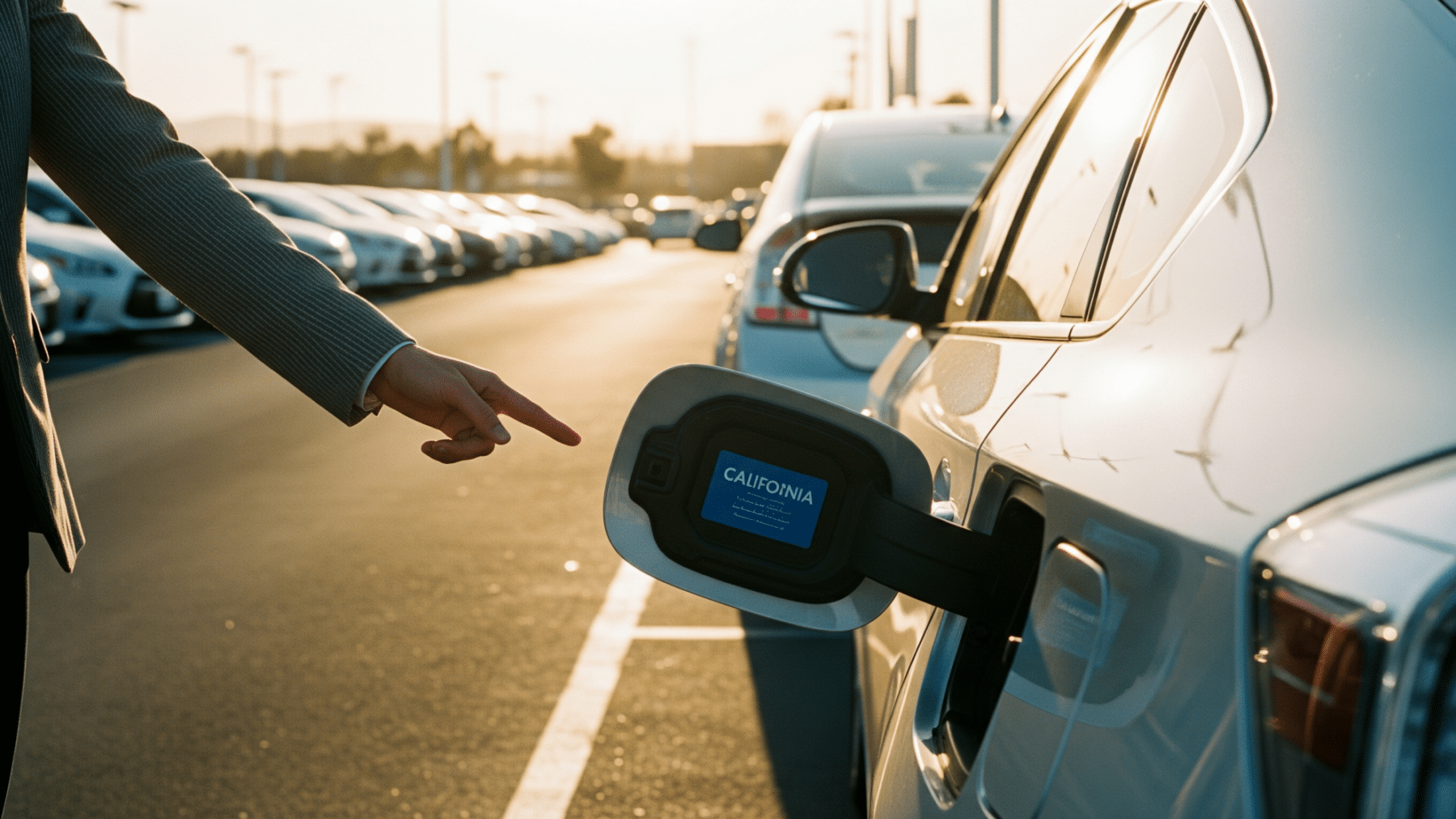
Hybrid vehicles captured 22.1 percent of California’s new-vehicle market through the first half of 2026, the highest share on record, according to the California New Car Dealers Association (CNCDA), with data sourced from Experian Automotive. The milestone confirms a structural shift in the nation’s largest car market, where hybrids have now overtaken zero-emission vehicles in market share.
Hybrids beat ZEVs for market share
Hybrid share climbed from 20.9 percent in the first quarter to 23.2 percent in the second. That gain outpaced sales of zero-emission vehicles, which registered a smaller share of the quarter’s total.
ZEV registrations declined 24.8 percent in the first half of 2026 compared with a year earlier, falling to 137,430 units. Hybrid registrations totaled 191,000 units in the first half of the year.
The data arrive as hybrid demand accelerates nationally as well. A July forecast from JD Power and GlobalData projects hybrid market share of retail sales will reach 15.9 percent nationally in July 2026, up 2.5 percentage points from a year ago, while EV share falls 3.3 percentage points to 7.0 percent year over year.
What is driving the switch
High fuel prices, broader model selection, and lingering concerns about EV range and charging infrastructure are pushing more buyers toward hybrids. Incentive spending on traditional ICE and hybrid vehicles is expected to increase $578 per unit year-over-year, up 22.2 percent, to $3,181 in July 2026.
Hybrid share has now increased in each of the past four years. Toyota’s Camry and RAV4, along with Honda’s CR-V, ranked among the state’s top-selling hybrid models through the period.
Nationally, Toyota led U.S. auto sales with 1.07 million vehicles sold in the first half of 2026, driven by surging hybrid demand that has increased over 80 percent since 2023 and now accounts for 14 percent of all light-vehicle sales.
The California Air Resources Board’s Advanced Clean Cars II (ACC2) mandate continues to face legal uncertainty after being struck down earlier this year under the Congressional Review Act. The ACC2 mandate excluded all hybrids and many PHEV models. ACC II had mandated that by 2035, 100 percent of new light- and medium-duty vehicle sales in California must be zero-emission vehicles or plug-in hybrid electric vehicles, meaning non-plug-in hybrids were excluded from its list of compliant vehicles. While litigation is ongoing, policymakers’ goal of 100 percent ZEV sales by 2035 remains far from current consumer trends. That ongoing legal uncertainty has given non-plug-in hybrid buyers additional confidence that their vehicles will remain fully compliant regardless of how the matter resolves.
Dealer network takes all hybrid sales
Hybrid registrations totaled 191,000 units in the first half of the year, and every one of those vehicles was sold through a franchised new-car dealership. Franchised dealerships accounted for 75.7 percent of combined hybrid, ZEV, and plug-in hybrid registrations statewide.
CNCDA Chairman Jessie Dosanjh, owner of Stevens Creek Chevrolet, said: “Californians are buying the vehicles that fit their budgets and the way they drive, and right now that means a lot of hybrids.”
California’s overall new-vehicle market declined 7.7 percent through the first six months of 2026, with 864,848 new light vehicles registered compared with 936,543 during the same period in 2025. The state is on pace to finish around 1.73 million in sales for the full year, down from last year’s 1.8 million.
EV programs aim to close the gap
While ZEV sales for the remainder of 2026 are expected to remain at roughly current levels, the state’s new point-of-sale rebate program, MyFirstEV, is expected to be implemented in the coming weeks, which could provide additional momentum for ZEV sales. The MyFirstEV program will deliver $3,500 off the price of a new electric vehicle at the dealership.
The hybrid surge is not isolated to California’s consumer segment. In the broader automotive supply chain, memory chip supply deals between Tier 1 automotive partners are increasingly being structured to support multi-powertrain platforms that span both hybrid and electric architectures.
Meanwhile, the California data stand in sharp contrast to the EV production investments covered in recent months, including the plug-in hybrid recall activity that has kept safety engineers busy alongside the sales growth.
The full Q2 2026 California Auto Outlook is available on the CNCDA website, with underlying registration data attributed to Experian Automotive.
