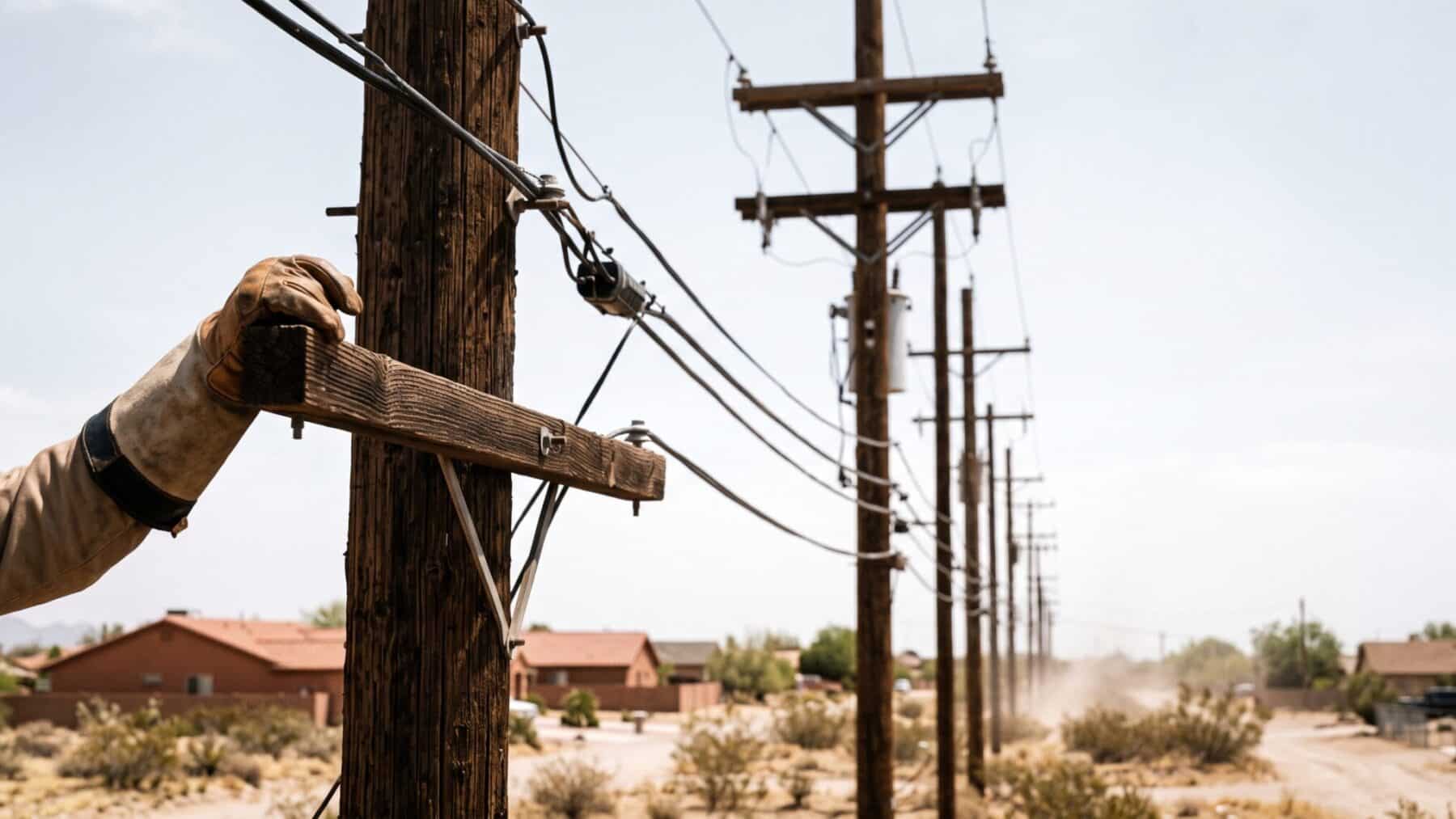
A Phoenix summer afternoon pulls electricity from the grid the way few places on earth can match.
Air conditioners run at full tilt for months on end. Now a vast new class of customer has arrived in the desert: the data center. That collision of relentless heat and surging industrial demand has landed before regulators, and the bill it proposes is unlike anything Arizona ratepayers have seen in years. The question at the center of it all is who exactly pays when the grid can no longer keep up.
How a utility’s cost structure can fall years behind reality
APS says its current rates have not kept pace with what it costs to operate a reliable grid, with the existing rates based on costs from roughly three to four years ago. Inflation and rising expenses mean those rates no longer cover what it actually takes to operate and strengthen the grid. That gap is the engine driving the entire proceeding. When prices for core equipment run far ahead of what the rate structure assumed, a utility either absorbs losses or files for relief.
Transformer costs are on average 60 to 90 percent higher, according to an APS regulatory compliance manager, citing “hundreds of thousands” of transformers in its network. Transformers are not optional equipment; every neighborhood substation relies on them. So the arithmetic of running a modern grid on rates designed for a cheaper era eventually forces a reckoning.
APS last filed a rate case three years ago, in 2022, and the ACC approved new rates in 2024 based on costs from 2021, 2022. It is now asking the commission for its third rate increase in four years, a frequency that has made it a political flashpoint well before the evidentiary hearing opened.
A $579 million request that splits the bill between homes and server halls
APS filed this application on June 13, 2025, proposing a net base rate increase of $579.52 million, representing a 13.99% net increase, which would become effective no earlier than July 8, 2026. That is the full sticker price before any regulatory trimming.
The proposal calls for a hike of 14 percent on residential customers, which would increase the typical household’s bill by around $20 a month. If approved, the average household could see around $240 more in utility costs per year. But the more striking number sits in a different tariff line: a proposed increase of more than 45 percent for extra-large energy users like data centers, to help ensure that they continue to pay for their costs of service.
APS is also requesting a 45 percent rate increase for large-load customers like data centers and manufacturing facilities, and is looking to update how it allocates costs to serve large-load customers, ensuring that any new power plants or transmission lines needed to serve those customers are paid for by the developers or end-users.
The utility’s argument is that customers causing the spike should bear a proportional share of the cost. It sounds straightforward, yet it has drawn multiple intervenors into the proceeding.
What the evidence on the record actually shows
The main large-load tariff, called Extra High Load Factor, already carries demand charges; in its 2025 rate case, APS is asking to raise that class’s revenue by more than 45 percent. That figure comes directly from APS’s rate case application filed with the commission.
The utility argues its current pricing no longer recovers the true cost of generation for high-load customers. It wants charges based on actual cost, and it says the demand from data centers is driving the need for new generation and transmission that those customers should fund.
APS serves about 1.4 million homes and businesses across Arizona. This is its third rate request in four years. That frequency has become a flashpoint on its own. The pattern of repeated rate filings is not unique to Arizona; a North Carolina utility’s 18 percent request earlier this year follows a similar cycle of infrastructure catch-up costs hitting ratepayers in rapid succession.
Where the case runs into serious resistance
The filing was opposed by the attorney general from the outset, a top-level intervention that signals how politically charged the proceeding has become. Advocacy groups packed two Arizona Corporation Commission hearing rooms for nearly four hours of public testimony on May 18.
The data center angle adds a second layer of friction. The commission must balance the utility’s need for revenue, ratepayers’ desire for affordable electricity and data center operators’ need for predictable operating costs. A rate increase of more than 45 percent would fundamentally alter the economics of running a server hall in that service territory.
The utility also proposed use of its first formula rate structure, a new ratemaking mechanism the commission approved, ending a decades-long practice of requiring utilities to file discrete multi-year rate cases, which would allow annual adjustments to rates based on actual costs. Consumer advocates see it as a permanent bypass of thorough regulatory review.
That single element has become one of the most contested items in the docket. The broader question of who pays for large-load grid upgrade costs has even reached the US Senate floor this year.
What a final decision late this year could mean for the country
The evidentiary hearing began May 18 and was expected to last just over a month. New rates are not expected to go into effect until the second half of 2026, and approved figures could land well below the requested amounts, but the direction of travel is clearly upward.
Other states watching their own data center booms are tracking the Arizona commission’s every move. The core question, whether data centers pay closer to their full cost of service or continue to benefit from rates calibrated to a slower grid, has no settled national answer yet.
What the Arizona proceeding establishes will ripple outward to every commission in every state now fielding a data center application. The hearing rooms in Phoenix are, in that sense, setting a price signal for the entire country. The floor has already been named.
