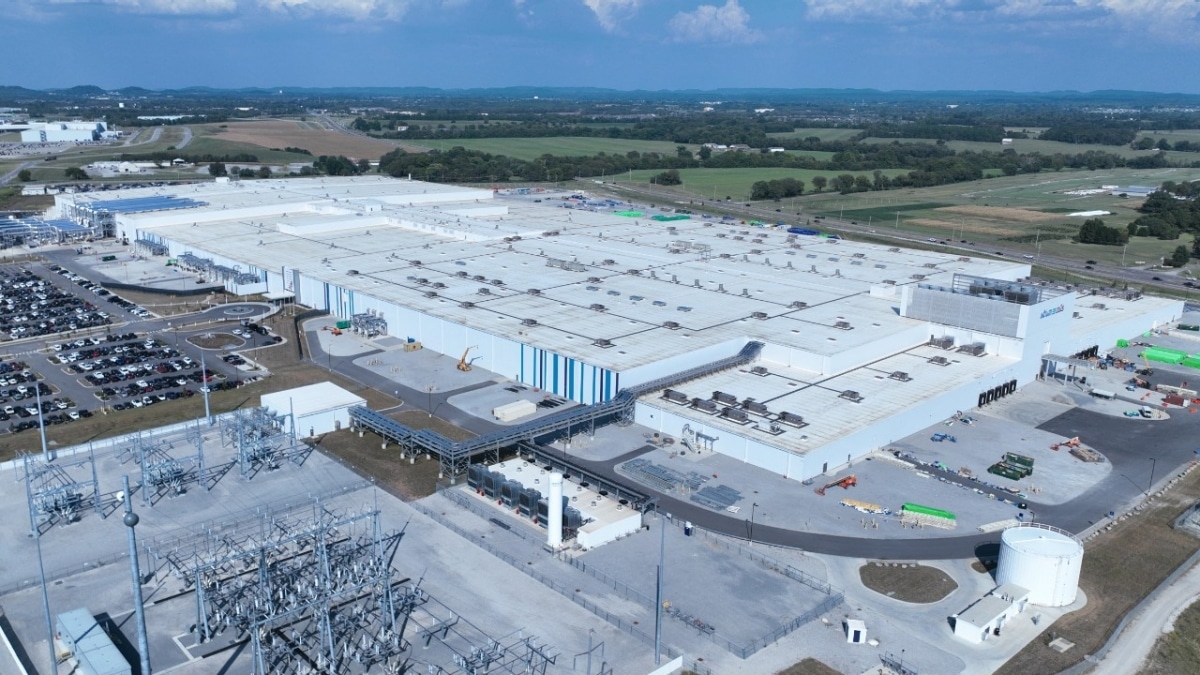
General Motors will upgrade its Ultium Cells plant in Spring Hill, Tennessee to become the world’s first facility to mass-produce lithium manganese-rich prismatic battery cells, the automaker announced Tuesday, setting up a new chemistry that it says can push future electric trucks and SUVs past 400 miles of EPA-rated range.
A new battery chemistry in the mix
Ultium Cells has announced that it will manufacture new lithium manganese-rich (LMR) prismatic battery cells at its facility in Spring Hill, Tennessee, giving General Motors another battery chemistry option for its future electric vehicles.
The move is expected to make Ultium Cells the first manufacturer globally to commercially produce this next-generation technology, positioning GM at the forefront of bringing it to market in future electric vehicles.
At their core, LMR batteries use a far lower percentage of cobalt and nickel than traditional nickel-manganese-cobalt (NMC) cells. Instead, they rely heavily on manganese, a cheaper and more plentiful metal. GM says this makes the chemistry easier and less costly to source and process.
The chemistry is designed to sit between today’s affordable lithium iron phosphate packs and the premium high-nickel cells that currently deliver the longest range in GM’s lineup.
The technology is designed to offer energy density 33% greater than lithium iron phosphate (LFP) chemistry, today’s leading, low-cost battery technology, but at a comparable cost. GM plans to use the new batteries in upcoming electric trucks and full-size SUVs, aiming to offer over 400 miles of range.
Spring Hill upgrades and job growth
Construction and facility upgrades at Ultium Cells Spring Hill will begin later this year and are expected to be completed in 2028. This expansion is projected to create 500 new jobs, in addition to the facility’s total current workforce of 1,200 employees.
Combined spending on the LFP storage and LMR projects, plus facility improvements, will reach $1 billion by 2030.
Since June 2026, Spring Hill has built LFP cells for energy storage systems for customers of LG Energy Solution Vertech. With the addition of the forthcoming prismatic LMR cells for EVs, the Spring Hill plant will be transformed into a multi-chemistry manufacturing hub capable of producing batteries with different chemistries, high-nickel, LFP, and LMR, as well as multiple form factors including pouch and prismatic, all at a single site.
Paul Jacobson, GM’s chief financial officer, said the change could reduce battery-pack costs by thousands of dollars per vehicle. “The first big step of that will be in ’28 when we start to produce the LMR technology, which is premium and power load at the same cost as LFP,” he said. “So that will be a stark improvement, thousands of dollars per vehicle at the pack level for new EVs as we start to roll those out.”
What it means for EV trucks and SUVs
GM is expected to launch its first vehicle with the new LMR batteries in 2028. The company has previously identified future all-electric full-size trucks and SUVs as potential applications for LMR technology.
That puts the cell in direct competition with the high-capacity packs used by rivals in the most contested segment of the US electric vehicle market.
High-nickel battery cells will remain the go-to choice for maximum range, while a broader selection of cell technologies will be offered in order to match the requirements of individual vehicles. Kurt Kelty, GM’s vice president of battery and sustainability, said that adding LMR “positions us to leapfrog today’s more affordable chemistries and deliver lower costs with better performance.”
Adding LMR to the Ultium Cells portfolio also demonstrates the flexibility of its manufacturing capabilities. Ultium Cells will be able to produce battery cells in multiple chemistries and form factors, helping tailor battery technology to the needs of different vehicles and applications.
Beyond manufacturing flexibility, bringing this new battery cell to market first is described by GM as “a milestone moment for keeping America competitive globally in EV and battery technology leadership.”
Broader context for US EV buyers
Range remains the single biggest factor buyers weigh against cost when considering an electric truck or SUV. The 400-plus mile target would place GM’s future LMR-equipped models at the top end of what is currently available in the full-size segment, where EV incentives have been stacking up to drive volume this year.
If the technology performs as expected, LMR batteries could become an important part of GM’s broader electric vehicle strategy. The Spring Hill project represents a significant development not only for GM and Ultium Cells, but also for the wider US EV battery industry. Commercializing a new battery chemistry at scale could help accelerate the development of lower-cost electric vehicles while strengthening domestic battery manufacturing capabilities.
The announcement comes as the US public charging network continues to expand to support longer-range vehicles. Public charging ports in the US have continued to grow, a trend that makes higher-range, long-haul electric trucks more practical for everyday drivers. Construction is expected to be completed in 2028, though the companies did not disclose when cell production will begin. GM has previously said its goal was to start commercial production of LMR cells for future EVs at a US facility in 2028.
